
Introduction
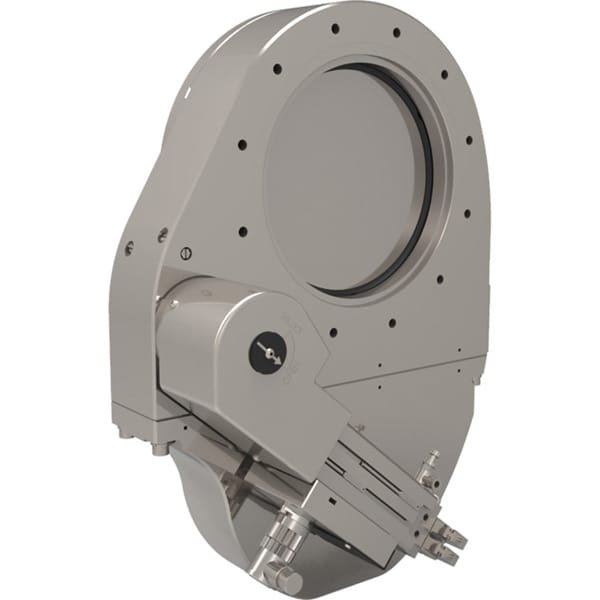
3-Position Pendulum Valves are precision vacuum isolation and throttling components designed for advanced vacuum systems where accurate pressure control and reliable sealing are critical. Unlike conventional on/off gate valves, a 3-position pendulum valve provides fully open, fully closed, and intermediate (throttling) positions, enabling stable process pressure regulation in demanding environments such as semiconductor manufacturing, thin film deposition, and high-vacuum research systems.
These valves are widely integrated into sputtering, evaporation, CVD, PVD, and plasma processing lines, where repeatable pressure control directly influences film uniformity, deposition rate, and overall process stability.
Detailed Description
A 3-Position Pendulum Valve operates using a pivoting (pendulum-style) sealing plate that swings into the sealing seat rather than sliding across it. This design minimizes particle generation and mechanical wear, making it especially suitable for clean vacuum applications.
Key structural and performance features include:
Pendulum Sealing Mechanism
The sealing plate moves in a controlled arc, reducing friction between the seal and seat. This significantly lowers particle contamination compared to traditional gate valves.Three Defined Operating States
Open Position: Maximum conductance for rapid pump-down.
Closed Position: Leak-tight isolation between chamber and pump line.
Intermediate Position: Precise pressure throttling for process stabilization.
High Vacuum Compatibility
Typically constructed from electropolished stainless steel bodies with elastomer or metal sealing options, these valves can support high vacuum (HV) and, in certain configurations, ultra-high vacuum (UHV) environments.Excellent Conductance Characteristics
The straight-through design ensures minimal flow resistance in the open state, improving pump efficiency and reducing cycle time.Actuation Options
Available with pneumatic or motorized actuators for automated system integration. Feedback control interfaces allow integration with PLC or vacuum controllers for closed-loop pressure regulation.
For thin film processes such as magnetron sputtering, where chamber pressure stability directly affects plasma characteristics and coating uniformity, the intermediate throttling position plays a crucial role in maintaining repeatable process conditions.
Applications
3-Position Pendulum Valves are widely used in:
Semiconductor fabrication equipment
Magnetron sputtering systems
E-beam and thermal evaporation chambers
CVD and PECVD systems
Ion implantation systems
Display and photovoltaic production lines
Vacuum furnace and research vacuum chambers
Aerospace component coating systems
In deposition systems, these valves are commonly installed between the process chamber and turbomolecular pump to regulate chamber pressure during reactive sputtering or plasma-enhanced processes.
Technical Parameters
| Parameter | Typical Value / Range | Importance |
|---|---|---|
| Nominal Diameter | DN40 – DN250 (custom available) | Matches vacuum system flange size |
| Operating Positions | Open / Closed / Throttle | Enables pressure control flexibility |
| Leak Rate | ≤ 1 × 10⁻⁹ mbar·L/s | Ensures vacuum integrity |
| Body Material | Stainless Steel (304/316L) | Corrosion resistance & vacuum compatibility |
| Actuation Type | Pneumatic / Motorized | Supports automation integration |
| Operating Pressure | Atmosphere to 10⁻⁸ mbar (typical) | Suitable for HV applications |
| Seal Type | Viton® / FKM / Metal (optional) | Determines temperature & vacuum performance |
Comparison with Related Vacuum Valves
| Valve Type | Key Advantage | Typical Application |
|---|---|---|
| 3-Position Pendulum Valve | Low particle generation & precise throttling | Semiconductor & PVD systems |
| Gate Valve | Simple isolation | General vacuum systems |
| Butterfly Valve | Compact & cost-effective | Roughing lines |
| Angle Valve | Directional flow control | Process gas lines |
Compared with standard gate valves, pendulum valves offer superior cleanliness and controlled intermediate positioning, making them preferable in contamination-sensitive thin film processes.
FAQ
| Question | Answer |
|---|---|
| Can the valve size be customized? | Yes, flange standards (ISO, CF, KF) and diameters can be tailored to system requirements. |
| Is it suitable for ultra-high vacuum (UHV)? | UHV-compatible versions with metal seals are available upon request. |
| What industries use it most? | Semiconductor, optics coating, photovoltaic, aerospace, and research laboratories. |
| Can it be integrated into automated systems? | Yes, motorized or pneumatic versions support PLC and feedback control integration. |
| What maintenance is required? | Periodic seal inspection and actuator check are recommended to maintain performance. |
Packaging
Our 3-Position Pendulum Valves are meticulously tagged and labeled externally to ensure efficient identification and maintain high standards of quality control. We take great care to prevent any potential damage during storage and transportation, ensuring the valves arrive in perfect condition.
Conclusion
3-Position Pendulum Valves provide a reliable solution for vacuum isolation and precise pressure regulation in advanced processing systems. Their low-particle design, excellent sealing integrity, and stable intermediate control make them particularly suitable for semiconductor and thin film deposition environments.
For detailed specifications and a quotation, please contact us at sales@thinfilmmaterials.com.


Reviews
There are no reviews yet.