
Introduction
Tellurium Powder is a high-purity elemental material widely used in semiconductor manufacturing, thermoelectric materials, metallurgy, and thin film deposition technologies. As a rare metalloid element, tellurium plays a critical role in advanced materials research and high-performance electronic devices. Its unique electrical and thermal properties make it particularly valuable in applications such as solar energy materials, thermoelectric devices, infrared detectors, and compound semiconductor synthesis.
In powder form, tellurium offers excellent process flexibility for applications including alloy preparation, evaporation materials, chemical synthesis, and powder metallurgy. High-purity tellurium powder is especially important in the fabrication of cadmium telluride (CdTe) photovoltaic cells and other telluride-based semiconductor materials.
Detailed Description
Tellurium powder is typically produced through refining processes such as electrolytic purification, vacuum distillation, or chemical reduction to achieve high purity and controlled particle size distribution. These processes help remove trace impurities and ensure consistent material performance in sensitive applications such as semiconductor processing and thin film deposition.
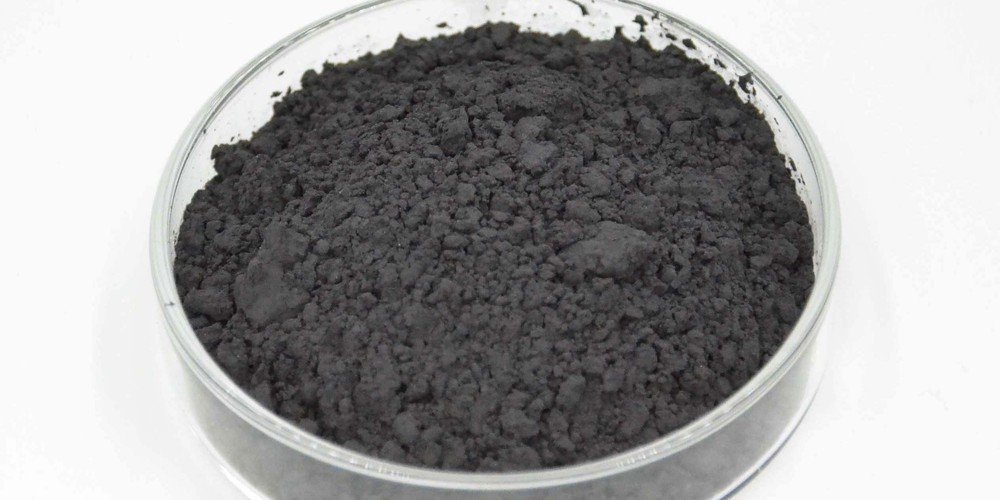
The powder typically appears as a gray to silver-gray material with a crystalline structure and good electrical conductivity compared to many non-metallic elements. Tellurium’s semiconducting behavior makes it a key component in several compound semiconductor systems. It is commonly combined with elements such as cadmium, bismuth, antimony, and lead to form materials used in thermoelectric generators, infrared sensors, and photovoltaic devices.
Particle size can be tailored depending on the intended application. Fine powders with narrow size distributions are often required for thin film deposition precursors or chemical synthesis, while coarser powders may be used in metallurgical alloying or powder metallurgy processes. Maintaining high purity and consistent particle morphology is essential to ensure reliable material performance and reproducible results in research and industrial production.
Tellurium powder can also serve as a precursor material for producing telluride compounds, sputtering targets, evaporation materials, and specialized semiconductor crystals.
Applications
Tellurium powder is widely used across several advanced technology sectors:
Thin film photovoltaic materials, especially CdTe solar cells
Thermoelectric materials such as bismuth telluride (Bi₂Te₃) used in energy conversion devices
Semiconductor compound synthesis for electronic and optoelectronic devices
Infrared detectors and sensors used in defense and imaging technologies
Alloy additives to improve machinability and corrosion resistance in metals
Research and development laboratories studying advanced chalcogenide materials
Technical Parameters
| Parameter | Typical Value / Range | Importance |
|---|---|---|
| Purity | 99.9% – 99.999% | High purity ensures reliable semiconductor and electronic performance |
| Particle Size | 1 – 500 µm (customizable) | Determines reactivity and processing characteristics |
| Appearance | Gray to silver-gray crystalline powder | Indicates material quality and purity |
| Density | ~6.24 g/cm³ | Important for handling and material calculations |
| Melting Point | ~449.5 °C | Relevant for evaporation and compound synthesis |
| Packaging | Vacuum-sealed or inert atmosphere | Prevents contamination and oxidation |
Comparison with Related Materials
| Material | Key Advantage | Typical Application |
|---|---|---|
| Tellurium (Te) | Semiconductor properties and thermoelectric performance | CdTe solar cells and thermoelectric materials |
| Selenium (Se) | Photoconductive properties | Photocells and optical devices |
| Bismuth Telluride (Bi₂Te₃) | High thermoelectric efficiency | Thermoelectric cooling and power generation |
FAQ
| Question | Answer |
|---|---|
| What purity levels are available for tellurium powder? | Typical purities range from 99.9% to 99.999%, depending on the application. |
| Can the particle size be customized? | Yes. Particle size distributions can be tailored to meet specific processing or research requirements. |
| Is tellurium powder suitable for thin film deposition materials? | Yes. It is commonly used as a precursor for sputtering targets, evaporation materials, and compound semiconductor synthesis. |
| What industries use tellurium powder most frequently? | Solar energy, thermoelectric devices, semiconductor manufacturing, and research laboratories. |
| How should tellurium powder be stored? | It should be stored in a dry environment, preferably in vacuum-sealed or inert-gas packaging to prevent contamination. |
Packaging
Our Tellurium Powder is meticulously tagged and labeled externally to ensure efficient identification and maintain high standards of quality control. The powder is packaged in sealed containers, vacuum bags, or inert atmosphere packaging depending on the purity level and particle size. Protective materials and export-safe cartons are used to prevent contamination, moisture exposure, and mechanical damage during storage and transportation.
Conclusion
Tellurium Powder is an essential material for modern semiconductor, photovoltaic, and thermoelectric technologies. Its unique semiconducting properties and compatibility with a wide range of compound materials make it a valuable resource for advanced energy systems and electronic devices.
With customizable purity levels, controlled particle sizes, and reliable supply, tellurium powder supports both industrial manufacturing and cutting-edge research applications.
For detailed specifications and a quotation, please contact us at sales@thinfilmmaterials.com.


Reviews
There are no reviews yet.