
Introduction
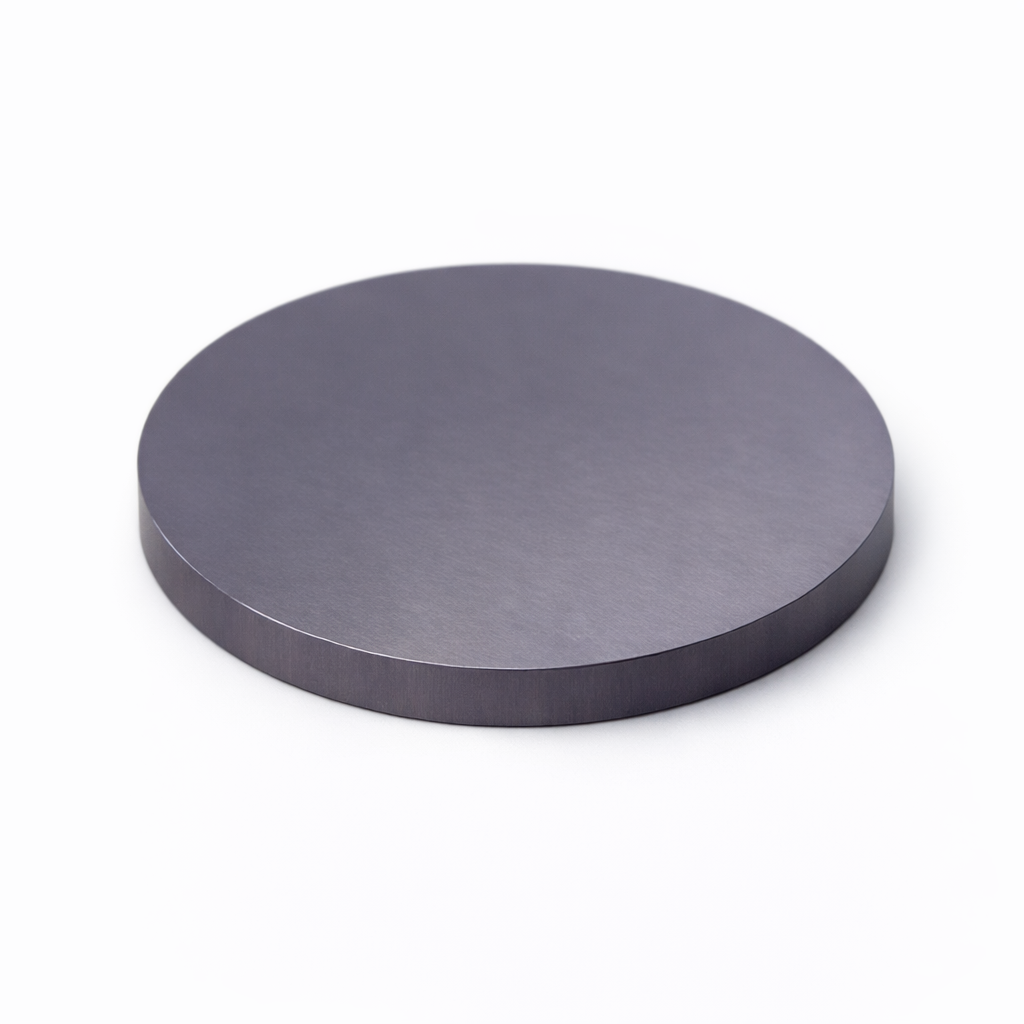
Yttrium Iron Gallium Garnet (YIGG) is a functional magnetic oxide material derived from the well-known garnet structure of Yttrium Iron Garnet. By partially substituting iron with gallium, the magnetic anisotropy, saturation magnetization, and microwave properties can be precisely tuned. The Y₃Fe₅Ga₁.₅O₁₂ sputtering target is specifically designed for advanced thin film deposition where controlled magnetic damping, spin-wave propagation, and magneto-optical performance are required.
As next-generation spintronic and microwave devices continue to demand lower loss and greater frequency stability, Yttrium Iron Gallium Garnet thin films have become increasingly important in both research laboratories and industrial fabrication environments.
Detailed Description
The Y₃Fe₅Ga₁.₅O₁₂ target belongs to the garnet-structured ferrite family with a cubic crystal system. Gallium substitution reduces magnetization while maintaining excellent insulating properties and low magnetic damping. This compositional tuning enables improved performance in high-frequency and spin-wave applications.
Our Yttrium Iron Gallium Garnet Target is manufactured through controlled solid-state synthesis followed by high-temperature sintering or hot pressing. Strict control of phase purity and stoichiometry ensures:
Single-phase garnet structure without secondary iron oxide phases
Uniform elemental distribution across the target surface
Stable sputtering rate and minimized particle generation
High density to support uniform film growth
Dense ceramic processing minimizes porosity, which is critical for stable RF sputtering, especially in oxide deposition systems. The carefully engineered microstructure directly influences thin film crystallinity, magnetic uniformity, and microwave loss characteristics.
The Y₃Fe₅Ga₁.₅O₁₂ composition offers a balanced reduction in saturation magnetization compared to pure YIG, enabling device designers to tailor resonance frequency and damping parameters without sacrificing structural integrity.
Applications
Yttrium Iron Gallium Garnet thin films deposited from this target are widely used in:
Spintronic devices and magnonic waveguides
Microwave resonators and filters
Magneto-optical isolators and circulators
Magnetic field sensors
Integrated ferrite-on-chip RF components
Research on spin-wave propagation and magnetic damping
In magnonics research, Ga-substituted YIG films are especially valuable for investigating low-loss spin transport and frequency tuning. In microwave engineering, the reduced magnetization allows improved control over ferromagnetic resonance characteristics.
Technical Parameters
| Parameter | Typical Value / Range | Importance |
|---|---|---|
| Chemical Formula | Y₃Fe₅Ga₁.₅O₁₂ | Determines magnetic tuning behavior |
| Purity | 99.9% – 99.99% (metals basis) | Reduces impurity-induced magnetic loss |
| Density | ≥ 95% theoretical | Improves sputtering stability |
| Diameter | 1″ – 6″ (custom available) | Compatible with standard sputtering guns |
| Thickness | 3 – 6 mm | Influences deposition lifetime |
| Backing Plate | Copper / Titanium optional | Enhances thermal management |
| Bonding Method | Indium Bonding / Elastomer Bonding | Ensures vacuum compatibility |
Comparison with Related Materials
| Material | Key Advantage | Typical Application |
|---|---|---|
| Y₃Fe₅Ga₁.₅O₁₂ | Tunable magnetization & low damping | Spintronics, microwave filters |
| Yttrium Iron Garnet | Higher saturation magnetization | Standard magnonic films |
| Nickel Zinc Ferrite | Higher resistivity, lower cost | EMI suppression components |
Compared to pure YIG, the Ga-doped variant offers enhanced frequency tuning flexibility. Compared to NiZn ferrites, it provides significantly lower magnetic damping and better performance in precision RF applications.
FAQ
| Question | Answer |
|---|---|
| Can the composition be customized? | Yes. Ga substitution levels can be adjusted based on magnetic property requirements. |
| Is the target single-phase? | Yes. Phase purity is verified by XRD to ensure a single garnet structure. |
| Is RF sputtering recommended? | Yes. Oxide garnet materials are typically deposited using RF sputtering. |
| Can it be bonded to a backing plate? | Yes. Copper or titanium backing plates are available. |
| What substrates are commonly used? | GGG, YAG, MgO, and sapphire are frequently selected for epitaxial growth. |
Packaging
Our Yttrium Iron Gallium Garnet Targets are meticulously tagged and labeled externally to ensure efficient identification and maintain high standards of quality control. We take great care to prevent any potential damage during storage and transportation, ensuring the targets arrive in perfect condition.
Conclusion
The Y₃Fe₅Ga₁.₅O₁₂ sputtering target offers a precise balance of magnetic tunability, structural stability, and low-loss performance, making it an essential material for spintronic, microwave, and magneto-optical thin film applications. Manufactured under strict compositional control and available in customizable dimensions and bonding configurations, it supports both research-scale development and industrial production.
For detailed specifications and a quotation, please contact us at sales@thinfilmmaterials.com.


Reviews
There are no reviews yet.