
Introduction
The Cobalt Samarium Sputtering Target is a specialized magnetic alloy target widely used in advanced thin film deposition processes. Combining the high magnetic anisotropy of samarium with the excellent magnetic and thermal stability of cobalt, this material is particularly valuable for producing high-performance magnetic films used in electronics, data storage, MEMS devices, sensors, and research applications.
Sm-Co based thin films are known for maintaining strong magnetic properties under elevated temperatures and harsh operating conditions, making them highly suitable for aerospace, semiconductor, and precision instrumentation industries. In sputtering applications, the alloy composition, microstructure uniformity, and target density directly influence film consistency, adhesion, and magnetic performance.
Detailed Description
The Cobalt Samarium Sputtering Target is manufactured using carefully controlled powder metallurgy and vacuum sintering processes to ensure homogeneous alloy distribution and stable sputtering behavior. Different cobalt-to-samarium ratios can be customized depending on the intended magnetic properties and deposition requirements.
Compared with conventional magnetic thin film materials, Sm-Co targets offer superior coercivity, oxidation resistance, and thermal stability. These characteristics are especially important in applications requiring reliable magnetic performance at high operating temperatures or under vacuum deposition environments.
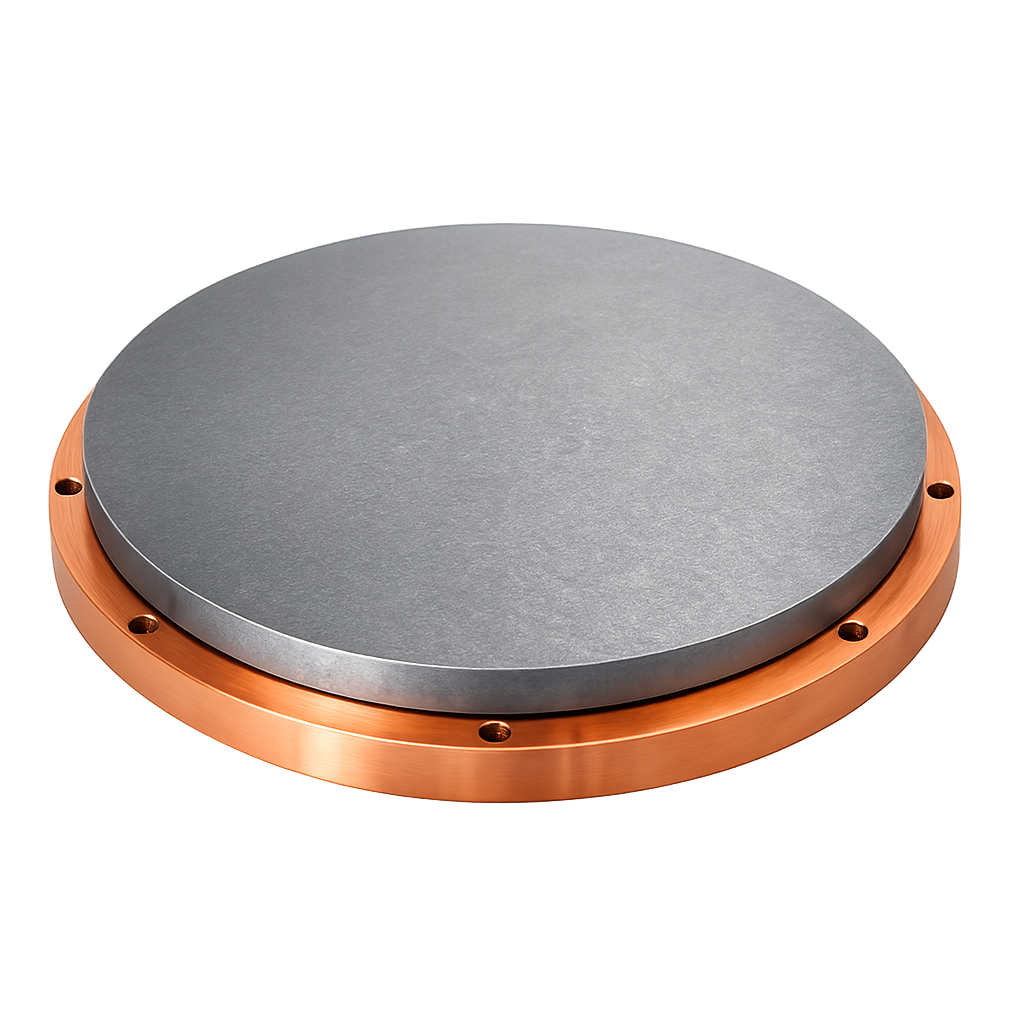
Available forms include planar sputtering targets, rotary targets, and customized bonded assemblies compatible with magnetron sputtering systems. Depending on the target size and operating power density, copper backing plates or indium bonding may be recommended to improve thermal conductivity and reduce the risk of cracking during deposition.
The material can be produced with high-density microstructures to minimize particle generation and improve deposition uniformity. Tight control over oxygen content and impurity levels is also essential for achieving high-quality magnetic thin films with stable crystal orientation.
Applications
Cobalt Samarium Sputtering Targets are commonly used in the following industries and applications:
- Magnetic thin film deposition
- High-temperature permanent magnetic coatings
- MEMS and microelectronic devices
- Spintronic and magnetic sensor research
- Aerospace magnetic components
- Data storage and recording media
- Semiconductor R&D
- Vacuum coating and PVD systems
- Precision instrumentation
- Advanced functional thin films
In research laboratories, Sm-Co thin films are often investigated for their excellent anisotropic magnetic behavior and thermal durability, especially in demanding environments where NdFeB-based materials may lose performance.
Technical Parameters
| Parameter | Typical Value / Range | Importance |
|---|---|---|
| Composition | SmCo₅, Sm₂Co₁₇, Custom Ratios | Determines magnetic performance |
| Purity | 99.9% – 99.99% | Reduces contamination during deposition |
| Density | ≥ 95% theoretical density | Improves sputtering stability |
| Diameter | 25 – 300 mm (custom) | Compatible with various sputtering systems |
| Thickness | 3 – 8 mm | Influences target lifetime |
| Backing Plate | Copper / Stainless Steel | Enhances heat dissipation |
| Bonding Method | Indium Bonded / Elastomer Bonded | Improves thermal contact |
| Surface Finish | Fine Ground / Precision Machined | Supports stable plasma conditions |
Comparison with Related Materials
| Material | Key Advantage | Typical Application |
|---|---|---|
| Cobalt Samarium | Excellent thermal stability and coercivity | High-temperature magnetic films |
| NdFeB | Extremely high magnetic strength | Consumer electronics |
| Pure Cobalt | Good conductivity and magnetism | General magnetic coatings |
| Ferrite Materials | Low cost and corrosion resistance | Low-frequency magnetic devices |
Compared with NdFeB-related thin film materials, Cobalt Samarium systems provide better resistance to thermal demagnetization and oxidation, making them preferable for vacuum, aerospace, and elevated-temperature environments.
FAQ
| Question | Answer |
|---|---|
| Can the target composition be customized? | Yes. Sm-Co ratios and dimensions can be tailored according to deposition requirements. |
| Is bonding recommended for large targets? | For larger diameters or high-power sputtering, bonded targets are generally recommended to improve heat transfer. |
| Which sputtering methods are compatible? | RF sputtering, DC magnetron sputtering, and pulsed DC systems are commonly used. |
| Are custom shapes available? | Yes. Planar, rotary, ring-shaped, and custom geometries can be manufactured. |
| What industries commonly use Sm-Co thin films? | Aerospace, semiconductor, sensor technology, MEMS, magnetic storage, and advanced research laboratories. |
Packaging
Our Cobalt Samarium Sputtering Targets are meticulously tagged and labeled externally to ensure efficient identification and maintain high standards of quality control. We take great care to prevent any potential damage during storage and transportation, ensuring the targets arrive in perfect condition.
Standard packaging includes vacuum-sealed protective wrapping, anti-static protection, foam cushioning, and export-grade cartons or wooden crates for international shipment.
Conclusion
The Cobalt Samarium Sputtering Target offers an outstanding combination of magnetic strength, thermal stability, and sputtering reliability for advanced thin film applications. Its ability to maintain stable magnetic performance under demanding operating conditions makes it an important material for next-generation electronics, aerospace systems, and precision magnetic devices.
With customizable compositions, precision machining, and reliable bonding solutions, these targets can be optimized for a wide range of deposition systems and research needs.
For detailed specifications and a quotation, please contact us at sales@thinfilmmaterials.com.
Reviews
There are no reviews yet.