
Introduction
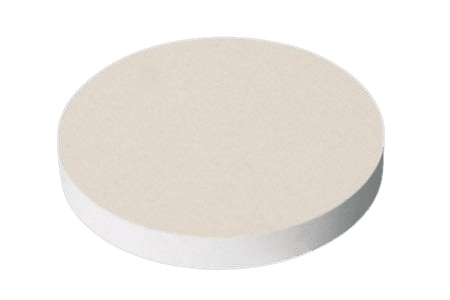
Magnesium Zinc Oxide (MgZnO) Sputtering Target is a tunable wide-bandgap oxide material widely used in optoelectronics, ultraviolet (UV) photodetectors, and transparent electronic devices. By alloying magnesium oxide (MgO) into zinc oxide (ZnO), the bandgap of the material can be precisely engineered, enabling control over optical absorption and electronic properties. MgZnO thin films are particularly attractive for UV-sensitive devices and high-performance transparent conductive structures.
Detailed Description
Our Magnesium Zinc Oxide Sputtering Targets are fabricated from high-purity ZnO and MgO powders with carefully controlled Mg incorporation levels. The magnesium content directly influences bandgap width, carrier concentration, and lattice parameters. Precise stoichiometric control ensures stable phase formation and reproducible film properties during deposition.
The targets are produced through advanced ceramic processing techniques, including homogeneous powder mixing, calcination, and high-temperature sintering to achieve high density and structural uniformity. A dense microstructure reduces particle ejection and enhances plasma stability during sputtering. Due to its ceramic oxide nature, MgZnO targets are typically deposited using RF sputtering systems, although reactive sputtering conditions may be optimized to fine-tune oxygen stoichiometry.
Targets are available in planar round, rectangular, or custom geometries and can be supplied unbonded or bonded to copper backing plates for improved thermal management in high-power deposition systems.
Applications
Magnesium Zinc Oxide Sputtering Targets are widely used in:
Ultraviolet (UV) photodetectors
Transparent electronics and optoelectronic devices
Wide-bandgap semiconductor research
Buffer layers in ZnO-based heterostructures
Transparent conducting oxide (TCO) applications
Thin film transistors and display technologies
Technical Parameters
| Parameter | Typical Value / Range | Importance |
|---|---|---|
| Chemical Composition | MgₓZn₁₋ₓO (custom x value) | Controls bandgap and conductivity |
| Purity | 99.9% – 99.99% | Minimizes defect-related optical loss |
| Diameter | 25 – 300 mm (custom available) | Compatible with sputtering cathodes |
| Thickness | 3 – 6 mm | Influences target lifetime |
| Density | ≥ 95% theoretical | Improves plasma stability |
| Sputtering Mode | RF sputtering | Required for ceramic oxides |
| Bonding | Unbonded / Cu backing (optional) | Enhances heat dissipation |
Comparison with Related Oxide Materials
| Material | Key Advantage | Typical Application |
|---|---|---|
| MgZnO | Tunable wide bandgap | UV photodetectors |
| ZnO | High transparency | Transparent electronics |
| Al-doped ZnO (AZO) | Improved conductivity | Solar cells |
| Ga₂O₃ | Ultra-wide bandgap | Power electronics |
FAQ
| Question | Answer |
|---|---|
| Can the magnesium content be customized? | Yes, the Mg fraction (x value) can be tailored to achieve desired bandgap properties. |
| Is RF sputtering required? | Yes, MgZnO is typically deposited using RF sputtering. |
| Are bonded targets available? | Yes, copper backing plates can be supplied upon request. |
| How is the target packaged? | Vacuum-sealed with protective foam and export-grade cartons or wooden crates. |
Packaging
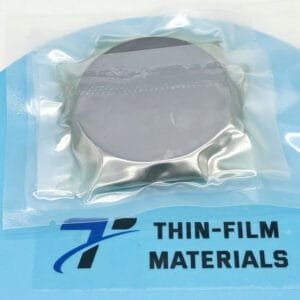
Our Magnesium Zinc Oxide Sputtering Targets are meticulously tagged and vacuum-sealed to ensure traceability and protection from moisture and contamination. Export-grade packaging safeguards the targets during storage and international transportation.
Conclusion
Magnesium Zinc Oxide (MgZnO) Sputtering Target provides a reliable solution for depositing wide-bandgap oxide thin films with tunable optical and electronic properties. With precise composition control, high density, and flexible customization options, it is well suited for UV optoelectronics, transparent devices, and advanced semiconductor research.
For detailed specifications and a quotation, please contact us at sales@thinfilmmaterials.com.


Reviews
There are no reviews yet.