
Introduction
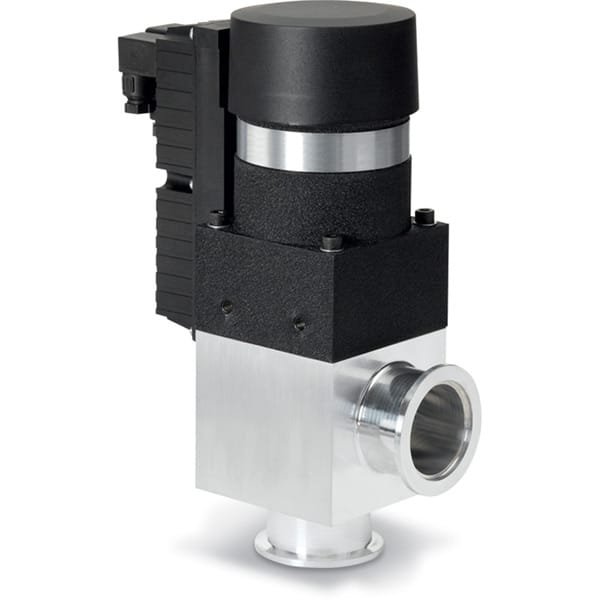
Aluminum Block Angle Valves (Electromagnetic) are compact, fast-response vacuum control components widely used in modern vacuum systems where space efficiency, lightweight construction, and rapid switching are essential. Designed with an integrated aluminum block body and electromagnetic (solenoid) actuation, these valves provide reliable isolation and flow control in high-performance deposition, analytical, and laboratory vacuum environments.
In thin film processing systems, such as sputtering and evaporation equipment, electromagnetic angle valves are frequently installed in foreline, roughing, and gas control circuits to ensure stable vacuum operation and precise timing during pump-down and vent cycles.
Detailed Description
Aluminum Block Angle Valves (Electromagnetic) combine a rigid monoblock aluminum housing with an internally controlled valve seat mechanism driven by a solenoid actuator. The angle configuration (typically 90° flow path) optimizes installation in compact system layouts while maintaining efficient gas conductance.
Key design characteristics include:
Integrated Aluminum Block Structure
The monolithic aluminum body reduces weight and minimizes potential leak points compared to multi-part assemblies. Aluminum construction also provides excellent corrosion resistance in controlled vacuum environments.Electromagnetic (Solenoid) Actuation
The valve is actuated by an electromagnetic coil that allows rapid opening and closing. This enables precise timing control for automated vacuum sequences, improving repeatability in process cycles.Compact 90° Flow Path
The angle design is ideal for systems with limited installation space. It facilitates efficient routing between vacuum chamber ports and pump lines.Fast Response Time
Solenoid operation provides quick switching, supporting applications that require frequent cycling or synchronized valve control in automated systems.Vacuum Compatibility
With appropriate sealing materials (e.g., FKM/Viton®), these valves are suitable for rough vacuum to high vacuum applications, commonly used in backing lines and auxiliary vacuum circuits.
In PVD and CVD systems, such valves are often used to isolate backing pumps, control purge gas lines, or manage venting operations. Their lightweight structure is especially advantageous in modular or compact deposition tools.
Applications
Aluminum Block Angle Valves (Electromagnetic) are widely applied in:
Thin film deposition systems (PVD, sputtering, evaporation)
Semiconductor processing tools
Analytical instruments (mass spectrometry, surface analysis)
Laboratory vacuum systems
Leak detection systems
Vacuum furnaces and coating chambers
Gas control and purge lines
Compact research vacuum platforms
Their fast actuation makes them particularly suitable for automated pump-down sequences and protective interlock systems.
Technical Parameters
| Parameter | Typical Value / Range | Importance |
|---|---|---|
| Body Material | Aluminum Alloy | Lightweight & corrosion-resistant |
| Nominal Diameter | DN16 – DN50 (custom available) | Matches vacuum line requirements |
| Actuation Type | Electromagnetic (Solenoid) | Enables fast, automated control |
| Operating Pressure | Atmosphere to 10⁻⁶ mbar (typical) | Suitable for rough & high vacuum |
| Leak Rate | ≤ 1 × 10⁻⁹ mbar·L/s | Ensures system integrity |
| Seal Material | FKM (Viton®) / Optional alternatives | Determines chemical & temperature resistance |
| Response Time | Millisecond-level switching | Supports rapid cycling |
Comparison with Related Valve Types
| Valve Type | Key Advantage | Typical Application |
|---|---|---|
| Aluminum Block Angle Valve (Electromagnetic) | Lightweight & fast switching | Compact vacuum systems |
| Stainless Steel Angle Valve | Higher mechanical strength | Heavy-duty vacuum systems |
| Pneumatic Angle Valve | Stronger actuation force | Large-diameter vacuum lines |
| Gate Valve | Full-bore isolation | Main chamber isolation |
Compared with pneumatic versions, electromagnetic aluminum block angle valves are generally more compact and easier to integrate into electrically controlled systems, making them ideal for smaller vacuum platforms and automated lab equipment.
FAQ
| Question | Answer |
|---|---|
| Can the valve be customized for different flange standards? | Yes, KF, ISO, and other connection types can be provided upon request. |
| Is it suitable for high-cycle applications? | Yes, electromagnetic actuation supports frequent switching in automated systems. |
| What industries use it most? | Semiconductor manufacturing, research labs, thin film coating, and analytical instrumentation. |
| Can it handle corrosive gases? | With appropriate seal selection, it can be adapted for compatible process gases. |
| Is voltage customizable? | Yes, common coil voltages (e.g., 24V DC, 110V/220V AC) are available. |
Packaging
Our Aluminum Block Angle Valves (Electromagnetic) are meticulously tagged and labeled externally to ensure efficient identification and maintain high standards of quality control. We take great care to prevent any potential damage during storage and transportation, ensuring the valves arrive in perfect condition.
Conclusion
Aluminum Block Angle Valves (Electromagnetic) provide a compact, lightweight, and fast-acting solution for vacuum flow control and system isolation. Their monoblock construction, reliable sealing, and rapid electromagnetic response make them highly suitable for thin film deposition systems, laboratory vacuum platforms, and automated processing tools.
For detailed specifications and a quotation, please contact us at sales@thinfilmmaterials.com.
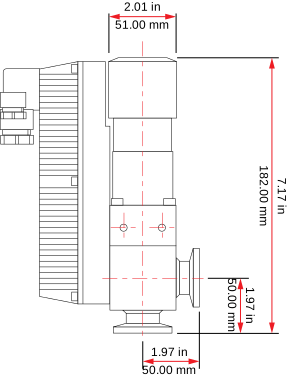
Ordering Table
| Drawing | Flange Size | Bonnet Seal Type | Voltage | Part Number |

| KF16 (1.18" OD) | Fluorocarbon (FKM) | 110/120VAC | C41203000 |
| KF25 (1.57" OD) | Fluorocarbon (FKM) | 220/240VAC | C41301000 |

| KF25 (1.57" OD) | Fluorocarbon (FKM) | 110/120VAC | C41303000 |

| KF40 (2.16" OD) | Fluorocarbon (FKM) | 220/240VAC | C41401000 |

| KF40 (2.16" OD) | Fluorocarbon (FKM) | 110/120VAC | C41403000 |

Reviews
There are no reviews yet.