

Introduction
Aluminum Gaskets for ConFlat (CF) UHV Flanges are precision sealing components designed for metal-to-metal vacuum joints in high-vacuum (HV) and selected ultra-high-vacuum (UHV) systems. As an alternative to copper gaskets, aluminum gaskets are preferred in applications where lower sealing force, reduced flange wear, or material compatibility is required.
Detailed Description
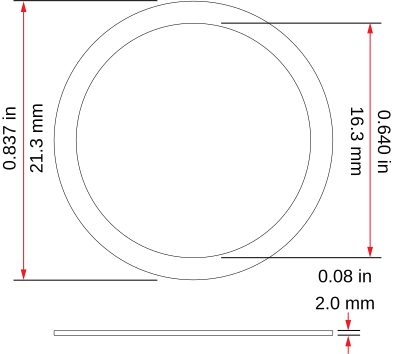
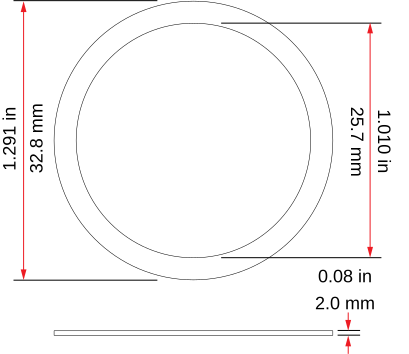
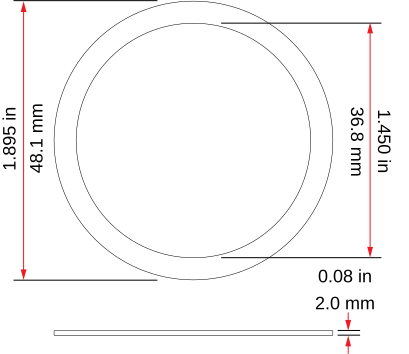
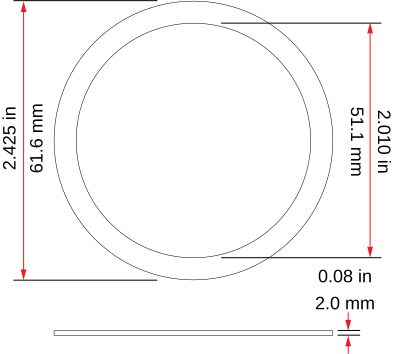
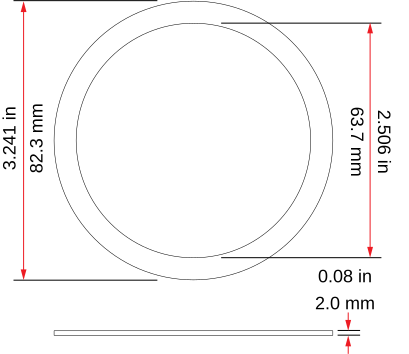
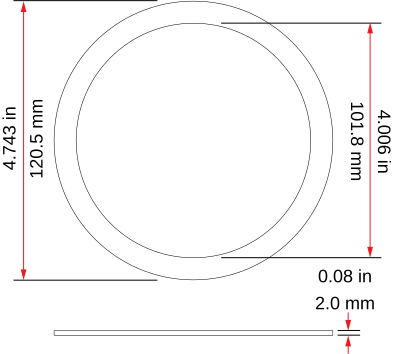
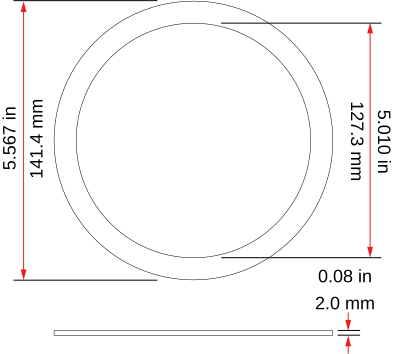
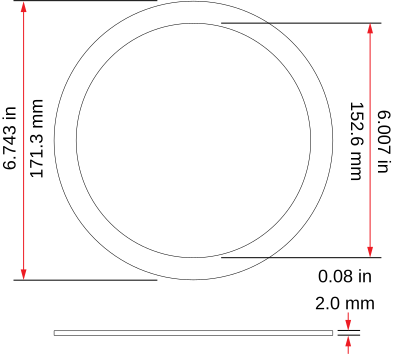
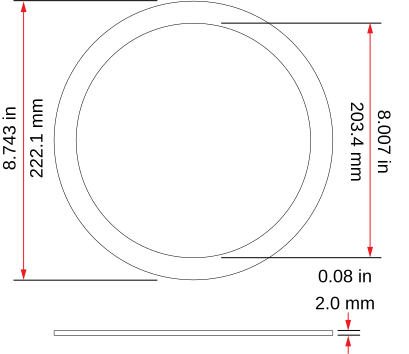
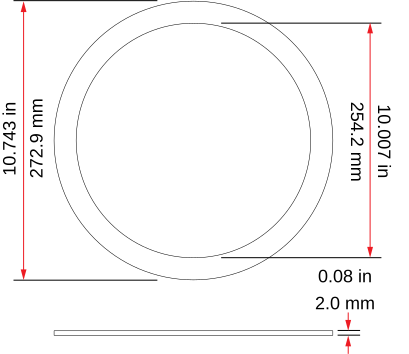
Aluminum CF gaskets are manufactured with tightly controlled dimensions to match standard ConFlat knife-edge geometries. During assembly, the knife edges plastically deform the aluminum gasket, creating a clean, reliable metal seal without elastomers. Compared with copper, aluminum’s lower hardness allows sealing at reduced bolt torque, which can be beneficial for delicate assemblies or frequent cycling.
These gaskets are typically produced from high-purity aluminum to minimize outgassing and ensure consistent deformation behavior. They are single-use components, ensuring repeatable sealing performance and minimizing the risk of virtual leaks caused by work-hardening or surface memory.
Key features include:
Reliable metal-to-metal sealing for CF flanges
Lower required sealing force compared with copper
Reduced knife-edge wear on stainless steel flanges
Clean, elastomer-free construction for vacuum use
Applications
High-vacuum and selected UHV vacuum systems
Research chambers and analytical instruments
Semiconductor and thin film deposition equipment
Systems requiring frequent flange cycling
Applications where copper contamination must be avoided
Technical Parameters
| Parameter | Typical Value / Range | Importance |
|---|---|---|
| Material | High-purity Aluminum | Consistent deformation, low outgassing |
| CF Sizes | DN16CF – DN250CF (custom available) | Matches standard CF flanges |
| Sealing Type | Knife-edge metal seal | Elastomer-free vacuum integrity |
| Single Use | Yes | Ensures repeatable sealing |
| Bakeout Capability | Lower than copper (application-dependent) | Defines thermal limit |
| Typical Leak Rate | ≤ 1×10⁻¹⁰ mbar·L/s | Suitable for HV/UHV use |
Comparison with Copper CF Gaskets
| Gasket Material | Key Advantage | Typical Use |
|---|---|---|
| Aluminum CF Gasket | Lower sealing force, less flange wear | Frequent cycling, sensitive flanges |
| Copper CF Gasket | Higher bakeout temperature | Standard UHV systems |
| Silver-Plated Copper | Improved reusability | Specialized UHV applications |
FAQ
| Question | Answer |
|---|---|
| Are aluminum CF gaskets reusable? | No, like copper gaskets, they are designed for single use. |
| Can aluminum gaskets be used for UHV? | Yes, for many UHV applications, within temperature limits. |
| Do they reduce damage to knife edges? | Yes, aluminum is softer than copper and reduces flange wear. |
| Are custom sizes available? | Yes, non-standard CF sizes can be supplied upon request. |
| How are they supplied? | Cleaned and packed to prevent contamination. |
Packaging
Our Aluminum Gaskets for ConFlat (CF) UHV Flanges are individually cleaned, counted, and packaged in sealed bags to maintain surface cleanliness. Bulk and small-quantity packaging options are available to support laboratory and production needs.
Conclusion
Aluminum Gaskets for ConFlat (CF) UHV Flanges provide a reliable, low-force sealing solution for metal vacuum joints where reduced flange wear and clean performance are priorities. With precise machining, consistent quality, and full compatibility with CF standards, they are a practical alternative to copper gaskets in many HV and UHV systems.
For detailed specifications and a quotation, please contact us at sales@thinfilmmaterials.com.

Reviews
There are no reviews yet.