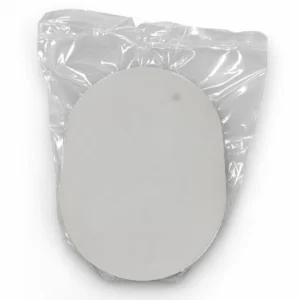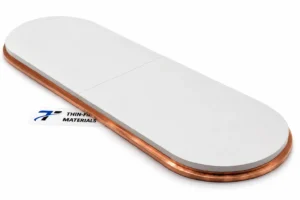
A 12 × 9 in one-piece ceramic, indium-bonded to a customer-supplied copper backing plate.
TFM manufactured a monolithic niobium pentoxide (Nb₂O₅) sputtering target with a racetrack outline and a continuous ceramic working face. The nominal footprint was 304.8 × 228.6 mm, with a ceramic thickness of 3.175 mm and a specified purity of 99.99% (4N). The specified thickness of the complete bonded assembly was 6 mm.
The challenge was keeping a broad, thin ceramic intact through forming, firing, finishing, and handling, then fitting it to the customer’s backing plate within the available assembly height. For a similar order, the drawing and inspection plan need to address those constraints together.


Project specifications
| Item | Project requirement or reported status |
|---|---|
| Material | Niobium pentoxide (Nb₂O₅) |
| Specified purity | 99.99% (4N) |
| Nominal overall dimensions | 12 × 9 in (304.8 × 228.6 mm) |
| External geometry | Racetrack / oblong |
| Ceramic construction | One-piece monolithic body; no internal segment joints |
| Ceramic thickness | 3.175 mm |
| Backing plate | Customer-supplied copper |
| Bonding method | Indium bonding |
| Total bonded assembly thickness | 6 mm |
| Reported result | Manufactured; bonded assembly inspected satisfactorily |
Here, “racetrack” describes the target’s external outline: straight sides joined by rounded ends. It does not describe the magnetron erosion track, which depends on the sputtering source and magnetic design. Overall length and width alone do not define the part; end radii, perimeter details, and mounting interfaces belong on the approved drawing. The sputtering target drawing checklist covers the dimensions and interfaces needed for an RFQ.
Manufacturing considerations for a broad, thin ceramic
A one-piece body keeps the working face free of segment joints. It also means that a crack or excessive distortion can affect the entire ceramic. The project summary does not disclose forming parameters or a firing schedule.
Green-body consistency and shrinkage
Before sintering, the consolidated powder forms a green body. A uniform-looking outline does not establish uniform packing inside it. Differences in local density can produce different shrinkage during firing, making dimensional control harder across a large part.
Lu and Lannutti’s study of density gradients in spray-dried alumina compacts links initial density gradients to losses in final dimensional tolerance. That research supports the general concern about green-body uniformity; it does not establish a shrinkage allowance or processing window for this Nb₂O₅ target.
Firing, support, and phase requirements
The straight sides and rounded ends remain mechanically connected as the body shrinks. Differences in packing, temperature, or support can therefore influence the finished shape. Temperature differences during cooling can also introduce thermal stress. Support and thermal processing therefore need to be considered when setting dimensional tolerances.
Nb₂O₅ has multiple crystalline forms. Hidde, Guguschev, and Klimm’s thermal-analysis and crystal-growth study examines phase relationships using thermal analysis and X-ray powder diffraction. If phase composition is an acceptance requirement, specify the XRD method and sampling basis. A photograph or the ceramic’s color cannot establish phase composition.
Finishing and handling
For a ceramic only 3.175 mm thick across this footprint, support matters during transfer and finishing. Uneven lifting or restraint can introduce bending loads before the backing plate is attached.
Thickness, flatness, perimeter accuracy, and edge condition need separate acceptance criteria. A part can have consistent thickness and still be bowed. Likewise, a smooth-looking photograph does not demonstrate a flatness tolerance. Edge chips also deserve attention because local damage can concentrate stress during handling.
Monolithic or segmented: what changes?
A segmented design allows smaller ceramic sections to be processed separately and positioned on a common backing plate. The assembly then needs controls for joint width, edge fit, and segment alignment. A monolithic design removes those internal joints but requires the full-size ceramic to survive the manufacturing sequence.
| Consideration | Monolithic target | Segmented target |
|---|---|---|
| Working face | Continuous ceramic without internal joints | Multiple sections with defined gaps or joints |
| Ceramic processing | One full-size body | Each segment processed separately |
| Manufacturing concerns | Whole-body distortion or fracture | Segment fit and assembly alignment |
| Backing assembly | One broad ceramic-to-backing interface | Multiple ceramic placement interfaces |
Neither construction alone guarantees film uniformity, target life, or sputtering performance. For a separate example of joint design, see TFM’s segmented Li₃PO₄ target case study. Its material and geometry differ from this Nb₂O₅ project.
Indium bonding and the 6 mm assembly height
TFM indium-bonded this ceramic to a customer-supplied copper backing plate. The plate supports the ceramic and provides a thermal path toward the cooled cathode. Indium can provide a compliant thermal interface between materials with different thermal expansion, as described in SCI Engineered Materials’ explanation of planar indium bonding. Bond suitability still depends on the mating surfaces, contact, bond layer, and intended operating conditions.
The two thickness values in this case refer to different things: 3.175 mm is the ceramic thickness; 6 mm is the specified total for ceramic, bond, and copper backing together. Those figures do not separately establish the copper thickness or bond-layer thickness.
Review the supplied plate’s drawing, mounting features, surface condition, and available height before bonding. If a plate is being reused, residual bonding material and distortion also need assessment. The backing plate selection guide and target bonding and backing plate service page help organize that review.
Inspection and the completed assembly
The project summary records manufacture and satisfactory inspection of the bonded assembly. It does not publish individual measurements, assay results, or inspection methods. The table below is a scope to agree for a comparable order, not a list of tests claimed for this project.
| Requirement | Record or acceptance basis to request |
|---|---|
| Chemical purity | Batch-linked certificate of analysis or an agreed assay supporting the specified purity |
| Phase composition, if required | XRD results with an agreed method and sampling basis |
| Density or porosity, if required | Result, measurement method, and reference density where applicable |
| Ceramic geometry | Approved outline, thickness, flatness, and edge criteria |
| Bonded assembly | Overall thickness and the agreed bond-inspection scope |
Chemical assay and XRD answer different questions. A purity specification does not establish phase composition, and neither density nor porosity can be read from a product photograph. If comparing suppliers, use the same reporting basis; the guide to comparing target density results explains why the method and reference value matter.
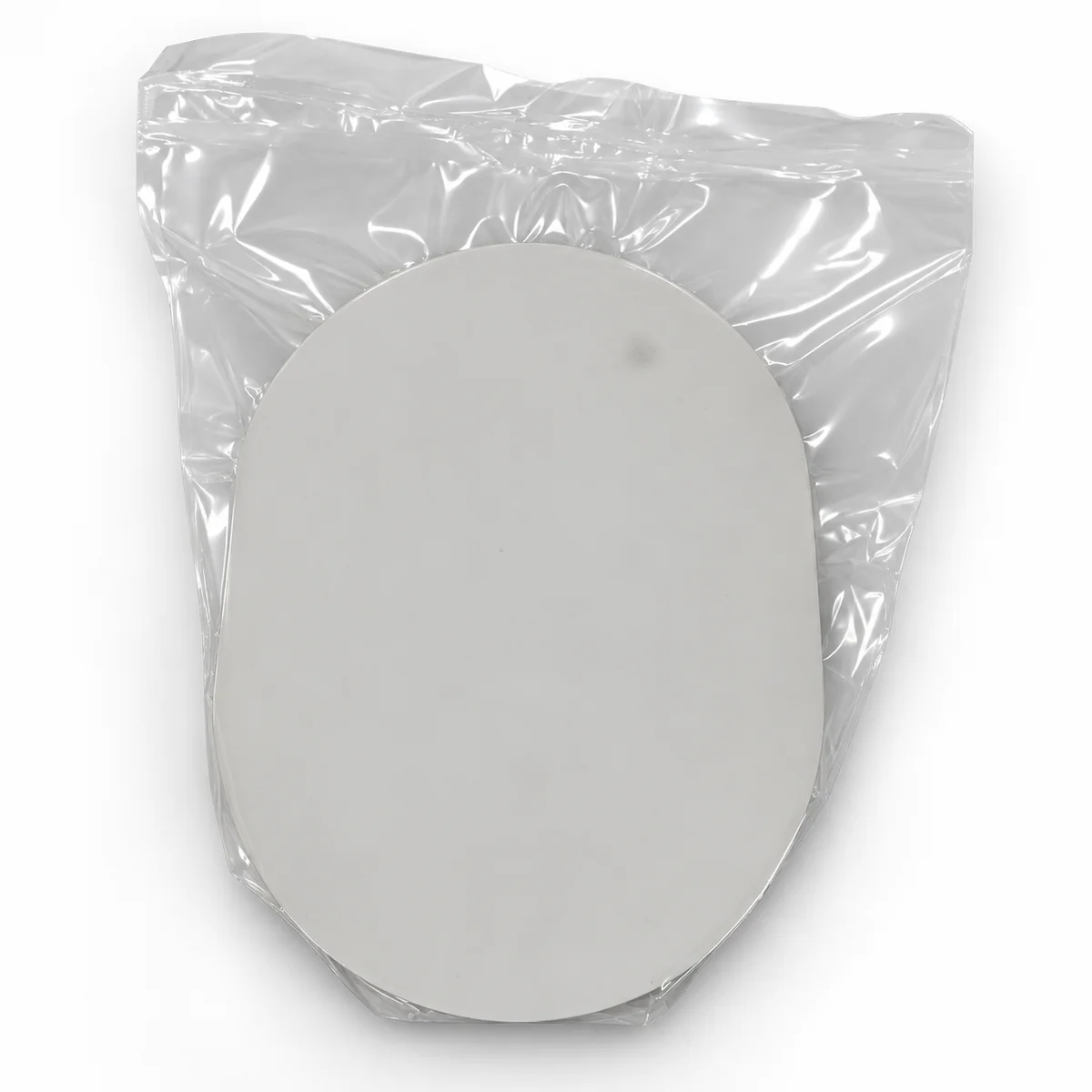
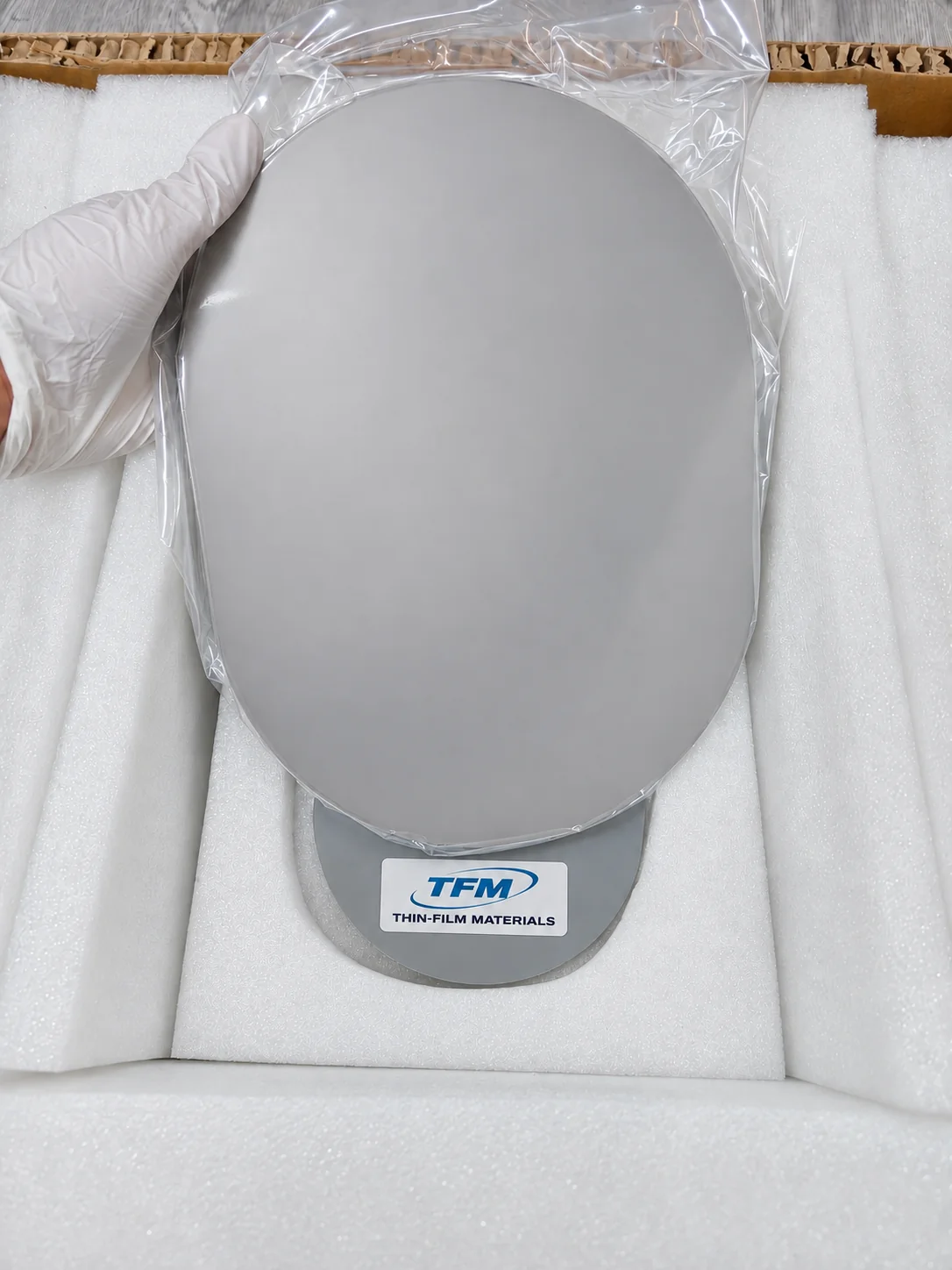
The completed part has the nominal 304.8 × 228.6 mm outline in one ceramic, bonded to the supplied plate. This case does not report an in-cathode service trial or thin-film qualification. A different outline, thickness, or installation requires its own review.
Project questions
Can a large Nb₂O₅ racetrack target be made in one piece?
This project demonstrates a one-piece target at the dimensions listed above. It does not establish a general maximum size. Feasibility for another part depends on its drawing, thickness, tolerances, and backing arrangement.
When should a segmented construction be considered?
Consider segmentation when processing or handling the full-size ceramic presents an unacceptable manufacturing risk. The design review must then address joint geometry, segment placement, and compatibility with the intended source.
Can TFM bond a target to a customer-supplied backing plate?
TFM did so in this project using indium and a copper plate. For another order, provide the plate drawing and condition, mounting details, intended bonding method, and permitted assembly height for review.
Which inspection records should be included in the order?
Agree on the certificate of analysis, dimensional report, and any required phase, density, or bond-inspection records before manufacture. Specify methods and acceptance criteria alongside the requested results.
Request a review of your Nb₂O₅ target drawing
For a similar target, send the material and specified purity, quantity, ceramic outline and end radii, ceramic thickness, backing plate drawing, bonding requirements, and maximum installed height. Include the tolerances and inspection records that determine acceptance.
Start with the Nb₂O₅ sputtering target product page, or send your drawing for an engineering and quotation review. Confidential drawings can be exchanged directly with sales@thinfilmmaterials.com.