

Introduction
Aluminum Chromium (Al/Cr) sputtering targets are widely used for depositing high-performance thin films that require a balance of corrosion resistance, hardness, and thermal stability. By combining aluminum’s lightweight and oxidation resistance with chromium’s strength and wear resistance, Al/Cr alloys are particularly valuable in protective coatings, decorative finishes, and functional thin films across industrial and research applications.
Detailed Description
Aluminum Chromium sputtering targets are engineered as alloy or composite materials with controlled Al/Cr ratios to tailor film properties such as hardness, conductivity, and oxidation resistance. These targets are typically manufactured using vacuum melting, powder metallurgy, or hot isostatic pressing (HIP) to achieve high density and compositional uniformity.
Aluminum contributes excellent oxidation resistance by forming a stable oxide layer, which improves durability in harsh environments. Chromium enhances hardness, wear resistance, and corrosion resistance, making the resulting films suitable for demanding mechanical and chemical conditions. The synergy between these elements enables the deposition of coatings with improved adhesion and long-term stability.
Depending on application requirements, Al/Cr sputtering targets can be supplied as planar or rotatable targets. For high-power sputtering systems, bonding to copper backing plates via indium or elastomer bonding is commonly used to improve heat dissipation and prevent thermal stress.
Key features include:
Tunable Al/Cr composition for customized coating performance
High density and homogeneous microstructure for stable sputtering
Excellent oxidation and corrosion resistance
Enhanced hardness and wear resistance in deposited films
Compatibility with reactive sputtering (e.g., forming AlCrN coatings)
Applications
Aluminum Chromium sputtering targets are widely used in:
Hard coatings such as AlCrN for cutting tools and molds
Protective coatings for aerospace and automotive components
Decorative coatings with improved durability
Semiconductor and electronic thin films
Optical coatings requiring stable performance
Wear-resistant and corrosion-resistant industrial coatings
Technical Parameters
| Parameter | Typical Value / Range | Importance |
|---|---|---|
| Composition | Al/Cr (custom ratios) | Determines coating hardness & resistance |
| Purity | 99.9% – 99.99% | Reduces contamination |
| Density | ≥ 99% theoretical | Ensures stable sputtering |
| Diameter | 25 – 300 mm (custom) | Fits sputtering systems |
| Thickness | 3 – 8 mm | Influences lifetime |
| Bonding | Copper backing (In / elastomer) | Improves thermal conductivity |
| Process Compatibility | DC / RF / Reactive sputtering | Enables AlCrN and similar coatings |
Comparison with Related Materials
| Material | Key Advantage | Typical Application |
|---|---|---|
| Aluminum Chromium (Al/Cr) | Balanced hardness & oxidation resistance | Hard coatings (AlCrN) |
| Aluminum (Al) | Lightweight, good conductivity | General coatings |
| Chromium (Cr) | High hardness, corrosion resistance | Wear-resistant coatings |
| Titanium Aluminum (Ti/Al) | High-temperature performance | Aerospace coatings |
FAQ
| Question | Answer |
|---|---|
| Can the Al/Cr ratio be customized? | Yes, compositions can be tailored based on coating performance requirements. |
| Is this target suitable for reactive sputtering? | Yes, it is commonly used to produce AlCrN and similar coatings in nitrogen atmospheres. |
| What bonding options are available? | Indium bonding and elastomer bonding with copper backing plates are typical options. |
| Which industries use Al/Cr targets most? | Tooling, automotive, aerospace, and electronics industries. |
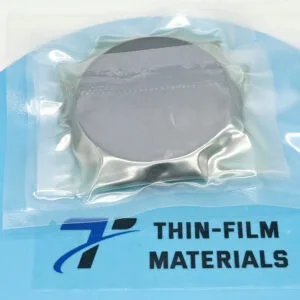
| How are the targets packaged? | Vacuum-sealed with protective materials to prevent oxidation and damage. |
Packaging
Our Aluminum Chromium Sputtering Targets are meticulously tagged and labeled externally to ensure efficient identification and maintain high standards of quality control. We take great care to prevent any potential damage during storage and transportation, ensuring the targets arrive in perfect condition.
Conclusion
Aluminum Chromium sputtering targets offer a robust solution for depositing durable, high-performance coatings with excellent resistance to wear, oxidation, and corrosion. With flexible composition design and reliable manufacturing quality, they are ideal for both industrial coating applications and advanced research.
For detailed specifications and a quotation, please contact us at sales@thinfilmmaterials.com.


Reviews
There are no reviews yet.