

Introduction
Calcium Ruthenate (CaRuO₃) Sputtering Target is a conductive perovskite oxide material widely used in advanced oxide electronics and functional thin film research. As a member of the ABO₃ perovskite family, CaRuO₃ exhibits metallic conductivity, strong structural compatibility with other perovskite oxides, and excellent chemical stability.
CaRuO₃ sputtering targets are particularly valuable as bottom electrodes, buffer layers, and conductive oxide components in complex oxide heterostructures, ferroelectric devices, and spintronic systems. Their structural and electronic compatibility with oxide materials makes them a preferred choice in epitaxial thin film growth.
Detailed Description
Calcium Ruthenate (CaRuO₃) crystallizes in an orthorhombic perovskite structure and is known for its metallic-like electrical conductivity and paramagnetic behavior. Unlike many oxide materials, CaRuO₃ maintains relatively low resistivity while preserving structural stability under high-temperature deposition conditions.
High-quality CaRuO₃ sputtering targets are typically fabricated through solid-state reaction or advanced ceramic processing routes, followed by hot pressing or sintering to achieve high density (≥ 95–99% of theoretical density). Proper phase control is critical to ensure single-phase perovskite structure and prevent secondary oxide formation.
Key material characteristics include:
Metallic conductivity among perovskite oxides
Strong lattice matching with SrTiO₃, LaAlO₃, and other perovskite substrates
Chemical stability in oxygen-rich deposition environments
Excellent compatibility as an electrode layer
Due to its ceramic and oxide nature, CaRuO₃ is commonly sputtered using RF magnetron sputtering or pulsed DC sputtering in oxygen or mixed Ar/O₂ atmospheres. Precise oxygen partial pressure control during deposition is essential to preserve stoichiometry and optimize film conductivity.
Available target configurations include:
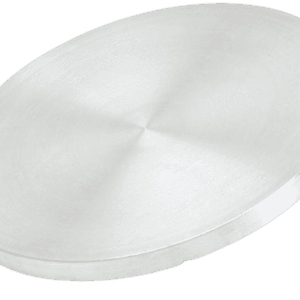
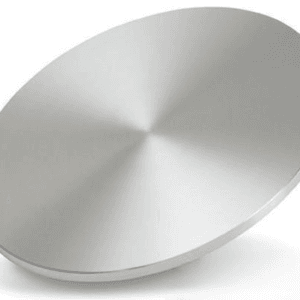
Planar round targets (1″–6″ and larger custom sizes)
Rectangular targets for large-area coating systems
Bonded configurations for enhanced thermal management (when required)
Applications
Calcium Ruthenate sputtering targets are widely used in:
Oxide Electronics – Conductive oxide electrodes
Ferroelectric Devices – Bottom electrodes for PZT and related films
Spintronics Research – Functional oxide heterostructures
Superconducting & Quantum Materials Research – Perovskite thin film studies
MEMS & Microelectronics – Stable conductive oxide layers
Thin Film Capacitors – High-performance electrode materials
CaRuO₃ is especially attractive in epitaxial growth systems where lattice compatibility and chemical stability are crucial.
Technical Parameters
| Parameter | Typical Value / Range | Importance |
|---|---|---|
| Purity | ≥ 99.9% (oxide basis typical) | Ensures phase purity and stable electrical behavior |
| Phase Structure | Single-phase Perovskite | Critical for predictable film properties |
| Density | ≥ 95–99% of theoretical | Reduces arcing and ensures stable sputtering |
| Diameter | 25 – 150 mm (custom available) | Compatible with sputtering systems |
| Thickness | 3 – 6 mm (typical) | Influences target lifetime |
| Sputtering Method | RF / Pulsed DC | Suitable for oxide ceramic targets |
Comparison with Related Materials
| Material | Key Advantage | Typical Application |
|---|---|---|
| CaRuO₃ | Conductive perovskite with strong lattice matching | Oxide electrodes |
| SrRuO₃ | Ferromagnetic perovskite conductor | Spintronic devices |
| LaNiO₃ | Metallic oxide with high conductivity | Transparent electrodes |
| IrO₂ | Excellent chemical stability | Electrochemical electrodes |
Compared to SrRuO₃, CaRuO₃ offers paramagnetic behavior and distinct electronic properties, making it suitable for specific oxide heterostructure designs.
FAQ
| Question | Answer |
|---|---|
| Can the CaRuO₃ composition be customized? | Yes, slight stoichiometric adjustments and dimensions can be tailored based on deposition requirements. |
| Is RF sputtering required? | Yes, RF magnetron sputtering is typically used for oxide ceramic targets. |
| Does oxygen flow need to be controlled? | Yes, maintaining appropriate oxygen partial pressure is essential to ensure film stoichiometry and conductivity. |
| What substrates are compatible? | SrTiO₃, LaAlO₃, NdGaO₃, and other perovskite-type substrates. |
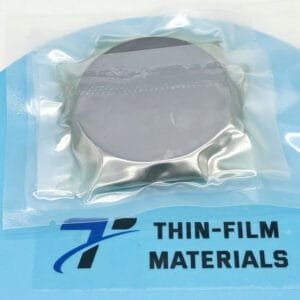
| How is the target packaged? | Vacuum-sealed packaging with protective cushioning and export-grade cartons or wooden crates. |
Packaging
Our Calcium Ruthenate Sputtering Targets are meticulously tagged and labeled externally to ensure efficient identification and maintain high standards of quality control. We take great care to prevent any potential damage during storage and transportation, ensuring the targets arrive in perfect condition.
Conclusion
Calcium Ruthenate (CaRuO₃) Sputtering Targets provide a reliable and structurally compatible solution for conductive oxide thin film deposition. With high phase purity, dense microstructure, and excellent lattice matching characteristics, CaRuO₃ supports advanced research and industrial applications in oxide electronics and functional materials.
For detailed specifications and a quotation, please contact us at sales@thinfilmmaterials.com.
Reviews
There are no reviews yet.