
Introduction
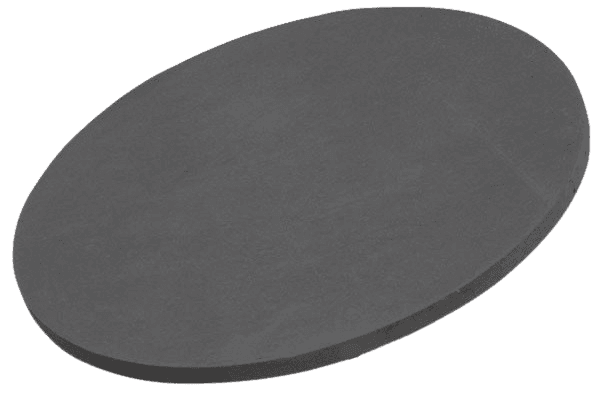
Barium Ruthenium Oxide Sputtering Target (BaRuO₃) is a functional perovskite oxide material widely used in advanced thin-film research and electronic device fabrication. Known for its unique combination of metallic conductivity and oxide stability, BaRuO₃ is an important material for conductive oxide layers, epitaxial film growth, and oxide electronics. Its compatibility with complex oxide heterostructures makes it particularly valuable in cutting-edge R&D and next-generation electronic systems.
Detailed Description
BaRuO₃ sputtering targets are fabricated from high-purity precursor powders with carefully controlled stoichiometry to ensure a stable Ba:Ru:O ratio. Through optimized ceramic processing—including calcination, pressing, and high-temperature sintering—the targets achieve high density, low porosity, and uniform microstructure. These characteristics are essential for maintaining compositional consistency during sputtering and minimizing particle generation.
As a conductive oxide, BaRuO₃ offers advantages over many insulating perovskite oxides by enabling more stable plasma conditions and higher deposition efficiency. Depending on system configuration, BaRuO₃ targets can be used in RF sputtering or pulsed DC sputtering processes. Deposited BaRuO₃ thin films exhibit good electrical conductivity, thermal stability, and strong lattice compatibility with common oxide substrates such as SrTiO₃ and LaAlO₃.
These properties make BaRuO₃ an attractive choice for bottom electrodes, conductive buffer layers, and functional oxide stacks where both electrical performance and chemical robustness are required.
Applications
Barium Ruthenium Oxide sputtering targets are commonly used in:
Oxide electronics: Conductive layers in complex oxide devices
Thin-film electrodes: Bottom electrodes for ferroelectric and dielectric films
Perovskite heterostructures: Epitaxial growth and interface engineering
Resistive switching devices: RRAM and neuromorphic research
Spintronics & functional oxides: Advanced physics and materials research
Academic & industrial R&D: Exploration of correlated electron systems
Technical Parameters
| Parameter | Typical Value / Range | Importance |
|---|---|---|
| Chemical Composition | BaRuO₃ | Defines electrical and structural behavior |
| Crystal Structure | Perovskite-type oxide | Enables epitaxial film growth |
| Purity | 99.9% – 99.99% | Reduces defects and impurities |
| Stoichiometry | Ba:Ru:O precisely controlled | Ensures film consistency |
| Diameter | 25 – 200 mm (custom) | Compatible with sputtering cathodes |
| Thickness | 3 – 6 mm (typical) | Influences target lifetime |
| Density | ≥ 95% of theoretical | Supports stable sputtering |
| Bonding | Indium / Elastomer / Direct | Improves thermal and mechanical stability |
Comparison with Related Conductive Oxides
| Material | Key Advantage | Typical Application |
|---|---|---|
| BaRuO₃ | Metallic conductivity with oxide stability | Electrodes & oxide electronics |
| SrRuO₃ | Excellent epitaxy, widely studied | Ferroelectric electrodes |
| RuO₂ | Very high conductivity | Electrodes, resistors |
| LaNiO₃ | Good lattice match | Buffer and electrode layers |
FAQ
| Question | Answer |
|---|---|
| Can BaRuO₃ sputtering targets be customized? | Yes, size, purity, density, and bonding can be tailored. |
| Which sputtering method is recommended? | RF or pulsed DC sputtering is commonly used. |
| Is BaRuO₃ suitable for epitaxial growth? | Yes, it is frequently used in epitaxial oxide film research. |
| How is the target packaged? | Vacuum-sealed with protective cushioning for safe transport. |
Packaging
Our Barium Ruthenium Oxide Sputtering Targets (BaRuO₃) are carefully labeled for traceability and packaged using vacuum sealing and reinforced protective materials. This ensures cleanliness, compositional integrity, and protection against moisture or mechanical damage during storage and international shipment.
Conclusion
Barium Ruthenium Oxide Sputtering Target (BaRuO₃) is a high-value material for conductive oxide thin films and advanced perovskite-based devices. With reliable sputtering performance, precise stoichiometric control, and flexible customization options, BaRuO₃ targets support both fundamental research and advanced electronic applications.
For detailed specifications and a quotation, please contact us at sales@thinfilmmaterials.com.
Reviews
There are no reviews yet.