Introduction
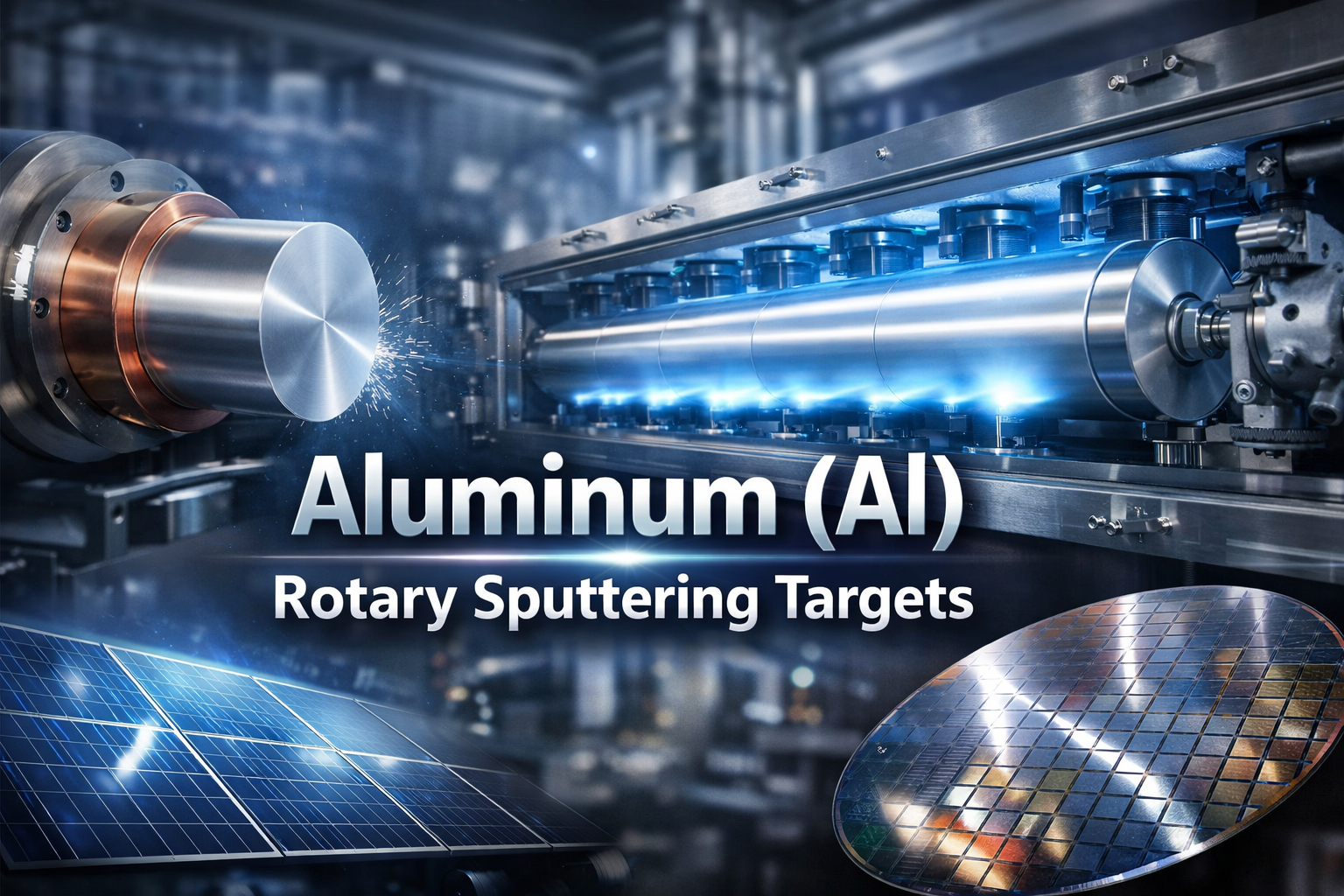
Aluminum (Al) rotary sputtering targets are a core consumable in large-area and high-throughput physical vapor deposition (PVD) systems. Compared with planar targets, rotary (also called rotatable or cylindrical) sputtering targets enable significantly higher material utilization, longer service life, and more stable deposition over extended production cycles. Aluminum, as a sputtering material, offers an exceptional balance of electrical conductivity, reflectivity, corrosion resistance, adhesion, and cost efficiency.
As a result, Aluminum rotary sputtering targets are widely adopted across industries ranging from architectural glass and flat-panel displays to photovoltaics, packaging, automotive coatings, and emerging energy devices. This article provides an in-depth, application-driven analysis of where and why Aluminum rotary sputtering targets are used, focusing on real industrial scenarios rather than generic descriptions.
1. Architectural and Automotive Glass Coatings
1.1 Low-Emissivity (Low-E) Glass Systems
One of the most established application scenarios for Aluminum rotary sputtering targets is architectural Low-E glass coating. In magnetron sputtering lines for large glass panels, aluminum layers are typically deposited as:
- Functional metallic layers
- Protective or barrier layers
- Adhesion or transition layers in multilayer stacks
In Low-E systems, Aluminum films are often used in combination with silver (Ag), zinc oxide (ZnO), tin oxide (SnO₂), or silicon nitride (Si₃N₄). Aluminum’s role is not always to provide infrared reflection directly, but rather to stabilize interfaces, improve adhesion between oxide layers, and control optical properties such as visible light transmission and reflectance.
Why rotary Al targets are preferred in glass coating lines:
- Continuous 24/7 operation demands long target lifetime
- Uniform coating across glass widths exceeding 3–4 meters
- Stable plasma behavior over thousands of square meters
Rotary Aluminum targets bonded to copper or stainless steel backing tubes provide efficient heat dissipation, reducing target cracking and enabling higher power densities.
1.2 Automotive Glass and Heated Windshields
In automotive glazing, aluminum thin films are used in:
- Heated windshield circuits
- Electromagnetic shielding layers
- Decorative or reflective coatings
Aluminum offers predictable resistivity, allowing precise control of heating performance in defrosting and de-icing applications. Rotary sputtering enables the continuous coating of curved or large automotive glass panels with consistent film thickness.
2. Flat Panel Displays (FPD) and Touch Panels
2.1 Thin Film Transistor (TFT) Backplanes
In TFT-LCD and OLED manufacturing, aluminum and aluminum-based alloys are commonly used for:
- Gate electrodes
- Data lines
- Reflective layers in specific pixel architectures
Although alloyed targets such as Al-Nd or Al-Cu are also widely used, pure Aluminum rotary sputtering targets remain essential in many production steps, especially where low resistivity and high reflectivity are required.
Rotary sputtering targets are increasingly favored in Gen-8 and Gen-10 display fabs due to:
- Large substrate sizes
- Reduced downtime for target replacement
- Lower particle generation compared to planar targets
2.2 Touch Panels and Transparent Conductive Structures
In capacitive touch panels, aluminum thin films are sometimes used as auxiliary conductive layers or bus lines. While transparent conductive oxides dominate sensing layers, aluminum remains important for peripheral circuits where transparency is less critical but conductivity and process stability are paramount.
3. Photovoltaic and Energy Devices
3.1 Thin-Film Solar Cells
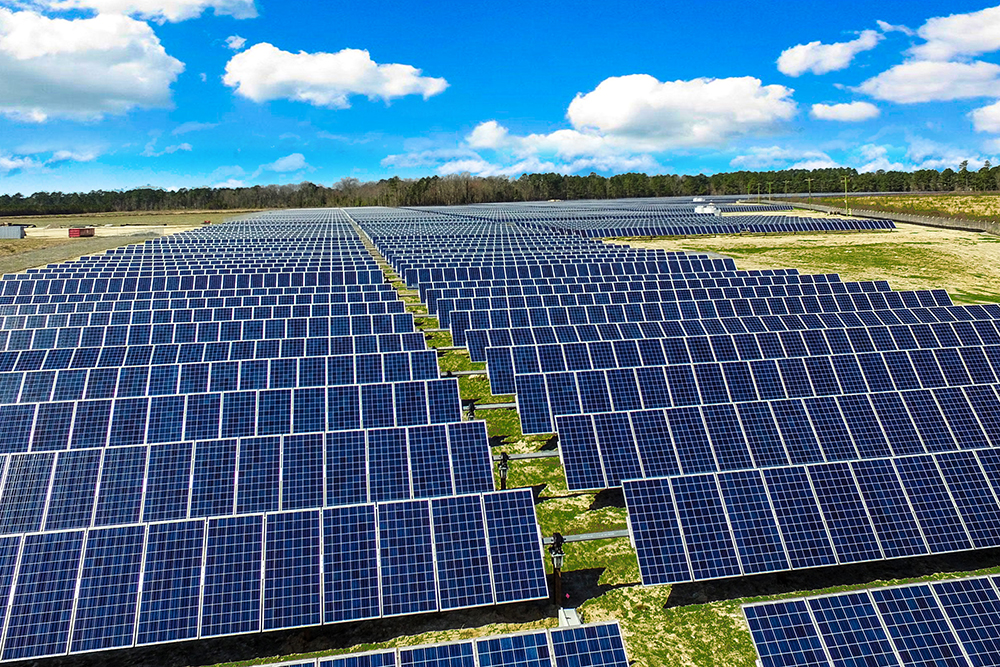
Aluminum rotary sputtering targets are widely used in thin-film photovoltaic technologies, including:
- CIGS (Cu-In-Ga-Se) solar cells
- Thin-film silicon (a-Si / µ-Si) solar cells
In these systems, aluminum is primarily used as:
- Back contact layers
- Reflective layers to enhance light trapping
- Barrier layers to control sodium diffusion from glass substrates
The reflectivity of aluminum in the visible and near-infrared range makes it especially valuable for improving cell efficiency by reflecting unabsorbed photons back into the active layer.
3.2 Energy Storage and Battery Components
Emerging applications include aluminum thin films in:
- Solid-state battery current collectors
- Thin-film lithium battery substrates
- Protective coatings for energy storage components
Rotary sputtering is particularly suitable for roll-to-roll or large-area coating processes used in next-generation energy devices, where throughput and uniformity are critical.
4. Packaging, Decorative, and Functional Coatings
4.1 Flexible Packaging Films
Aluminum metallization is a cornerstone of the packaging industry, especially for:
- Food packaging
- Pharmaceutical blister packs
- High-barrier polymer films
Aluminum thin films provide:
- Excellent oxygen and moisture barrier performance
- Enhanced shelf life
- Improved light blocking
While evaporation remains common in packaging, rotary sputtering aluminum targets are increasingly used where higher film density, adhesion, or controlled microstructure is required. Sputtered aluminum coatings show better abrasion resistance and adhesion compared to evaporated layers.
4.2 Decorative Coatings
In decorative PVD applications, aluminum is used to create:
- Mirror-like reflective finishes
- Metallic visual effects
- Base layers for colored or anodic-like coatings
Automotive interior trims, consumer electronics housings, and architectural elements benefit from aluminum’s bright appearance and compatibility with subsequent coating layers.
5. Optical and Reflective Coatings
5.1 High-Reflectivity Optical Mirrors
Aluminum is one of the most widely used materials for optical mirrors due to its high reflectance across a broad spectral range, from ultraviolet to infrared. Rotary sputtering targets are used in coating systems for:
- Astronomical mirrors
- Scientific instruments
- Laser optics
Compared with batch evaporation, rotary sputtering allows more reproducible film thickness and density, which is essential for precision optical components.
5.2 Infrared and UV Optical Systems
In infrared sensors and UV optical systems, aluminum coatings are often applied as reflective or shielding layers. The dense microstructure achievable through sputtering enhances environmental stability and lifetime under harsh operating conditions.
6. Electronics, EMI Shielding, and Functional Films
6.1 EMI and RFI Shielding
Aluminum thin films deposited by rotary sputtering are widely used for electromagnetic interference (EMI) and radio-frequency interference (RFI) shielding in:
- Consumer electronics
- Automotive electronics
- Aerospace and industrial control systems
Aluminum provides effective shielding while maintaining low material cost and compatibility with polymer or glass substrates.
6.2 Heat Dissipation and Thermal Management Layers
Aluminum coatings are also used as thermal spreading layers in electronic assemblies. The combination of high thermal conductivity and low density makes aluminum an attractive option for managing heat in compact devices.
7. Industrial Manufacturing Advantages of Rotary Aluminum Targets
Beyond specific applications, the adoption of Aluminum rotary sputtering targets is driven by clear manufacturing advantages:
- High material utilization: Often exceeding 80–90%, compared with 30–40% for planar targets
- Extended production runs: Reduced downtime and fewer target changes
- Uniform erosion profile: Stable coating thickness over time
- Scalability: Ideal for large-area and inline coating systems
These benefits directly translate into lower cost of ownership for high-volume manufacturers.
8. Future Trends and Emerging Applications
As coating technologies evolve, Aluminum rotary sputtering targets continue to find new application scenarios:
- Smart glass and electrochromic windows
- Advanced display backplanes
- Solid-state batteries and thin-film energy devices
- Lightweight reflective coatings for aerospace
Process optimization, higher purity aluminum, and improved bonding technologies are further expanding the performance envelope of rotary sputtering targets.
Conclusion
Aluminum (Al) rotary sputtering targets play a critical role across a broad spectrum of industrial and high-technology applications. From architectural glass and flat-panel displays to photovoltaics, packaging, optics, and electronic shielding, aluminum’s unique combination of conductivity, reflectivity, process stability, and cost efficiency makes it indispensable.
When paired with rotary sputtering technology, aluminum targets enable high-throughput, uniform, and reliable thin-film deposition tailored for modern large-area and continuous production environments. As industries push toward higher efficiency, larger substrates, and more complex multilayer structures, Aluminum rotary sputtering targets will remain a foundational material supporting both established and emerging coating technologies.
For detailed specifications, customization options, and technical support for Aluminum rotary sputtering targets, please contact us at sales@thinfilmmaterials.com.