Introduction
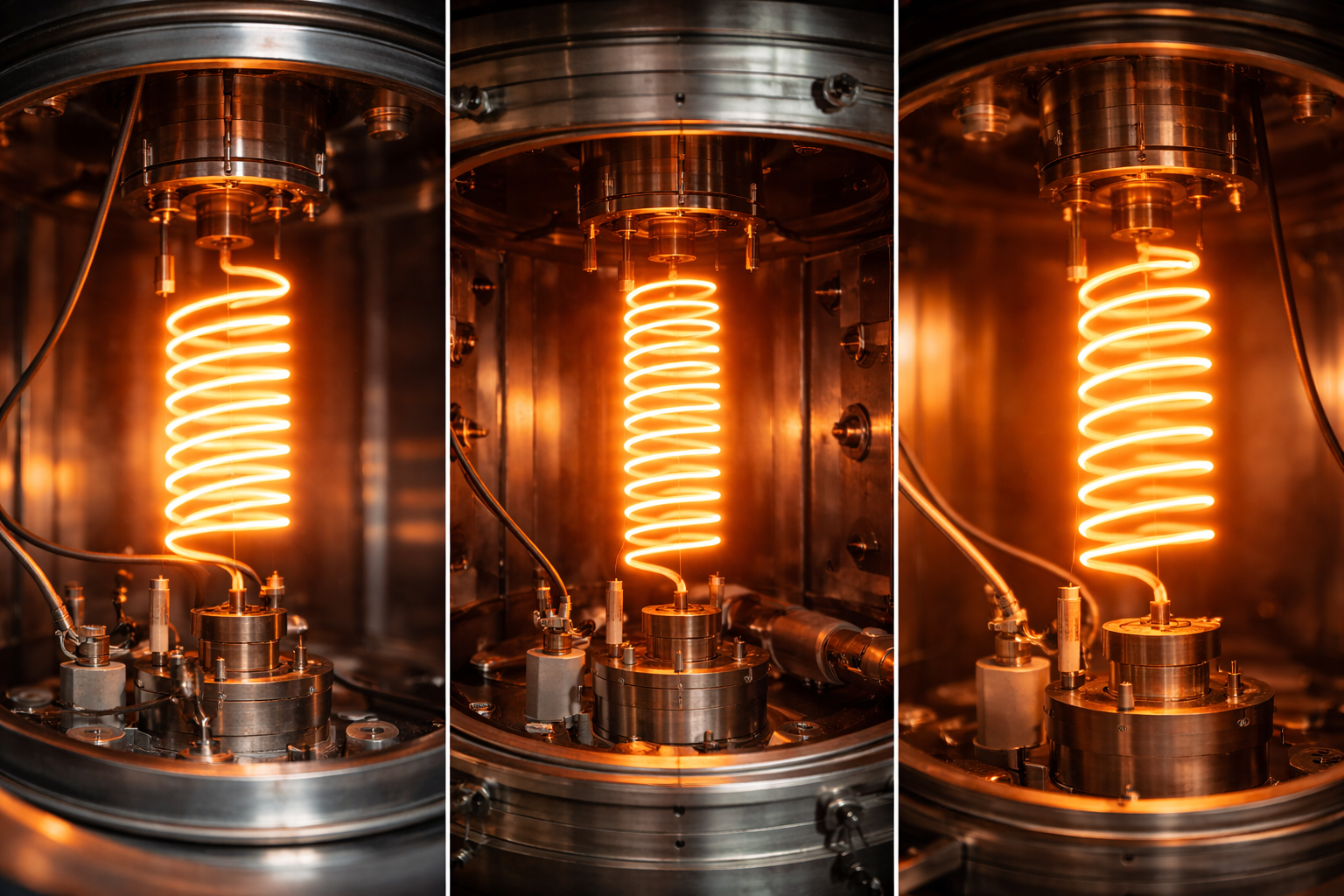
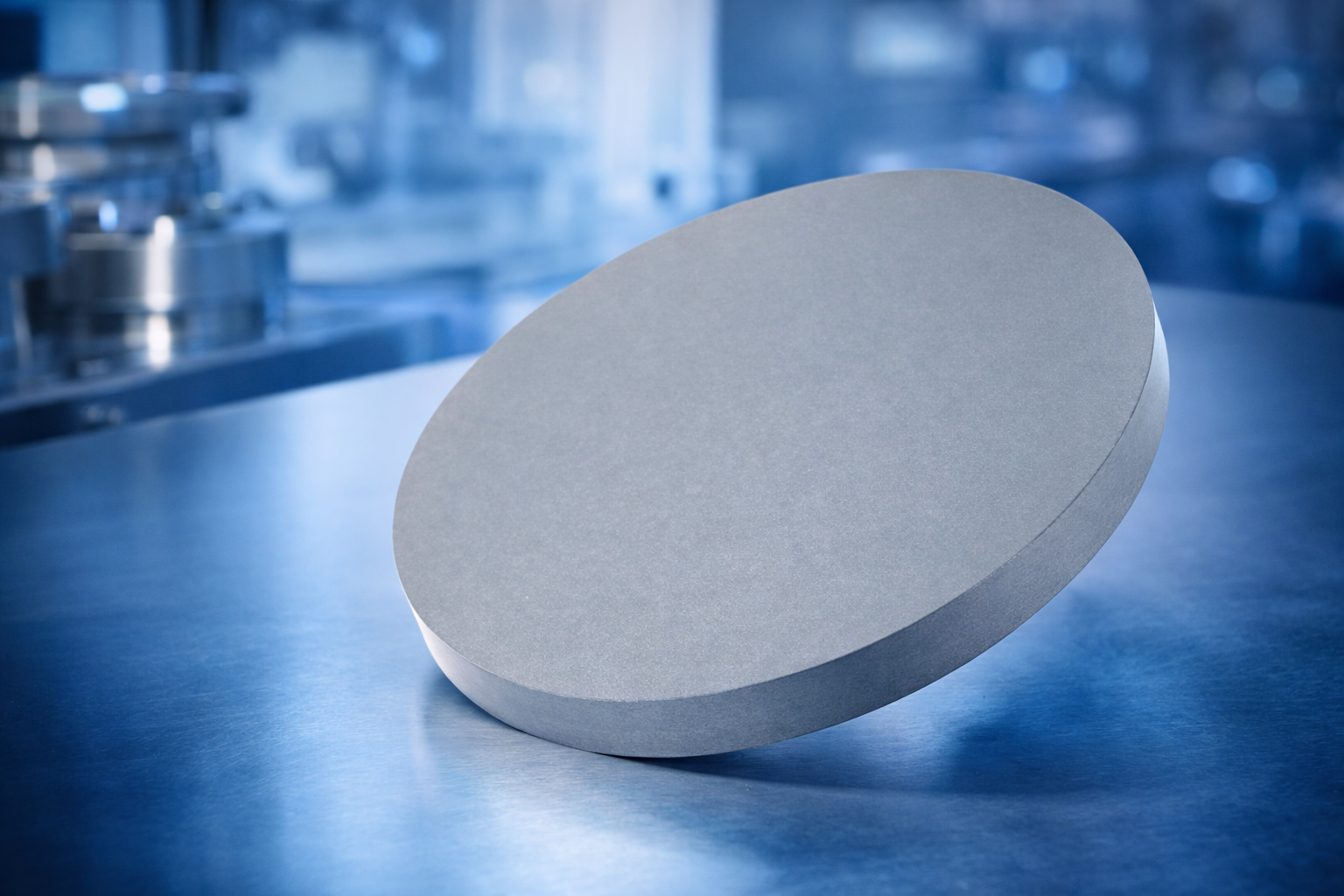
Iridium Manganese (Ir/Mn) sputtering targets are highly specialized materials used in advanced thin film deposition processes, particularly in magnetron sputtering systems for microelectronic and spintronic device fabrication. As functional materials continue to move toward higher integration density, lower power consumption, and enhanced thermal stability, alloy systems such as Ir/Mn have become increasingly important due to their unique magnetic and structural properties.
Iridium is known for its exceptional corrosion resistance, high melting point, and chemical stability, while manganese contributes critical antiferromagnetic behavior when alloyed appropriately. Together, the Ir/Mn alloy—most commonly in compositions such as Ir20Mn80 or Ir25Mn75 (atomic percent)—forms one of the most widely used antiferromagnetic pinning layers in spin-valve and magnetic tunnel junction (MTJ) structures.
This article provides a detailed analysis of the major application scenarios of Iridium Manganese sputtering targets, with a focus on microelectronics, magnetic storage, sensor technology, emerging spintronic systems, and advanced research applications.
1. Fundamental Material Characteristics of Ir/Mn Thin Films
Before analyzing application fields, it is important to understand why Ir/Mn is technically valuable in thin film structures.
1.1 Antiferromagnetic Behavior and Exchange Bias
Ir/Mn alloys exhibit strong antiferromagnetic ordering at room temperature and above. When deposited as a thin film adjacent to a ferromagnetic layer (e.g., CoFe, NiFe), Ir/Mn creates an exchange bias effect. This phenomenon stabilizes the magnetization direction of the adjacent ferromagnetic layer through interfacial coupling.
Key advantages include:
- High blocking temperature (>250–300°C depending on composition)
- Strong exchange bias field
- Excellent thermal stability during device processing
- Low training effect (minimal degradation after cycling)
1.2 Structural and Thermal Stability
Iridium contributes:
- High melting point (~2446°C)
- Oxidation resistance
- Dense microstructure
- Good adhesion to adjacent metallic layers
Manganese provides:
- Magnetic ordering properties
- Tunable anisotropy depending on composition and crystallographic orientation
These properties make Ir/Mn films suitable for multilayer stacks in high-temperature microfabrication processes.
2. Application in Spin-Valve Structures for Magnetic Sensors
One of the most significant applications of Ir/Mn sputtering targets is in spin-valve thin film stacks used in magnetic sensing.
2.1 Role in Giant Magnetoresistance (GMR) Sensors
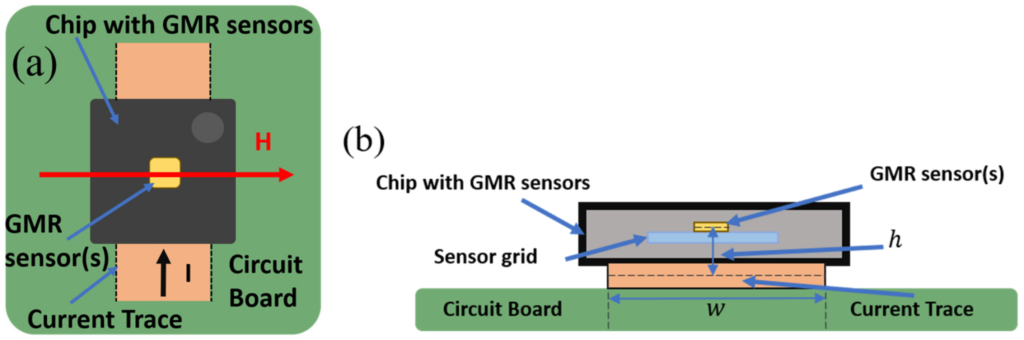
In GMR-based sensors, a multilayer structure typically includes:
- Seed layer
- Antiferromagnetic layer (Ir/Mn)
- Pinned ferromagnetic layer
- Spacer layer (Cu)
- Free ferromagnetic layer
- Cap layer
The Ir/Mn layer pins the magnetization of the reference ferromagnetic layer via exchange bias. This stabilizes the magnetic orientation, allowing the free layer to rotate in response to external magnetic fields.
Applications include:
- Automotive position sensors
- Industrial current sensors
- Magnetic field detection modules
- Precision angular detection systems
The high exchange bias provided by Ir/Mn improves sensor linearity, signal stability, and thermal reliability.
2.2 Automotive Magnetic Sensing
Modern vehicles use magnetic sensors for:
- Wheel speed detection (ABS systems)
- Steering angle measurement
- Throttle position sensing
- Electric motor position control in EVs
Ir/Mn films ensure long-term stability under:
- Elevated temperatures (up to 150°C operational)
- Mechanical vibration
- Electromagnetic interference environments
The durability of Iridium enhances corrosion resistance, critical in automotive under-hood conditions.
3. Magnetic Tunnel Junctions (MTJs) and MRAM Technology
3.1 Ir/Mn in Magnetic Random Access Memory (MRAM)
MRAM devices rely on magnetic tunnel junctions consisting of:
- Pinned magnetic layer
- Tunnel barrier (MgO)
- Free magnetic layer
Ir/Mn serves as the antiferromagnetic pinning layer that stabilizes the reference layer.
Advantages in MRAM applications:
- High blocking temperature supports back-end CMOS processing
- Strong exchange bias ensures reliable switching
- Reduced thermal drift improves data retention
- Compatibility with perpendicular magnetic anisotropy (PMA) structures
As MRAM moves toward embedded memory in microcontrollers and automotive-grade electronics, the thermal robustness of Ir/Mn becomes increasingly important.
3.2 STT-MRAM and Next-Generation Spintronic Devices
Spin-transfer torque (STT) MRAM and spin-orbit torque (SOT) devices require precisely engineered magnetic stacks. Ir/Mn layers:
- Provide consistent pinning fields
- Support thin-film scaling (<10 nm thickness)
- Maintain magnetic integrity after repeated switching cycles
This makes Ir/Mn sputtering targets essential for advanced semiconductor manufacturing nodes.
4. Hard Disk Drive (HDD) Read Heads
Although solid-state storage is growing rapidly, HDDs remain critical for data centers and archival storage. GMR and TMR read heads rely on multilayer magnetic stacks incorporating Ir/Mn.
4.1 Stabilizing Reference Layers
In HDD read heads:
- The pinned layer must remain magnetically stable over billions of read cycles.
- Ir/Mn provides high exchange bias, preventing unwanted magnetization reversal.
4.2 Thermal and Process Stability
During fabrication:
- Multiple annealing steps are required.
- Ir/Mn withstands annealing temperatures of 250–300°C without significant loss of exchange bias.
This reliability is crucial for mass production of HDD components.
5. Spintronic Research and Quantum Materials Development
Ir/Mn sputtering targets are widely used in academic and industrial research.
5.1 Exchange Bias Engineering
Researchers investigate:
- Thickness-dependent exchange bias
- Interface roughness effects
- Crystallographic texture control
- Spin-orbit coupling phenomena
Iridium’s heavy atomic mass also contributes to strong spin-orbit interactions, making Ir/Mn films interesting for studying advanced spin phenomena.
5.2 Antiferromagnetic Spintronics
Emerging research explores antiferromagnetic materials as active elements rather than passive pinning layers. Ir/Mn is studied for:
- Ultrafast spin dynamics
- Terahertz-frequency spin devices
- Low stray-field magnetic components
- Radiation-resistant electronics
These studies support future computing architectures beyond traditional CMOS scaling.
6. Magnetic Biosensing and Medical Diagnostics
High-sensitivity magnetic sensors used in biosensing systems often incorporate GMR or TMR elements utilizing Ir/Mn pinning layers.
Applications include:
- Magnetic bead detection
- DNA hybridization sensing
- Pathogen detection platforms
- Lab-on-chip magnetic systems
Ir/Mn ensures stable sensor calibration and consistent signal performance across temperature variations typical in biomedical environments.
7. Aerospace and Defense Electronics
In aerospace and defense systems, magnetic sensing and memory components must operate reliably in harsh conditions.
Ir/Mn-based thin films contribute to:
- Radiation-tolerant electronics
- High-temperature avionics sensors
- Satellite attitude control sensors
- Precision gyroscopic systems
Iridium’s corrosion resistance is especially valuable in environments with extreme temperature cycling and atmospheric exposure.
8. Integrated Semiconductor Manufacturing Compatibility
8.1 CMOS Process Integration
Ir/Mn thin films are compatible with:
- DC magnetron sputtering
- RF sputtering (for precise composition control)
- Cluster tool integration
- High-vacuum deposition systems
The alloy can be deposited uniformly across large wafer diameters (200 mm, 300 mm).
8.2 Composition Control and Uniformity
Precise stoichiometry is critical for achieving consistent exchange bias fields. High-quality Ir/Mn sputtering targets offer:
- Homogeneous alloy microstructure
- Low impurity content
- Uniform erosion profile
- Reduced particle generation
This ensures minimal defect density in semiconductor cleanroom environments.
9. Process Considerations in Thin Film Deposition
9.1 Typical Deposition Parameters
- Working pressure: 1–5 mTorr
- Power density: optimized for low stress films
- Substrate temperature: room temperature to 300°C
- Post-deposition annealing required for exchange bias activation
9.2 Target Fabrication Requirements
Ir/Mn sputtering targets must exhibit:
- High density (>99% theoretical)
- Fine-grain microstructure
- Strong metallurgical bonding (if backed with copper)
- Low oxygen contamination
Given Iridium’s high cost and density, precision alloying and sintering methods are essential to ensure cost-efficiency and performance reliability.
10. Emerging Applications and Future Outlook
10.1 Neuromorphic Computing
Spintronic elements incorporating Ir/Mn layers are being explored for artificial synapse and neuromorphic hardware.
10.2 Energy-Efficient Logic Devices
Antiferromagnetic materials may enable:
- Zero stray-field logic
- Reduced cross-talk in dense circuits
- Faster magnetic switching speeds
10.3 Advanced Data Security
Exchange-biased magnetic structures are studied for tamper-resistant hardware and secure memory modules.
Conclusion
Iridium Manganese sputtering targets play a foundational role in modern thin film magnetic technology. From GMR sensors and MRAM memory devices to HDD read heads and advanced spintronic research, Ir/Mn alloys serve as reliable antiferromagnetic pinning layers offering high exchange bias, thermal stability, and long-term reliability.
The combination of Iridium’s corrosion resistance and structural integrity with Manganese’s magnetic ordering properties enables Ir/Mn thin films to meet the demanding requirements of semiconductor fabrication, automotive sensing, aerospace electronics, and emerging quantum research.
As the electronics industry continues advancing toward higher performance, lower power consumption, and greater integration density, Ir/Mn sputtering targets will remain a critical material platform supporting the next generation of magnetic and spin-based technologies.