

Introduction
Aluminum Magnesium Sputtering Targets are widely used alloy targets for advanced thin-film deposition, combining the lightweight nature of aluminum with the enhanced mechanical strength and chemical reactivity of magnesium. This alloy system is especially valued in functional coatings, microelectronics, and optical applications where controlled film composition, adhesion, and electrical performance are critical.
Detailed Description
Our Aluminum Magnesium Sputtering Targets are manufactured from high-purity aluminum and magnesium raw materials using controlled alloying and densification processes to ensure compositional uniformity and stable sputtering behavior. Compared with pure aluminum targets, the addition of magnesium improves hardness, reduces film resistivity in certain compositions, and enhances film adhesion on glass, ceramic, and polymer substrates.
The alloy composition can be precisely adjusted (for example, AlMg 2–10 wt%) to meet specific deposition requirements. Uniform grain structure and high density help minimize particle generation and arcing during sputtering, contributing to consistent deposition rates and improved target utilization.
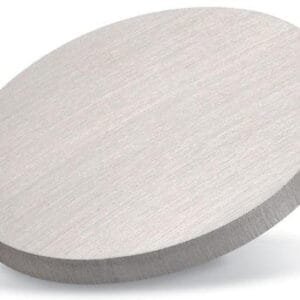
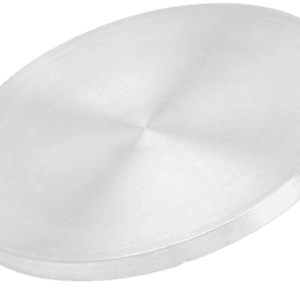
Targets are available in round, rectangular, and custom shapes, compatible with both DC and RF magnetron sputtering systems. Optional copper or titanium backing plates can be supplied to improve thermal conductivity, mechanical stability, and target lifetime during high-power operation.
Applications
Aluminum Magnesium Sputtering Targets are commonly used in:
Semiconductor and microelectronic thin films
Display and touch panel coatings
Optical and decorative coatings
Barrier and protective layers
Functional films for energy and sensor devices
They are particularly suitable where balanced electrical conductivity, adhesion, and corrosion resistance are required.
Technical Parameters
| Parameter | Typical Value / Range | Importance |
|---|---|---|
| Composition | Al–Mg alloy (custom ratios) | Controls film properties and performance |
| Purity | 99.9% – 99.99% | Reduces contamination in thin films |
| Shape | Round / Rectangular / Custom | Fits various sputtering systems |
| Density | ≥ 99% theoretical | Ensures stable sputtering and uniform erosion |
| Bonding | Indium, elastomer, or monolithic | Improves heat transfer and mechanical stability |
| Backing Plate | Copper or Titanium (optional) | Enhances thermal management |
Comparison with Related Materials
| Material | Key Advantage | Typical Application |
|---|---|---|
| Aluminum Magnesium Sputtering Target | Improved strength and adhesion | Functional & electronic coatings |
| Pure Aluminum Target | High conductivity, simple composition | General metallization |
| Aluminum Silicon Target | Enhanced hardness | Semiconductor interconnects |
FAQ
| Question | Answer |
|---|---|
| Can the alloy composition be customized? | Yes, aluminum–magnesium ratios can be tailored to your process needs. |
| Is it suitable for DC sputtering? | Yes, depending on composition and system design, DC sputtering is commonly used. |
| Are backing plates available? | Yes, copper or titanium backing plates can be supplied upon request. |
| What sizes are available? | Standard and custom sizes are available to match your sputtering equipment. |
Packaging
Our Aluminum Magnesium Sputtering Targets are carefully tagged and labeled for full traceability. Each target is vacuum-sealed and packed with protective materials to prevent oxidation, contamination, or mechanical damage during storage and transportation.
Conclusion
Aluminum Magnesium Sputtering Targets offer a versatile and reliable solution for depositing high-performance alloy thin films. With customizable composition, high purity, and stable sputtering behavior, they are well suited for demanding research and industrial applications.
For detailed specifications and a quotation, please contact us at sales@thinfilmmaterials.com.

Reviews
There are no reviews yet.