

Annealed Nickel Gaskets for ConFlat (CF) UHV Flanges
Annealed nickel CF gaskets (pure nickel sealing rings) are metal vacuum seals designed for ConFlat® (CF) knife-edge flanges used in high vacuum and ultra-high vacuum (UHV) systems. When the flange bolts are tightened, the knife edges plastically deform the annealed metal gasket, creating a robust, leak-tight metal-to-metal seal.
Nickel gaskets are often selected when the vacuum system may involve corrosive media or when users prefer nickel’s compatibility profile compared with standard copper CF gaskets.
Ordering Table
| Drawing | Flange OD | Gasket ID | Gasket OD | Part Number | Price |

| DN16CF (1.33" OD) | 0.640 | 0.835 | GA-0133NIA | $46 |

| DN35CF-DN40CF (2.75" OD) | 1.535 | 1.895 | GA-0275NIA | $98 |

| DN50CF (3.375" OD) | 2.008 | 2.425 | GA-0337NIA | $152 |

| DN63CF (4.50" OD) | 2.520 | 3.241 | GA-0450NIA | $202 |

| DN75CF (4.625" OD) | 3.010 | 3.598 | GA-0462NIA | $220 |

| DN100CF (6.00" OD) | 4.016 | 4.740 | GA-0600NIA | $274 |

| DN160CF (8.00" OD) | 6.024 | 6.740 | GA-0800NIA | $404 |

| DN200CF (10.00" OD) | 8.031 | 8.740 | GA-1000NIA | $508 |
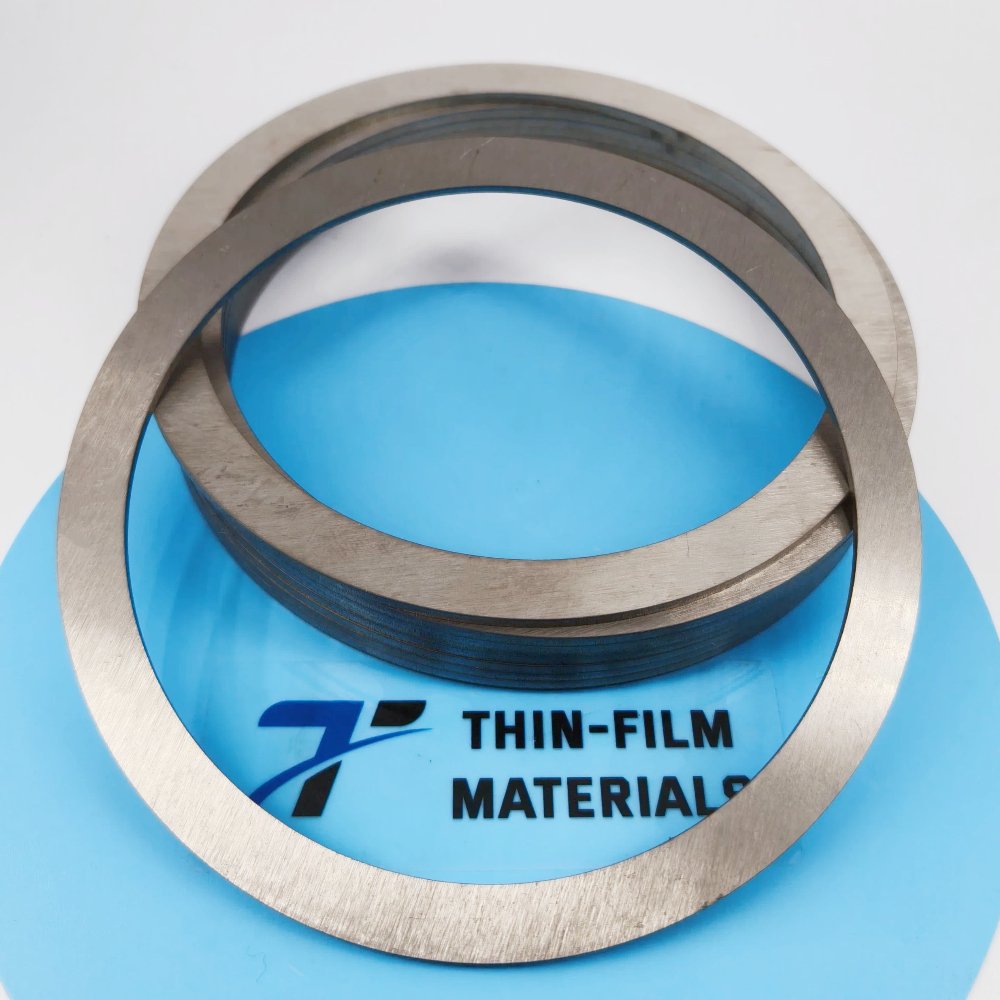
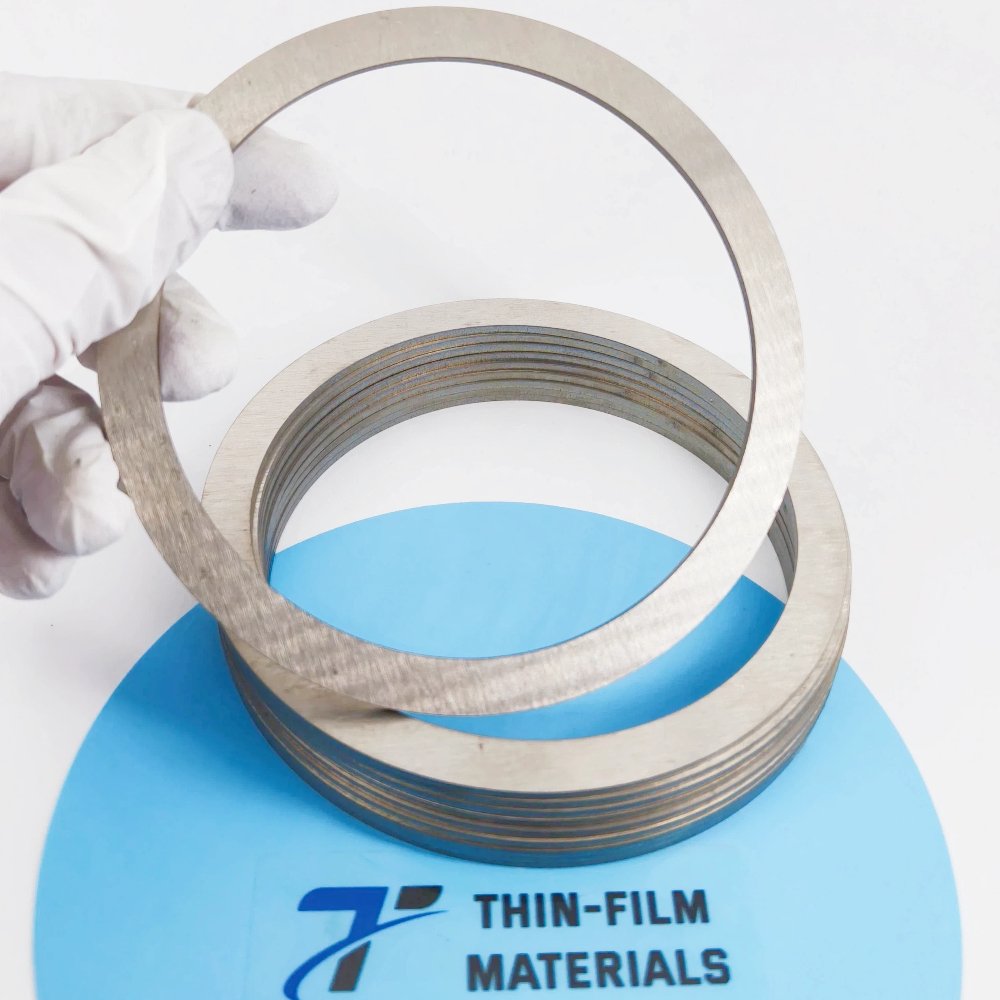
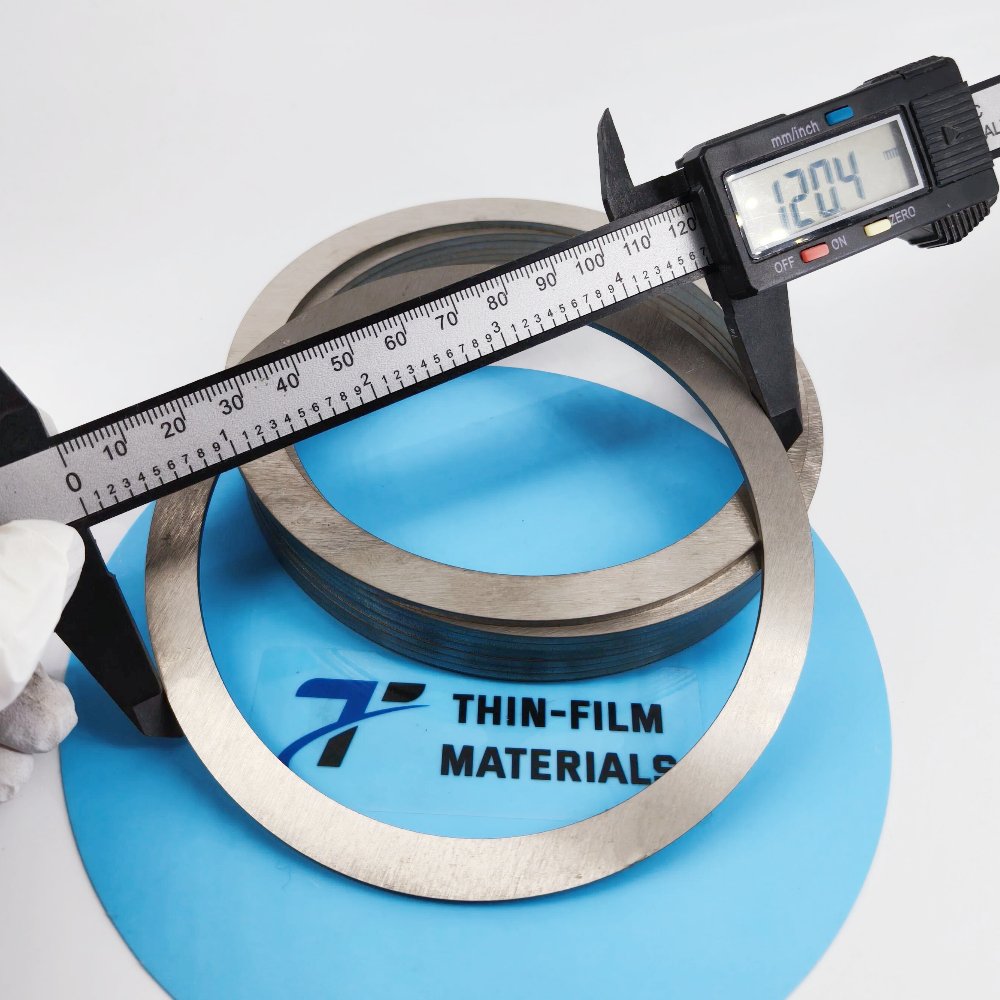
Key Benefits
Made for CF knife-edge sealing: Optimized for ConFlat® flange geometry to achieve consistent compression and sealing.
Annealed for reliable deformation: Annealed condition supports stable “bite” marks from the knife edges and repeatable sealing results.
Good choice for corrosive environments: Nickel is commonly chosen for vacuum setups that may encounter more aggressive chemistries.
Clean, vacuum-ready handling: Individually packaged options help maintain gasket cleanliness and reduce particle contamination risk.
Multiple sizes available: Standard CF sizes (DN and inch-series) plus custom requests.
How a CF Nickel Gasket Seals
ConFlat® flanges seal using two sharp knife edges that press into a soft metal gasket. The controlled plastic deformation forms a circumferential seal line on both sides of the gasket. This sealing method is widely used in UHV equipment because it is robust, bakeable, and compatible with clean vacuum practices when installed correctly.
Typical Applications
Annealed nickel CF gaskets are commonly used in:
UHV chambers and beamline components
Surface science and materials characterization tools
Vacuum furnaces, vacuum coating systems, and research PVD equipment
Feedthroughs, viewports, valves, and gauges with CF interfaces
Systems handling reactive or corrosive gases (application-dependent)
Available Sizes and Ordering Options
We supply annealed nickel CF gaskets across common ConFlat® standards.
What to specify in your RFQ
To quote quickly and accurately, please include:
CF size (e.g., DN16CF / DN40CF / 2.75″ CF / 6″ CF, etc.)
Quantity (pcs)
Operating environment (vacuum level, gas exposure, corrosion concerns)
Bakeout requirements (maximum temperature and duration, if applicable)
Any clean packaging or documentation needs (e.g., certificate of conformance)
Note: CF metal gaskets are generally treated as single-use sealing components after compression.
Material Notes (Pure Nickel)
“Pure nickel” in vacuum hardware commonly refers to commercially pure nickel grades. If your process requires a specific grade designation, hardness range, or chemistry limits, include that in your inquiry so the supply can be matched to your requirement.
Installation Guidelines (Best Practices)
For consistent sealing performance:
Use new gaskets for each assembly (recommended for CF metal seals).
Clean sealing surfaces: Remove particles, oil, or debris from flange knife edges and gasket surfaces.
Tighten evenly: Use a cross-pattern and stepwise torque approach to reduce uneven loading.
Avoid scratches and dents: Handle gaskets carefully—surface damage can create leak paths.
Inspect knife edges: Damaged or rolled knife edges can compromise sealing even with a new gasket.
Quality and Packaging
Controlled handling to reduce contamination risk
Optional individual packaging for cleanliness and traceability
Inspection available upon request (visual checks and dimensional confirmation, project-dependent)
Frequently Asked Questions
1) Are nickel CF gaskets compatible with standard ConFlat® flanges?
Yes. They are designed for CF knife-edge flange sealing. Always match the gasket size to the exact CF flange size.
2) Why choose nickel instead of copper CF gaskets?
Nickel gaskets are often chosen for corrosive environments or when users prefer nickel’s performance/compatibility for their specific process conditions.
3) Can I reuse a compressed CF nickel gasket?
In most CF applications, metal gaskets are treated as single-use after compression because the knife-edge imprint remains and resealing reliability may drop.
4) Will nickel gaskets work for UHV?
CF sealing is widely used for UHV systems when properly installed. Final achievable vacuum depends on surface condition, cleaning, torque procedure, and system outgassing—not the gasket alone.
5) Do you offer clean or individual packaging?
Yes, packaging options are available. Tell us your cleanliness and traceability requirements when requesting a quote.
6) What sizes do you carry?
We supply common DN CF and inch-series CF sizes. Share your flange size list and we’ll confirm availability.
7) Do nickel gaskets require different tightening procedures than copper gaskets?
Use standard CF best practices: clean surfaces, cross-pattern tightening, and stepwise torque. If your system has special constraints, share them so we can advise.
8) Can you provide documentation?
Documentation such as certificates can be provided upon request depending on your project needs.
9) Are nickel gaskets suitable for high-temperature bakeout?
CF metal seals are generally bakeable, but the actual bakeout limit depends on the full flange assembly, bolts, materials, and your thermal cycle. Provide your bakeout spec for confirmation.
10) Can you make custom nickel gaskets?
For non-standard dimensions or special requirements, send drawings or detailed specs for evaluation.


Reviews
There are no reviews yet.