

Introduction
The Antimony Sputtering Target (Sb) is a high-purity elemental target widely used in thin film deposition processes for semiconductor, optical, and electronic applications. Antimony is a metalloid with unique electrical and optical properties, making it an important component in phase-change materials, infrared devices, thermoelectric materials, and compound semiconductors.
Using magnetron sputtering or other physical vapor deposition (PVD) techniques, antimony sputtering targets enable the deposition of thin films with controlled thickness and composition. These films are widely utilized in data storage technologies, optoelectronics, photovoltaic devices, and advanced materials research.
Detailed Description
Antimony sputtering targets are typically manufactured from high-purity antimony metal using processes such as vacuum melting, casting, and precision machining. These manufacturing methods ensure a dense and homogeneous target structure, which is essential for stable sputtering performance and uniform thin film deposition.
Antimony has semimetallic electrical characteristics and exhibits strong optical absorption in certain spectral ranges. In thin film technology, it is often used either as a pure element or as a precursor material for various compound semiconductors.
One of the most significant applications of antimony thin films is in phase-change memory materials, where antimony-based compounds such as GeSbTe are used in non-volatile memory devices. Antimony also plays a critical role in thermoelectric materials and infrared-sensitive semiconductor systems.
High-density sputtering targets help ensure stable sputtering rates and minimize particle generation during deposition. For high-power sputtering systems, antimony targets can be supplied as bonded targets with copper backing plates, typically using indium bonding to improve thermal management and mechanical stability during sputtering.
Applications
Antimony sputtering targets are widely used in several advanced technology sectors:
Phase-change memory materials used in data storage technologies
Compound semiconductor deposition such as Sb-based alloys and chalcogenides
Thermoelectric materials research
Infrared detectors and optoelectronic devices
Thin film electronics and sensors
Advanced materials research involving Sb-containing compounds
Technical Parameters
| Parameter | Typical Value / Range | Importance |
|---|---|---|
| Purity | 99.9% – 99.999% | High purity ensures stable electronic and optical film properties |
| Chemical Symbol | Sb | Determines elemental composition of thin films |
| Diameter | 25 – 300 mm (custom) | Compatible with standard sputtering systems |
| Thickness | 3 – 6 mm | Influences sputtering efficiency and target lifespan |
| Density | ≥ 99% theoretical density | Ensures uniform sputtering and film growth |
| Bonding | Copper backing plate / Indium bonded | Improves heat dissipation during deposition |
Comparison with Related Materials
| Material | Key Advantage | Typical Application |
|---|---|---|
| Antimony (Sb) | Important component in phase-change and thermoelectric materials | Memory devices and semiconductor films |
| Bismuth (Bi) | Strong thermoelectric properties | Energy conversion materials |
| Tellurium (Te) | Semiconductor and thermoelectric functionality | Infrared detectors and thermoelectric systems |
FAQ
| Question | Answer |
|---|---|
| What sputtering methods are suitable for antimony targets? | Antimony sputtering targets are commonly used in DC or RF magnetron sputtering systems depending on system configuration. |
| Can the target size be customized? | Yes. Diameter, thickness, and bonding configurations can be tailored to specific sputtering systems. |
| Are bonded sputtering targets available? | Yes. Antimony targets can be bonded to copper backing plates using indium bonding to improve thermal conductivity and stability. |
| What purity levels are typically available? | Standard purities range from 99.9% to 99.999%, depending on application requirements. |
| What substrates can antimony thin films be deposited on? | Antimony films can be deposited on silicon wafers, glass, ceramic substrates, and metallic surfaces. |
Packaging
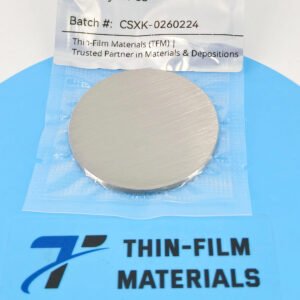
Our Antimony Sputtering Target (Sb) products are meticulously tagged and labeled externally to ensure efficient identification and maintain strict quality control standards. Each target is carefully packaged in vacuum-sealed bags with protective foam materials and export-grade cartons or wooden crates to prevent contamination, oxidation, and mechanical damage during storage and transportation.
Conclusion
The Antimony Sputtering Target (Sb) provides a reliable solution for depositing high-quality thin films used in semiconductor devices, phase-change memory technologies, and advanced optoelectronic materials. Its unique electronic properties and compatibility with various compound systems make it an essential material for modern thin film applications.
With high purity levels, customizable dimensions, and stable sputtering performance, antimony sputtering targets support both industrial production and cutting-edge research in advanced materials science.
For detailed specifications and a quotation, please contact us at sales@thinfilmmaterials.com.


Reviews
There are no reviews yet.