
Introduction
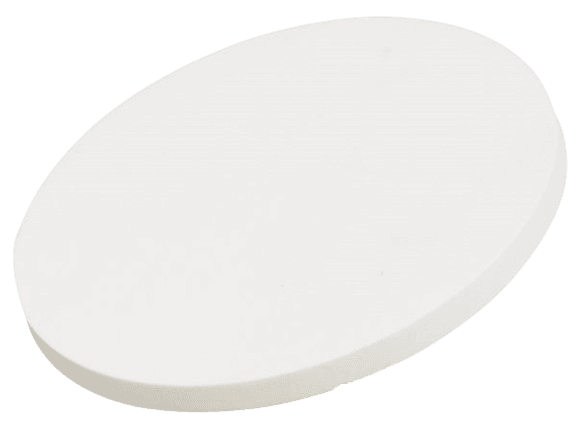
Boron Nitride (BN) is a versatile ceramic material with unique structural forms, including hexagonal (h-BN) and cubic (c-BN), each offering distinct physical and chemical properties. As a sputtering target, BN is widely used for depositing insulating, protective, and thermally stable thin films. Its combination of high thermal conductivity, electrical insulation, and chemical inertness makes it highly valuable in semiconductor, electronics, and advanced coating applications.
Detailed Description
Boron Nitride Sputtering Targets are typically produced through high-purity powder processing, followed by hot pressing or sintering to achieve dense, uniform ceramic structures. Depending on the intended application, targets may be composed primarily of hexagonal BN (h-BN), which exhibits layered structure similar to graphite, or cubic BN (c-BN), known for its diamond-like hardness.
h-BN targets are widely used for insulating and lubricating coatings due to their excellent dielectric properties and low friction characteristics. In contrast, c-BN targets are preferred for applications requiring extreme hardness and wear resistance.
Due to the inherently brittle nature of BN ceramics, sputtering targets are often bonded to metallic backing plates such as copper using indium or elastomer bonding. This enhances thermal conductivity and mechanical stability during sputtering, especially under RF magnetron conditions.
The purity and density of BN targets are critical for achieving stable deposition and minimizing particle generation. High-density targets ensure uniform sputtering rates, while controlled microstructure contributes to consistent film quality and reduced defect formation.
Applications
Boron Nitride Sputtering Targets are widely used in:
- Dielectric and insulating thin films in semiconductor devices
- Protective coatings with high thermal and chemical stability
- Solid lubricant coatings for mechanical systems
- Optical coatings and transparent films
- Wear-resistant coatings (especially c-BN)
- Advanced electronics and high-temperature applications
Technical Parameters
| Parameter | Typical Value / Range | Importance |
|---|---|---|
| Purity | 99% – 99.99% | Ensures film quality and reduces contamination |
| Density | ≥ 95% theoretical | Improves sputtering stability |
| Diameter | 50 – 200 mm (custom available) | Compatible with sputtering systems |
| Thickness | 3 – 6 mm | Influences target lifetime |
| Bonding | Indium / Elastomer / Cu backing | Enhances heat dissipation |
| Crystal Type | h-BN / c-BN | Determines film properties |
Comparison with Related Materials
| Material | Key Advantage | Typical Application |
|---|---|---|
| Boron Nitride (BN) | Excellent insulation, thermal stability | Dielectric and protective films |
| Aluminum Nitride (AlN) | High thermal conductivity, good dielectric | Electronics, heat dissipation layers |
| Silicon Nitride (Si₃N₄) | Strong mechanical properties | Protective coatings, MEMS |
FAQ
| Question | Answer |
|---|---|
| Can BN sputtering targets be customized? | Yes, size, purity, crystal structure, and bonding options can be tailored. |
| What sputtering method is suitable for BN? | RF magnetron sputtering is typically used due to its insulating nature. |
| What is the difference between h-BN and c-BN? | h-BN offers lubricating and insulating properties, while c-BN provides extreme hardness and wear resistance. |
| Are bonded targets necessary? | Yes, bonding improves thermal stability and reduces the risk of cracking. |
| Which industries use BN sputtering targets? | Semiconductor, electronics, optics, and advanced coatings industries. |
Packaging
Our Boron Nitride Sputtering Targets are meticulously tagged and labeled externally to ensure efficient identification and maintain high standards of quality control. We take great care to prevent any potential damage during storage and transportation, ensuring the targets arrive in perfect condition.
Conclusion
Boron Nitride Sputtering Targets offer a unique combination of electrical insulation, thermal stability, and chemical resistance, making them ideal for a wide range of thin film applications. With customizable specifications and reliable performance, BN targets are a preferred choice for advanced industrial and research environments.
For detailed specifications and a quotation, please contact us at sales@thinfilmmaterials.com.
Target Bonding of Boron Nitride Sputtering Target
Specialized bonding services for Boron Nitride Sputtering Targets, including indium and elastomeric bonding techniques, enhance performance and durability. Thin Film Materials (TFM) ensures high-quality solutions that meet industry standards and customer needs.
We also offer custom machining of backing plates, which is essential for sputtering target assembly. This comprehensive approach improves target design flexibility and performance in thin film deposition. Our channels provide detailed information about bonding materials, methods, and services, helping clients make informed decisions.

Packaging
Our boron nitride sputter targets are meticulously tagged and labeled externally to ensure clear identification and stringent quality control. We take special precautions in handling and packaging to prevent any damage during storage or transportation, ensuring that our products arrive in optimal condition.

Reviews
There are no reviews yet.