
 MSDS File
Introduction
Calcium Sulfide (CaS) evaporation materials are important sulfur-based compounds used in thin film deposition processes, particularly for optical, phosphor, and electronic applications. As a wide bandgap material with notable luminescent properties, CaS plays a key role in advanced coatings and functional films. High-quality evaporation materials ensure consistent composition, stable evaporation behavior, and reliable film performance in vacuum deposition systems.
Detailed Description
Calcium Sulfide is an alkaline earth sulfide compound known for its cubic crystal structure and wide bandgap (~4.3 eV), making it suitable for optical and luminescent applications. One of its most valuable characteristics is its ability to act as a host material for rare earth dopants (such as Eu²⁺ or Ce³⁺), enabling efficient phosphorescence and long-lasting luminescence.
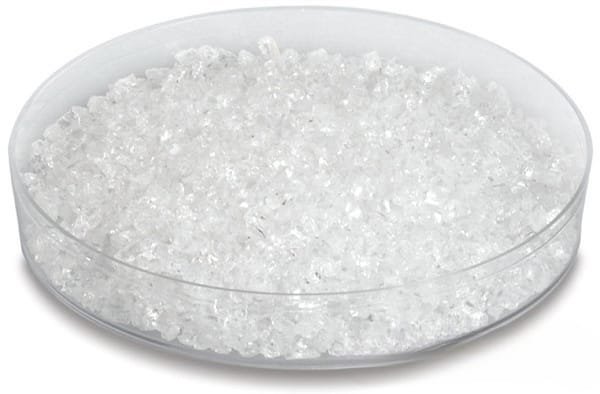
CaS evaporation materials are typically supplied in the form of granules, lumps, or powder, optimized for use in thermal evaporation or electron beam evaporation systems. Due to the sensitivity of sulfide materials to moisture and oxygen, CaS must be processed and handled under controlled conditions to prevent hydrolysis or oxidation, which could affect film quality.
Careful control of particle size distribution and purity is essential for stable evaporation rates and uniform film deposition. High-purity CaS minimizes contamination and ensures reproducible optical and electronic properties in the resulting thin films. For demanding applications, pre-melted or densified forms can be provided to improve evaporation consistency and reduce spitting during deposition.
Applications
Calcium Sulfide Evaporation Materials are widely used in:
- Luminescent and Phosphor Coatings: As a host material for rare-earth-doped phosphors
- Thin Film Optics: Infrared and visible optical coatings
- Display Technologies: Electroluminescent and photoluminescent devices
- Semiconductor Research: Wide bandgap material studies
- Energy and Sensor Devices: Functional coatings for specialized detection systems
Technical Parameters
| Parameter | Typical Value / Range | Importance |
|---|---|---|
| Chemical Formula | CaS | Defines material composition |
| Purity | ≥ 99.9% (3N) | Ensures optical and electronic performance |
| Form | Granules / Lumps / Powder | Suitable for different evaporation methods |
| Particle Size | 1 – 6 mm (granules) / custom | Affects evaporation stability |
| Density | ~2.6 g/cm³ (bulk) | Influences material loading |
| Melting Point | ~2525°C | Relevant for e-beam evaporation |
| Evaporation Method | Thermal / E-beam | Process compatibility |
Comparison with Related Materials
| Material | Key Advantage | Typical Application |
|---|---|---|
| CaS | Excellent phosphor host, wide bandgap | Luminescent coatings |
| ZnS | High transparency, mature processing | Optical coatings, displays |
| SrS | Strong luminescence with dopants | Electroluminescent devices |
| BaS | Higher density, stable sulfide | Specialized optical films |
FAQ
| Question | Answer |
|---|---|
| Can CaS be doped for luminescent applications? | Yes, CaS is commonly doped with rare earth elements such as europium to achieve strong luminescence. |
| Is CaS sensitive to moisture? | Yes, it should be stored and handled in dry or inert environments to prevent degradation. |
| What evaporation method is recommended? | Both thermal and electron beam evaporation can be used, depending on system configuration. |
| Can particle size be customized? | Yes, different forms and particle sizes are available to suit specific deposition requirements. |
| What industries use CaS evaporation materials? | Optoelectronics, display manufacturing, research institutions, and advanced coating industries. |
Packaging
Our Calcium Sulfide Evaporation Materials, CaS, are meticulously tagged and labeled externally to ensure efficient identification and maintain high standards of quality control. We take great care to prevent any potential damage during storage and transportation, ensuring the materials arrive in optimal condition.
Conclusion
Calcium Sulfide Evaporation Materials offer a reliable solution for producing high-performance luminescent and optical thin films. With controlled purity, customizable forms, and stable evaporation characteristics, CaS is well-suited for both research and industrial applications.
For detailed specifications and a quotation, please contact us at sales@thinfilmmaterials.com.

Reviews
There are no reviews yet.