
Product Overview
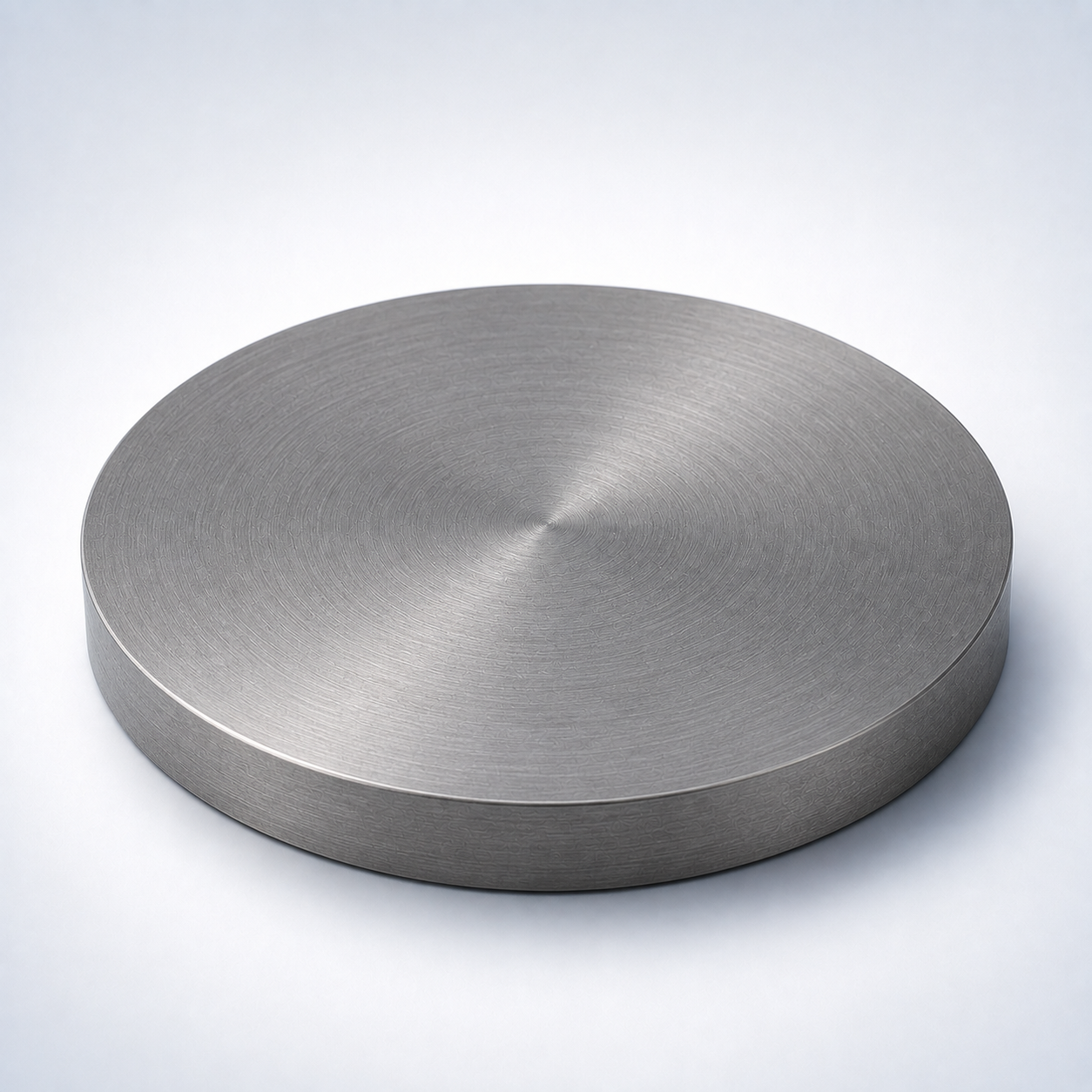
Chromium Vanadium Sputtering Target (Cr/V) is an alloy sputtering target used to deposit composition-controlled alloy films. Relative to a pure elemental target, the alloying constituents are introduced to tune electrical, magnetic, optical, mechanical, or adhesion-related film properties. For this reason, alloy ratio, homogeneity, purity basis, and the intended film composition should be defined clearly in the procurement specification.
Material and Deposition Characteristics
Many alloy targets are electrically conductive and can be compatible with DC or pulsed-DC magnetron sputtering, subject to the actual alloy composition and equipment capability. The target composition is not always reproduced exactly in the deposited film because preferential sputtering, re-sputtering, substrate heating, and process gas conditions can shift the final ratio. For composition-sensitive work, deposited-film analysis should be part of process qualification.
Technical Data
| Parameter | Typical Value / Range | Importance |
|---|---|---|
| Chemical Composition | Cr/V alloy (custom ratios) | Controls hardness and corrosion resistance |
| Purity | 99.9% – 99.99% | Reduces impurity-related defects |
| Diameter | 25 – 300 mm (custom available) | Compatible with standard sputtering cathodes |
| Thickness | 3 – 10 mm | Influences target lifetime |
| Density | ≥ 99% theoretical | Improves plasma stability |
| Sputtering Mode | DC / RF sputtering | Suitable for conductive alloys |
| Bonding | Unbonded / Cu backing (optional) | Enhances thermal management |
| Material | Key Advantage | Typical Application |
|---|---|---|
| Cr/V | Balanced hardness and toughness | Protective alloy coatings |
| Pure Chromium | Excellent corrosion resistance | Decorative & protective films |
| Pure Vanadium | Strengthening element | Alloy modification |
| Cr/N coatings | High hardness | Cutting tools & wear layers |
| Question | Answer |
|---|---|
| Can the Cr/V composition be customized? | Yes, alloy ratios can be tailored to specific performance requirements. |
| Is DC sputtering suitable? | Yes, Cr/V is conductive and compatible with DC sputtering systems. |
| Are bonded targets available? | Yes, copper backing plates are available for improved heat dissipation. |
| How is the target packaged? | Vacuum-sealed with protective foam and export-grade cartons or crates. |
Typical Thin-Film Applications
- Chromium Vanadium alloy films where composition control is important to electrical, mechanical, magnetic, or optical performance
- Multilayer stacks, adhesion/barrier layers, conductive films, or functional coatings depending on the alloy system
- Research and production programs that require customized alloy ratios and repeatable sputtering behavior
Target Configuration and Ordering Considerations
For quotation and manufacturability review, provide target size, thickness, purity or alloy composition, quantity, and the sputtering gun or cathode model if known. If a bonded assembly is required, include backing-plate material, bonding preference, and any dimensional tolerances, surface-finish needs, or inspection-document requirements. TFM can also review customer drawings or old-target samples for replacement builds.
Frequently Asked Questions
Can the composition of a Chromium Vanadium sputtering target be customized?
Yes. For alloy targets, the required ratio should be specified clearly in wt% or at%. TFM can review custom compositions together with purity, dimensions, and manufacturability.
Will an alloy target always produce a film with the same composition?
Not necessarily. Preferential sputtering, substrate heating, process gas, and re-sputtering effects can shift the deposited composition relative to the nominal target chemistry. Film analysis should be used when the composition is critical.
Is a Chromium Vanadium alloy target compatible with DC magnetron sputtering?
Many metallic alloy targets are electrically conductive and can be compatible with DC or pulsed-DC sputtering, but the final choice depends on the actual alloy system and equipment.
Why is alloy homogeneity important in a Chromium Vanadium target?
A uniform alloy distribution helps support stable erosion and reduces local composition variation across the target, which in turn helps improve run-to-run consistency.
Can a Chromium Vanadium target be supplied bonded?
Yes. Where the cathode or thermal load requires it, TFM can supply bonded assemblies. Backing-plate material, target thickness, bonding method, and operating power should be reviewed together.
What should I include in an RFQ for Chromium Vanadium?
Specify the alloy composition, purity basis, dimensions, quantity, backing requirement, cathode model or drawing, and any tolerance, inspection, or documentation requirements.
Reviews
There are no reviews yet.