

Chromium Vanadium Sputtering Target (Cr/V)
Introduction
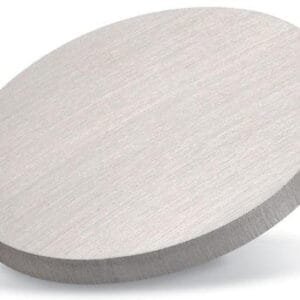
Chromium Vanadium (Cr/V) Sputtering Target is a versatile alloy material designed for depositing functional thin films that combine chromium’s hardness and corrosion resistance with vanadium’s strengthening and grain-refining effects. Cr/V alloy coatings are widely used in protective, decorative, and electronic applications where enhanced wear resistance, adhesion, and mechanical stability are required. As a sputtering target, Cr/V enables precise control of alloy composition and thin film performance.
Detailed Description
Our Chromium Vanadium Sputtering Targets are produced from carefully alloyed raw materials using vacuum melting or powder metallurgy techniques to ensure compositional uniformity and structural integrity. The Cr-to-V ratio can be customized to tailor hardness, stress behavior, electrical conductivity, and oxidation resistance in the deposited films.
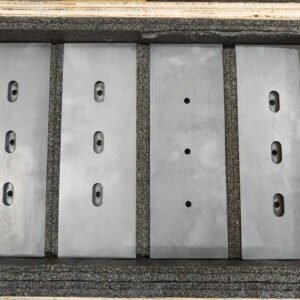
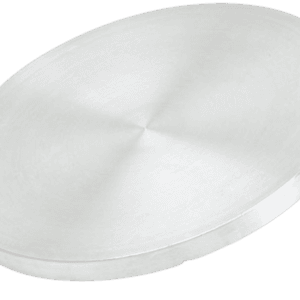
High-density targets with homogeneous microstructure minimize particle generation and arcing during sputtering, providing stable plasma conditions and consistent deposition rates. Due to their metallic conductivity, Cr/V targets are typically compatible with DC sputtering systems, although RF sputtering can also be used depending on system configuration. Targets are available in circular, rectangular, or rotary configurations, with optional bonding to copper backing plates for improved heat dissipation and mechanical stability in high-power applications.
Applications
Chromium Vanadium Sputtering Targets are widely used in:
Wear-resistant and hard protective coatings
Decorative coatings with enhanced durability
Thin films for tools and mechanical components
Corrosion-resistant surface layers
Functional coatings in electronics and microfabrication
Research on Cr-based alloy thin films
Technical Parameters
| Parameter | Typical Value / Range | Importance |
|---|---|---|
| Chemical Composition | Cr/V alloy (custom ratios) | Controls hardness and corrosion resistance |
| Purity | 99.9% – 99.99% | Reduces impurity-related defects |
| Diameter | 25 – 300 mm (custom available) | Compatible with standard sputtering cathodes |
| Thickness | 3 – 10 mm | Influences target lifetime |
| Density | ≥ 99% theoretical | Improves plasma stability |
| Sputtering Mode | DC / RF sputtering | Suitable for conductive alloys |
| Bonding | Unbonded / Cu backing (optional) | Enhances thermal management |
Comparison with Related Materials
| Material | Key Advantage | Typical Application |
|---|---|---|
| Cr/V | Balanced hardness and toughness | Protective alloy coatings |
| Pure Chromium | Excellent corrosion resistance | Decorative & protective films |
| Pure Vanadium | Strengthening element | Alloy modification |
| Cr/N coatings | High hardness | Cutting tools & wear layers |
FAQ
| Question | Answer |
|---|---|
| Can the Cr/V composition be customized? | Yes, alloy ratios can be tailored to specific performance requirements. |
| Is DC sputtering suitable? | Yes, Cr/V is conductive and compatible with DC sputtering systems. |
| Are bonded targets available? | Yes, copper backing plates are available for improved heat dissipation. |
| How is the target packaged? | Vacuum-sealed with protective foam and export-grade cartons or crates. |
Packaging
Our Chromium Vanadium Sputtering Targets are carefully labeled and vacuum-sealed to ensure traceability and protection from oxidation or contamination. Export-grade packaging safeguards the targets during storage and international transport.
Conclusion
Chromium Vanadium (Cr/V) Sputtering Target offers a dependable solution for depositing durable alloy thin films with enhanced hardness, corrosion resistance, and mechanical stability. With precise composition control, high density, and customizable formats, it is well suited for advanced protective coatings and functional thin film applications.
For detailed specifications and a quotation, please contact us at sales@thinfilmmaterials.com.
Reviews
There are no reviews yet.