
Introduction
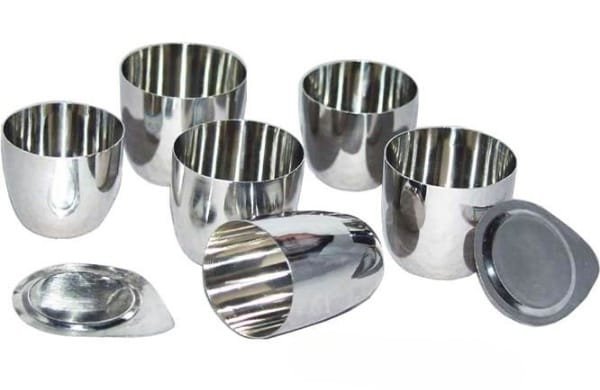
Claisse® Platinum Crucibles & Molds are precision-manufactured noble metal laboratory vessels designed for high-temperature fusion, analytical sample preparation, and advanced materials processing. Widely used in XRF (X-ray fluorescence) analysis and glass bead preparation, platinum crucibles and molds provide unmatched chemical inertness, thermal stability, and dimensional reliability.
In fusion laboratories where contamination control and repeatability are critical, platinum labware ensures consistent analytical accuracy and long service life under extreme thermal conditions.
Detailed Description
Claisse® Platinum Crucibles & Molds are typically fabricated from high-purity platinum (≥99.95%) or platinum-rhodium (Pt-Rh) alloys to enhance mechanical strength and resistance to deformation at elevated temperatures.
Key performance characteristics include:
High melting point (~1768°C for pure Pt)
Exceptional resistance to acids and molten fluxes
Excellent oxidation resistance at red heat
Dimensional stability during repeated heating cycles
Smooth polished interior surfaces for easy cleaning
Crucible configurations include:
Standard cylindrical crucibles
Tall-form crucibles
Low-form crucibles
Reinforced rim designs
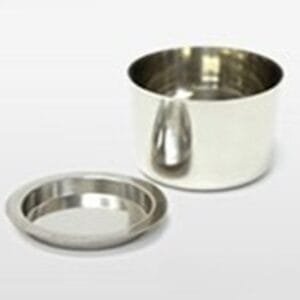
Crucibles with matching platinum lids
Molds are engineered for:
Glass bead casting
Fusion sample preparation
Analytical pellet formation
High-purity material solidification
Pt-Rh alloys are often selected when enhanced mechanical strength is required, especially in automated fusion systems where repeated mechanical handling is involved.
Applications
Claisse® Platinum Crucibles & Molds are extensively used in:
XRF fusion sample preparation
Geological and mining laboratories
Cement and mineral analysis
Glass and ceramic melting
Chemical laboratory research
Precious metal refining
High-temperature analytical procedures
In analytical chemistry, platinum labware ensures minimal sample contamination and accurate quantitative results.
Technical Parameters
| Parameter | Typical Value / Range | Importance |
|---|---|---|
| Material | Pt ≥99.95% / Pt-Rh alloys | Ensures purity & durability |
| Melting Point | ~1768°C (Pt) | Supports extreme temperature use |
| Capacity | 5 – 300 mL (custom options) | Matches fusion requirements |
| Wall Thickness | 0.3 – 1.0 mm (custom) | Balances durability & heat transfer |
| Surface Finish | Polished interior | Reduces residue and contamination |
| Customization | Size, shape, alloy grade | Tailored to fusion systems |
Custom fabrication based on fusion machine compatibility and laboratory workflow is available.
Comparison with Alternative Crucible Materials
| Material | Key Advantage | Typical Application |
|---|---|---|
| Platinum (Pt) | Maximum chemical inertness | XRF & analytical fusion |
| Pt-Rh Alloy | Improved high-temp strength | Automated fusion systems |
| Zirconia | Cost-effective ceramic | General high-temp melting |
| Graphite | High thermal conductivity | Metal melting applications |
Compared to ceramic or graphite vessels, platinum crucibles provide superior chemical resistance and minimal contamination risk, making them essential for precision analytical laboratories.
FAQ
| Question | Answer |
|---|---|
| What alloy grades are available? | High-purity platinum and platinum-rhodium alloys are available. |
| Can crucibles be customized? | Yes, capacity, wall thickness, and design can be tailored. |
| Are lids supplied? | Matching platinum lids can be provided upon request. |
| Is platinum suitable for repeated thermal cycling? | Yes, platinum maintains structural integrity under repeated high-temperature cycles. |
| Is recycling or refining service available? | Precious metal reclaim options can be discussed depending on customer needs. |
Packaging
Our Claisse® Platinum Crucibles & Molds are meticulously tagged and labeled externally to ensure efficient identification and maintain high standards of quality control. Each unit is carefully protected with cushioning materials and secure packaging to prevent deformation or surface damage during storage and transportation.
Conclusion
Claisse® Platinum Crucibles & Molds provide reliable, high-purity performance for analytical fusion, glass bead preparation, and advanced laboratory applications. With superior thermal stability, chemical resistance, and customizable configurations, they remain the preferred choice for laboratories requiring precision and durability.
For detailed specifications and a quotation, please contact us at sales@thinfilmmaterials.com.
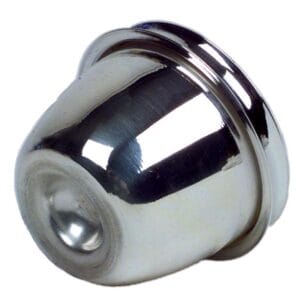
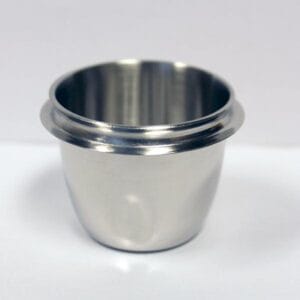
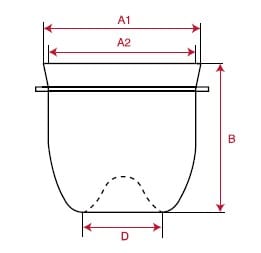
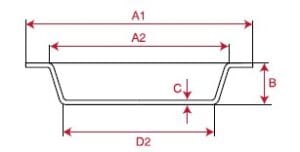
All weights are in grams and all dimensions are in millimeters.
Claisse® Platinum Crucibles
Code | Description | Capacity | B | A2 | D | A1 | Weight |
PT0501 | BIS with dimple | 25ml | 32 | 37 | 20 | 43 | 26 |
PT0502 | BIS reinforced with dimple | 25ml | 32 | 37 | 20 | 43 | 30 |
PT0503 | Flat base no dimple | 25ml | 35 | 35 | 21 | 44 | 26 |
PT0504 | Flat base no dimple | 25ml | 35 | 35 | 21 | 44 | 30 |
PT0505 | Optimix | 25ml | 32 | 37 | 20 | 43 | 30 |
Claisse® Platinum Molds
Code | D2 | A2 | A1 | B | C | Weight |
PT0506 | 30 | 31 | 39 | 6 | 0.6 | 18 |
PT0507 | 30 | 31 | 39 | 6 | 1 | 30 |
PT0508 | 32 | 34 | 42 | 6 | 0.6 | 21 |
PT0509 | 32 | 34 | 42 | 6 | 1 | 36 |
PT0510 | 35 | 37 | 44 | 6 | 0.6 | 25 |
PT0511 | 35 | 37 | 44 | 6 | 0.9 | 48 |
PT0512 | 38 | 41 | 49 | 6 | 0.6 | 29 |
PT0513 | 38 | 41 | 49 | 6 | 0.9 | 48 |
PT0514 | 40 | 42 | 49 | 6 | 0.6 | 34 |
PT0515 | 40 | 42 | 49 | 6 | 0.9 | 48 |

Reviews
There are no reviews yet.