
 MSDS File
Introduction
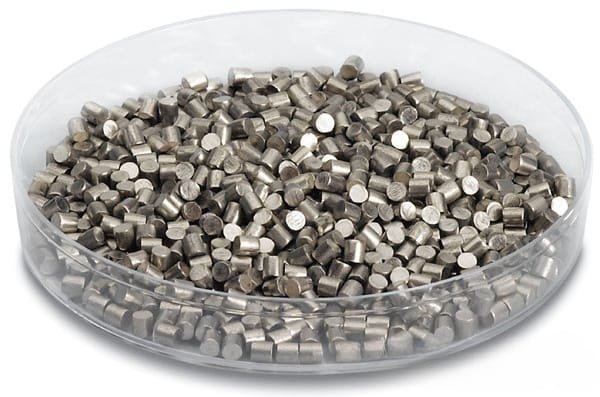
Copper Nickel Evaporation Materials (Cu/Ni) are alloy-based sources designed for vacuum deposition processes requiring corrosion resistance, controlled electrical properties, and stable metallic film formation. By combining copper’s excellent conductivity with nickel’s mechanical strength and chemical stability, Cu/Ni alloys provide balanced performance in functional and decorative thin film applications.
Cu/Ni thin films are widely used in electronics, barrier layers, resistive films, and marine-grade coatings. High-purity evaporation materials ensure consistent alloy composition transfer during deposition, supporting uniform film performance across substrates.
Detailed Description
Copper Nickel alloys are typically produced through vacuum induction melting followed by casting and precision machining to ensure homogeneous microstructure and controlled composition. Common alloy ratios include:
Cu 70% / Ni 30%
Cu 80% / Ni 20%
Cu 90% / Ni 10%
Custom atomic or weight ratios upon request
Cu/Ni evaporation materials are available in:
Pellets
Granules
Small alloy pieces
Custom-cut slugs
With melting points generally between 1170–1240 °C (depending on composition), Cu/Ni alloys are suitable for both thermal evaporation and electron beam evaporation. Uniform alloy distribution ensures consistent vapor composition and reduces phase segregation during deposition.
Key performance characteristics include:
Good electrical conductivity (composition dependent)
Enhanced corrosion resistance compared to pure copper
Improved adhesion compared to pure nickel
Stable film formation in multilayer stacks
Cu/Ni films can also serve as diffusion barrier layers or intermediate adhesion layers in microelectronic structures.
Applications
Copper Nickel Evaporation Materials are commonly used in:
Resistive thin films and precision resistors
Barrier and adhesion layers in electronics
Corrosion-resistant coatings
Decorative metallic finishes
RF shielding and conductive coatings
Marine-related components
Research and prototyping of alloy thin films
In microelectronics, Cu/Ni films can provide improved oxidation resistance and mechanical stability compared to pure copper layers.
Technical Parameters
| Parameter | Typical Value / Range | Importance |
|---|---|---|
| Composition | Cu/Ni (custom ratios) | Controls conductivity & corrosion resistance |
| Purity | 99.9% – 99.99% | Ensures stable alloy deposition |
| Form | Pellets / Granules / Pieces | Compatible with crucibles |
| Melting Range | ~1170–1240 °C | Suitable for thermal or e-beam evaporation |
| Density | ~8.9 g/cm³ (varies by ratio) | Relevant for deposition rate calculation |
| Deposition Method | Thermal / E-beam | Enables uniform alloy thin films |
Custom alloy ratios and forms can be supplied to match specific deposition systems.
Comparison with Related Alloy Materials
| Material | Key Advantage | Typical Application |
|---|---|---|
| Copper Nickel (Cu/Ni) | Balanced conductivity & corrosion resistance | Resistive & protective films |
| Pure Copper | High electrical conductivity | Metallization layers |
| Pure Nickel | Strong corrosion resistance | Protective coatings |
| Brass (Cu/Zn) | Cost-effective alloy | Decorative films |
Compared to pure copper, Cu/Ni alloys offer better resistance to oxidation and environmental degradation. Compared to pure nickel, they provide improved electrical conductivity.
FAQ
| Question | Answer |
|---|---|
| Can the Cu/Ni ratio be customized? | Yes, both weight and atomic ratios can be tailored to meet film property requirements. |
| Is it suitable for thermal evaporation? | Yes, depending on composition, it is compatible with thermal and e-beam systems. |
| Will the alloy composition remain consistent during evaporation? | With proper process control, stable composition transfer can be achieved. |
| Is copper backing plate bonding required? | Typically not required for evaporation materials, but custom configurations can be discussed. |
| Are material certificates provided? | Yes, chemical composition and batch traceability documents are available. |
Packaging
Our Copper Nickel Evaporation Materials are meticulously tagged and labeled externally to ensure efficient identification and maintain high standards of quality control. Materials are carefully packed in vacuum-sealed or moisture-resistant containers to prevent oxidation during storage and transportation.
Conclusion
Copper Nickel Evaporation Materials (Cu/Ni) provide a reliable alloy solution for conductive, corrosion-resistant, and functional thin film deposition. With customizable composition, controlled purity, and stable evaporation behavior, they support a broad range of electronic, industrial, and research applications.
For detailed specifications and a quotation, please contact us at sales@thinfilmmaterials.com.
Reviews
There are no reviews yet.