

Erbium(III) Oxide Powder (Er₂O₃)
Introduction
Erbium(III) Oxide Powder (Er₂O₃) is a high-purity rare-earth compound widely used in photonics, ceramics, electronics, and specialized glass applications. Known for its distinctive pink hue and optical absorption in the infrared region, Er₂O₃ plays a critical role in fiber optics, lasers, and luminescent materials.
Detailed Description
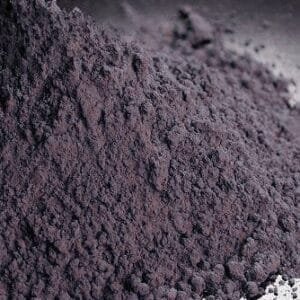
Erbium Oxide is a pale pink to rose-colored crystalline powder with a melting point of ~2,340 °C and density of ~8.64 g/cm³. It is typically available in 99.9% (3N) to 99.999% (5N) purities, ensuring minimal impurities for high-precision applications.
Key characteristics include:
Optical properties: Strong absorption bands in the infrared region, making it ideal for fiber amplifiers and laser materials.
Colorant: Used in specialty glass and ceramics to impart a stable pink tint.
Thermal stability: Suitable for high-temperature applications in ceramics and coatings.
Electrical applications: Acts as a component in dielectric materials.
Applications
Erbium(III) Oxide Powder is applied in:
Fiber Optics: As a dopant in erbium-doped fiber amplifiers (EDFAs) for telecommunications.
Lasers: Used in solid-state lasers for medical, defense, and industrial applications.
Glass & Ceramics: Adds a pink coloration and improves optical performance.
Electronics: Integrated into thin-film dielectrics and insulating ceramics.
Phosphors: Contributes to luminescent and display materials.
Technical Parameters
| Parameter | Typical Value / Range | Importance |
|---|---|---|
| Purity | 99.9% – 99.999% | High purity ensures optical and electronic performance |
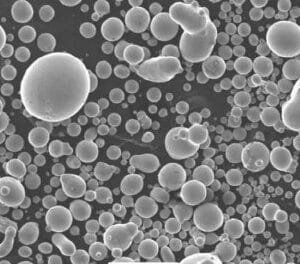
| Particle Size | 100 nm – 5 µm | Nano-grade powders enhance sintering and thin films |
| Appearance | Pink crystalline powder | Distinctive color indicates erbium content |
| Melting Point | ~2,340 °C | Excellent thermal resistance |
| Density | ~8.64 g/cm³ | High density for advanced ceramics |
Comparison with Related Materials
| Material | Key Advantage | Typical Application |
|---|---|---|
| Erbium Oxide (Er₂O₃) | Optical absorption, pink tint | Lasers, optics, ceramics |
| Ytterbium Oxide (Yb₂O₃) | Infrared optical activity | Laser materials, ceramics |
| Yttrium Oxide (Y₂O₃) | Transparency and thermal stability | Optical ceramics, coatings |
FAQ
| Question | Answer |
|---|---|
| Why is Er₂O₃ used in fiber optics? | It provides gain in erbium-doped fiber amplifiers for telecom systems. |
| What color is Er₂O₃ powder? | Pale pink to rose-colored due to erbium’s optical properties. |
| Can Er₂O₃ withstand high temperatures? | Yes, with a melting point above 2,300 °C, it is suitable for ceramics and coatings. |
| Is nano Er₂O₃ available? | Yes, nano-sized powders are supplied for thin films and sintering. |
| How is it packaged? | Vacuum-sealed bottles or bags, with bulk orders in lined drums. |
Packaging
Erbium(III) Oxide Powder is carefully vacuum-sealed in moisture-proof containers. Bulk shipments are packed in reinforced drums or cartons to ensure purity and safe transport.
Conclusion
Erbium(III) Oxide Powder (Er₂O₃) is a valuable material for photonics, lasers, ceramics, and electronics. Its unique optical properties and high purity make it indispensable in telecommunications, specialty glass, and advanced material applications.
For detailed specifications and a quotation, please contact us at [sales@thinfilmmaterials.com].

Reviews
There are no reviews yet.