

Introduction
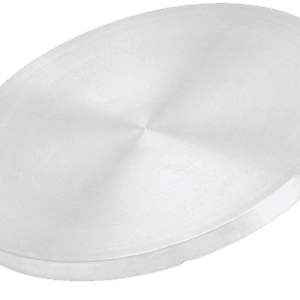
Gold Zinc Sputtering Target (Au/Zn) is a precisely engineered alloy target designed for advanced thin film deposition processes. By combining the excellent electrical conductivity and chemical stability of gold with the functional alloying effect of zinc, Au/Zn targets enable tailored film properties for microelectronics, optoelectronics, and specialized coating applications.
In high-vacuum environments such as magnetron sputtering systems, compositional uniformity and microstructural stability are critical. Au/Zn sputtering targets are manufactured to deliver consistent deposition rates, controlled alloy composition, and reliable film performance across R&D and industrial production platforms.
Detailed Description
Gold Zinc Sputtering Target typically consists of a pre-alloyed Au/Zn composition, with ratios customized according to application requirements (e.g., Au-rich conductive films or Zn-modified functional layers). The alloy is produced through vacuum induction melting or controlled atmosphere melting to minimize oxidation and ensure homogeneity.
Key characteristics include:
Controlled Alloy Composition – Precise Au/Zn ratios ensure predictable film stoichiometry and electrical performance.
High Density and Low Porosity – Densification processes reduce particle generation and improve sputtering stability.
Optimized Grain Structure – Fine and uniform grains enhance sputtering uniformity and reduce arcing.
Excellent Thermal Conductivity – Particularly important in high-power sputtering systems to maintain dimensional stability.
Au/Zn alloy targets can be supplied in planar or rotary configurations, with optional copper or titanium backing plates for improved heat dissipation and mechanical integrity. For applications involving sensitive substrates, careful bonding ensures flatness and minimizes thermal stress during operation.
The presence of zinc in the alloy can influence film adhesion, wettability, and alloy phase formation, which is especially relevant in microelectronic interconnects and diffusion-related applications.
Applications
Gold Zinc Sputtering Target is widely used in:
Microelectronics & Semiconductor Devices
Formation of alloyed conductive layers, contact materials, and diffusion-modified interfaces.Optoelectronic Components
Deposition of functional metallic films with controlled reflectivity and conductivity.Thin Film Research & Development
Exploration of Au-based alloy systems and phase engineering in advanced materials studies.Decorative & Functional Coatings
Gold-toned coatings with modified hardness or adhesion characteristics.Specialized Vacuum Coating Systems
Custom alloy films for sensors, MEMS devices, and precision instrumentation.
Technical Parameters
| Parameter | Typical Value / Range | Importance |
|---|---|---|
| Purity | 99.9% – 99.99% (metal basis) | Reduces impurities that affect film conductivity |
| Composition | Custom Au/Zn ratios (wt% or at%) | Controls electrical and structural properties |
| Diameter | 25 – 300 mm (custom) | Matches sputtering cathode assemblies |
| Thickness | 3 – 8 mm | Influences target lifetime and sputtering rate |
| Density | ≥ 99% of theoretical | Ensures stable plasma and uniform erosion |
| Bonding | Copper / Titanium backing optional | Improves heat transfer and mechanical stability |
Comparison with Related Materials
| Material | Key Advantage | Typical Application |
|---|---|---|
| Gold Zinc Sputtering Target | Tunable conductivity & alloy phase control | Semiconductor contacts & functional films |
| Pure Gold | Maximum corrosion resistance & conductivity | High-reliability electrical contacts |
| Gold Silver Alloy | Enhanced reflectivity & cost balance | Optical coatings |
| Zinc | Reactive & functional modification capability | Barrier or functional layers |
Compared to pure gold, Au/Zn alloy targets offer enhanced flexibility in tailoring film properties. The addition of zinc can modify mechanical strength, adhesion behavior, and diffusion characteristics without significantly compromising conductivity.
FAQ
| Question | Answer |
|---|---|
| Can the Au/Zn ratio be customized? | Yes, the alloy composition can be tailored by weight or atomic percentage to meet specific film requirements. |
| Is the target supplied pre-alloyed or blended? | Standard products are pre-alloyed to ensure compositional uniformity during sputtering. |
| Are bonded targets available? | Yes, copper or titanium backing plates are available for improved thermal management. |
| What sputtering methods are compatible? | Suitable for DC, RF, and magnetron sputtering systems depending on composition and equipment design. |
| How is the product packaged? | Vacuum-sealed with protective cushioning and export-grade cartons or wooden crates. |
Packaging
Our Gold Zinc Sputtering Target are meticulously tagged and labeled externally to ensure efficient identification and maintain high standards of quality control. We take great care to prevent any potential damage during storage and transportation, ensuring the targets arrive in perfect condition.
Conclusion
Gold Zinc Sputtering Target (Au/Zn) provides a reliable and customizable solution for precision thin film deposition where controlled alloy composition and stable sputtering performance are essential. With engineered microstructure, flexible dimensions, and optional bonding configurations, it supports both laboratory-scale research and industrial-scale coating processes.
For detailed specifications and a quotation, please contact us at sales@thinfilmmaterials.com.

Reviews
There are no reviews yet.