
 MSDS File
Introduction
Hafnium Tetrafluoride (HfF₄) evaporation materials are high-purity fluoride compounds used in vacuum deposition processes for optical, dielectric, and specialized thin film applications. As a metal fluoride with unique optical and chemical properties, HfF₄ is particularly valued in infrared optics, multilayer interference coatings, and advanced photonic systems.
In controlled vacuum environments, HfF₄ serves as a reliable source material for forming fluoride-based thin films with low refractive index and high transmission in selected wavelength ranges.
Detailed Description
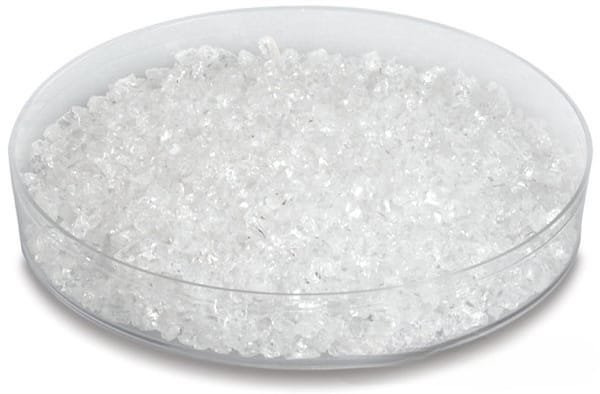
Hafnium Tetrafluoride (chemical formula HfF₄) is a white crystalline compound characterized by high thermal stability under vacuum and strong chemical bonding between hafnium and fluorine atoms. It is typically supplied in powder, granule, or compacted pellet form for compatibility with thermal or electron beam evaporation systems.
High-quality HfF₄ evaporation materials are manufactured under carefully controlled conditions to ensure:
High chemical purity (typically 3N–4N or higher upon request)
Low moisture content to minimize hydrolysis
Controlled particle size for stable evaporation
Minimal metallic or oxide impurities
Because fluoride compounds are sensitive to moisture, strict drying and packaging procedures are essential to maintain material integrity. During evaporation, HfF₄ can form thin films suitable for optical stacks, especially when low absorption and precise refractive index control are required.
HfF₄ is generally evaporated using thermal evaporation under high vacuum, although electron beam systems may also be employed depending on equipment configuration and film design.
Applications
Hafnium Tetrafluoride evaporation materials are widely used in:
Optical Multilayer Coatings
Low-index layers in interference filters and antireflection coatings.Infrared Optical Components
Thin films for IR lenses, windows, and sensor systems.Laser Optics
Optical coatings requiring high transparency and low absorption.Photonic Devices
Waveguide and specialized dielectric film structures.Research & Advanced Coating Development
University and industrial R&D laboratories.Vacuum Optical Deposition Systems
Compatible with high-vacuum evaporation equipment.
Technical Parameters
| Parameter | Typical Value / Range | Importance |
|---|---|---|
| Chemical Formula | HfF₄ | Defines film chemistry |
| Purity | 99.9% – 99.99% (3N–4N) | Minimizes optical absorption |
| Form | Powder / Granule / Pellet | Matches evaporation source |
| Particle Size | 0.5 – 5 mm (custom available) | Influences evaporation stability |
| Deposition Method | Thermal / E-beam evaporation | System compatibility |
| Storage Condition | Moisture-controlled environment | Prevents hydrolysis |
Comparison with Related Fluoride Materials
| Material | Key Advantage | Typical Application |
|---|---|---|
| Hafnium Tetrafluoride (HfF₄) | Stable fluoride for optical coatings | IR & interference filters |
| Magnesium Fluoride (MgF₂) | Very low refractive index | Antireflection coatings |
| Calcium Fluoride (CaF₂) | Excellent IR transmission | Optical windows |
| Aluminum Fluoride (AlF₃) | Chemical stability in fluoride systems | Optical coatings |
HfF₄ is selected when specific refractive index tuning and fluoride-based dielectric performance are required.
FAQ
| Question | Answer |
|---|---|
| Is HfF₄ sensitive to moisture? | Yes, it should be stored in a dry, sealed environment to prevent hydrolysis. |
| Can particle size be customized? | Yes, granule size and pellet form can be tailored to your evaporation system. |
| Which deposition method is recommended? | Thermal evaporation is commonly used; E-beam is optional depending on system setup. |
| What purity is recommended for optical coatings? | 4N purity is generally preferred for high-precision optical applications. |
| How is the product packaged? | Vacuum-sealed with desiccant and moisture-barrier packaging to ensure stability during transport. |
Packaging
Our Hafnium Tetrafluoride Evaporation Materials are meticulously tagged and labeled externally to ensure efficient identification and maintain high standards of quality control. We take great care to prevent any potential damage during storage and transportation, ensuring the materials arrive in perfect condition.
Conclusion
Hafnium Tetrafluoride (HfF₄) evaporation materials provide a dependable source for fluoride-based thin films used in optical and infrared applications. With controlled purity, moisture protection, and customizable forms, HfF₄ supports stable vacuum deposition and consistent film performance.
For detailed specifications and a quotation, please contact us at sales@thinfilmmaterials.com.
Reviews
There are no reviews yet.