
Introduction
Hastelloy X Powder (Alloy X, UNS N06002) is a nickel-based superalloy powder engineered for excellent high-temperature strength, oxidation resistance, and structural stability. Designed for demanding thermal environments, Alloy X maintains mechanical integrity under prolonged exposure to temperatures approaching 1100°C.
In powder form, Hastelloy X is widely used in additive manufacturing (AM), hot isostatic pressing (HIP), and thermal spray applications. Its combination of fabricability, weldability, and resistance to carburization makes it particularly suitable for gas turbine engines, industrial furnaces, and chemical processing systems.
Detailed Description
Alloy X (UNS N06002) is primarily a nickel-chromium-iron-molybdenum alloy with balanced chemistry for oxidation resistance and solid-solution strengthening.
Typical nominal composition (wt%):
Ni: Balance
Cr: ~20–23%
Fe: ~17–20%
Mo: ~8–10%
Co: ~0.5–2.5%
Minor elements: Mn, Si, C (controlled levels)
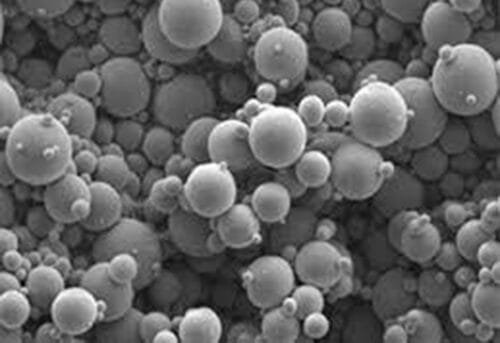
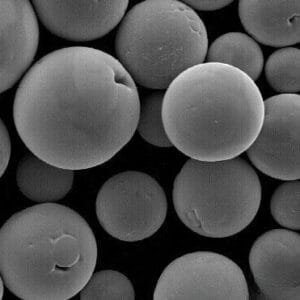
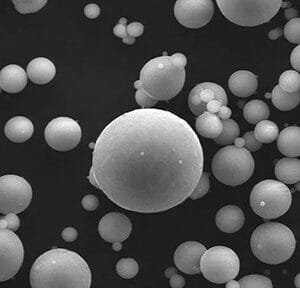
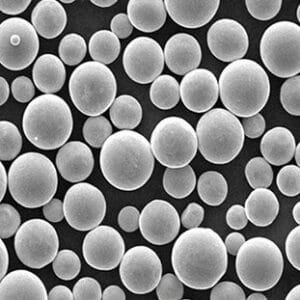
Spherical Hastelloy X Powder is typically produced by gas atomization, resulting in:
High sphericity for improved flowability
Controlled particle size distribution (PSD)
Low oxygen and impurity content
Uniform internal microstructure
These characteristics are essential for laser powder bed fusion (LPBF), directed energy deposition (DED), and plasma or HVOF thermal spray systems.
The alloy’s strength is derived primarily from solid-solution hardening rather than precipitation strengthening, which enhances its resistance to phase instability during long-term high-temperature service. Hastelloy X also exhibits excellent resistance to oxidation, carburization, and nitriding in combustion environments.
Applications
Hastelloy X Powder is widely used in:
Gas turbine combustor components
Afterburner and transition duct parts
Industrial furnace hardware
Additive manufacturing of high-temperature components
Thermal spray oxidation-resistant coatings
Chemical processing equipment
Aerospace hot-section components
Its ability to withstand thermal cycling and oxidation makes it suitable for parts exposed to continuous heating and cooling cycles.
Technical Parameters
| Parameter | Typical Value / Range | Importance |
|---|---|---|
| Standard | UNS N06002 | Identifies alloy specification |
| Chemistry | Controlled per ASTM/AMS specs | Ensures oxidation & strength performance |
| Particle Size | 15–45 µm / 45–106 µm (custom) | Matches AM or spray processes |
| Morphology | Spherical (gas atomized) | Improves flow and layer uniformity |
| Apparent Density | ~4.0–5.0 g/cm³ (varies by PSD) | Influences build quality |
| Melting Range | ~1260–1355°C | Defines processing window |
Custom PSD ranges and material test reports (MTR) are available upon request.
Comparison with Related High-Temperature Alloys
| Material | Key Advantage | Typical Application |
|---|---|---|
| Hastelloy X (N06002) | Excellent oxidation & carburization resistance | Combustion systems |
| Inconel 625 (N06625) | Superior corrosion resistance | Marine & oil & gas |
| Inconel 718 | High precipitation strength | Turbine disks |
| Alloy 188 | High-temperature oxidation stability | Combustors |
Compared to precipitation-hardened alloys such as Inconel 718, Hastelloy X offers improved fabricability and stability in prolonged high-temperature oxidation environments.
FAQ
| Question | Answer |
|---|---|
| Is Hastelloy X Powder suitable for LPBF? | Yes, spherical gas-atomized powder is compatible with LPBF systems. |
| Does it require complex heat treatment? | It primarily relies on solid-solution strengthening and may require stress relief depending on application. |
| Is it resistant to carburization? | Yes, it provides good resistance in high-temperature combustion environments. |
| Can PSD be customized? | Yes, particle size distribution can be tailored to your equipment. |
| Are certifications available? | Yes, chemical analysis and batch traceability documents are provided. |
Packaging
Our Hastelloy X Powder (Alloy X, UNS N06002) are meticulously tagged and labeled externally to ensure efficient identification and maintain high standards of quality control. Powders are packed in sealed, moisture-resistant containers to prevent contamination during storage and transportation.
Conclusion
Hastelloy X Powder (Alloy X, UNS N06002) delivers reliable high-temperature strength, oxidation resistance, and structural stability for aerospace, industrial, and energy applications. With spherical morphology, controlled chemistry, and customizable particle size distribution, it supports advanced additive manufacturing and protective coating technologies.
For detailed specifications and a quotation, please contact us at sales@thinfilmmaterials.com.
Reviews
There are no reviews yet.