

Introduction
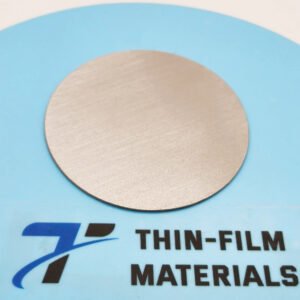
The Iron Manganese Sputtering Target (Fe/Mn) is an alloy target widely used for depositing magnetic, antiferromagnetic, and functional alloy thin films. By combining iron’s magnetic characteristics with manganese’s ability to tailor magnetic ordering and electrical behavior, Fe/Mn targets support advanced thin-film research and device development in spintronics, magnetic sensors, and electronic materials. Their controllable composition and stable sputtering behavior make them a reliable choice for both R&D and pilot-scale production.
Detailed Description
Iron Manganese sputtering targets are manufactured from high-purity iron and manganese raw materials through controlled melting, alloying, and precision machining. Strict compositional control ensures homogeneous element distribution across the target, which is critical for maintaining film stoichiometry and reproducibility during sputtering.
Fe/Mn alloy targets exhibit stable erosion characteristics and predictable sputtering rates under magnetron sputtering conditions. By adjusting the Fe/Mn atomic or weight ratio, users can fine-tune thin-film properties such as magnetic ordering (including antiferromagnetic behavior), resistivity, and microstructure. Targets can be supplied as monolithic alloy discs or bonded to copper or titanium backing plates to improve heat dissipation and mechanical stability at higher power densities.
Applications
Iron Manganese sputtering targets are commonly used in:
Spintronic and magnetic thin-film research
Antiferromagnetic layers for exchange bias structures
Magnetic sensors and memory device development
Functional alloy thin films
Semiconductor and electronic materials research
Academic and industrial thin-film R&D
Technical Parameters
| Parameter | Typical Value / Range | Importance |
|---|---|---|
| Alloy Composition | Fe/Mn (custom ratios available) | Controls magnetic behavior |
| Purity | 99.9% – 99.99% | Improves film consistency |
| Target Diameter | 25 – 300 mm (custom) | Fits standard sputtering guns |
| Thickness | 3 – 6 mm (custom available) | Influences sputtering stability |
| Density | ≥ 99% of theoretical | Ensures uniform erosion |
| Backing Plate | Optional (Cu / Ti) | Enhances thermal management |
| Deposition Method | DC / RF Magnetron Sputtering | Process flexibility |
Comparison with Related Magnetic Alloy Targets
| Material | Key Advantage | Typical Application |
|---|---|---|
| Iron Manganese (Fe/Mn) | Tunable antiferromagnetic properties | Spintronics & sensors |
| Iron Cobalt (FeCo) | High magnetic saturation | Magnetic cores |
| Nickel Iron (NiFe) | Soft magnetic behavior | Magnetic shielding |
| Cobalt Manganese (CoMn) | Exchange bias control | Magnetic multilayers |
FAQ
| Question | Answer |
|---|---|
| Can the Fe/Mn ratio be customized? | Yes, alloy composition can be tailored to application requirements. |
| Is DC sputtering suitable? | Yes, DC sputtering is commonly used for Fe/Mn alloy targets. |
| Is bonding recommended? | Bonded targets are recommended for larger sizes or higher power use. |
| Are small research targets available? | Yes, laboratory-scale diameters and thicknesses are supported. |
| How is the target packaged? | Vacuum-sealed with protective cushioning to prevent oxidation. |
Packaging
Our Iron Manganese Sputtering Targets are meticulously tagged and labeled externally to ensure efficient identification and strict quality control. Each target is vacuum-sealed and protected with shock-absorbing, moisture-resistant materials to prevent damage or contamination during storage and transportation.
Conclusion
The Iron Manganese Sputtering Target (Fe/Mn) offers a versatile material platform for depositing magnetic and antiferromagnetic alloy thin films with controlled composition and reliable performance. With customizable alloy ratios, stable sputtering behavior, and consistent quality, Fe/Mn targets are well suited for advanced magnetic research and next-generation electronic applications.
For detailed specifications and a quotation, please contact us at sales@thinfilmmaterials.com.

Reviews
There are no reviews yet.