
Introduction
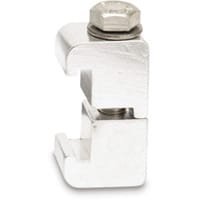
ISO-K HV Double Clamps (Cold Steel, Zinc Plated) are essential fastening components used in ISO-K high-vacuum flange systems. These clamps are designed to securely connect ISO-K flanges and ensure a stable, leak-tight assembly in vacuum pipelines and chambers. ISO-K clamp systems are widely used in high-vacuum environments such as thin film deposition equipment, semiconductor manufacturing tools, analytical instruments, and industrial vacuum systems.
Double clamps provide strong mechanical compression between two mating flanges and the centering ring, enabling reliable sealing while allowing quick assembly and disassembly. Their robust design makes them suitable for vacuum systems that require both mechanical strength and ease of maintenance.
Detailed Description
ISO-K HV Double Clamps are manufactured from high-strength cold-formed steel, which provides excellent structural durability and mechanical stability. The clamps are typically finished with a zinc-plated surface coating, which enhances corrosion resistance and protects the steel from environmental degradation.
The double clamp design includes two clamping arms connected by a tightening mechanism, allowing the clamp to apply uniform pressure across the flange connection. When installed together with a centering ring and O-ring, the clamp holds the two ISO-K flanges tightly in place, ensuring proper sealing within the vacuum system.
ISO-K flange systems are commonly used in high-vacuum (HV) environments, typically operating in the pressure range from rough vacuum down to approximately 10⁻⁸ mbar. The clamp system enables fast installation and removal of vacuum components without the need for complex bolting arrangements.
These clamps are engineered to maintain stable flange alignment while accommodating the mechanical loads associated with vacuum pumping and thermal expansion. Their robust construction ensures long service life even under repeated assembly cycles.
ISO-K HV Double Clamps are available in multiple sizes to match standard ISO-K flange diameters, including ISO-K63, ISO-K100, ISO-K160, ISO-K200, and ISO-K250 systems. The clamps are designed to work in combination with other ISO vacuum components such as centering rings, O-rings, and vacuum tubing.
Applications
ISO-K HV Double Clamps are widely used in high-vacuum systems across many industries:
Thin film deposition systems – vacuum chambers used for sputtering, evaporation, and coating processes.
Semiconductor manufacturing equipment – vacuum pipelines and process chambers.
Analytical instruments – mass spectrometers, electron microscopes, and surface analysis tools.
Vacuum furnaces – high-temperature processing equipment.
Industrial vacuum systems – vacuum pumping stations and gas handling systems.
Research laboratories – modular vacuum setups used in experimental research.
Technical Parameters
| Parameter | Typical Value / Range | Importance |
|---|---|---|
| Material | Cold Steel | Provides high mechanical strength |
| Surface Finish | Zinc Plated | Improves corrosion resistance |
| Compatible Flange | ISO-K Standard | Ensures compatibility with ISO vacuum systems |
| Available Sizes | ISO-K63 – ISO-K250 | Matches various vacuum pipeline diameters |
| Vacuum Range | High Vacuum (HV) | Suitable for industrial and laboratory systems |
Comparison with Related Vacuum Clamps
| Clamp Type | Key Advantage | Typical Application |
|---|---|---|
| ISO-K Double Clamp | Strong mechanical compression for ISO flanges | High-vacuum pipelines |
| ISO-F Bolted Flange | Higher mechanical strength for heavy systems | Large industrial vacuum systems |
| KF Quick Clamp | Fast assembly for small vacuum lines | Laboratory vacuum setups |
FAQ
| Question | Answer |
|---|---|
| What is an ISO-K double clamp used for? | It is used to secure two ISO-K flanges together with a centering ring to form a vacuum-tight connection. |
| What materials are these clamps made from? | They are typically made from cold steel with a zinc-plated surface to enhance corrosion resistance. |
| What vacuum range are ISO-K clamps suitable for? | ISO-K flange systems are commonly used in high-vacuum environments down to around 10⁻⁸ mbar. |
| Are different clamp sizes available? | Yes, ISO-K double clamps are available in multiple sizes such as ISO-K63, ISO-K100, ISO-K160, and larger sizes. |
| Can these clamps be reused? | Yes, ISO-K clamps are designed for repeated assembly and disassembly without significant wear. |
Packaging
Our ISO-K HV Double Clamps are carefully inspected and packaged to ensure they meet vacuum system cleanliness and quality requirements. Each clamp is individually protected to prevent mechanical damage or surface contamination during storage and transportation. Clear labeling ensures efficient identification and traceability.
Conclusion
ISO-K HV Double Clamps (Cold Steel, Zinc Plated) provide a reliable and durable solution for assembling ISO-K flange connections in high-vacuum systems. Their robust steel construction, corrosion-resistant zinc plating, and strong clamping force ensure stable and leak-tight vacuum connections in demanding industrial and laboratory environments.
Designed for compatibility with standard ISO-K flange systems, these clamps offer dependable performance and convenient installation for vacuum pipelines, semiconductor equipment, and thin film deposition systems.
For detailed specifications and a quotation, please contact us at sales@thinfilmmaterials.com.
Ordering Table
| Flange OD | Reference | Per Package | Material | Part Number |
| ISO63-ISO250 | Double Clamps | 1 | Cold Steel, Zinc Plated | QF-LDC-CS1 |
| ISO320-ISO500 | Double Clamps | 1 | Cold Steel, Zinc Plated | QF-LDC-CS2 |
| ISO630 | Double Clamps | 1 | Cold Steel, Zinc Plated | QF-LDC-CS3 |


Reviews
There are no reviews yet.