
Introduction
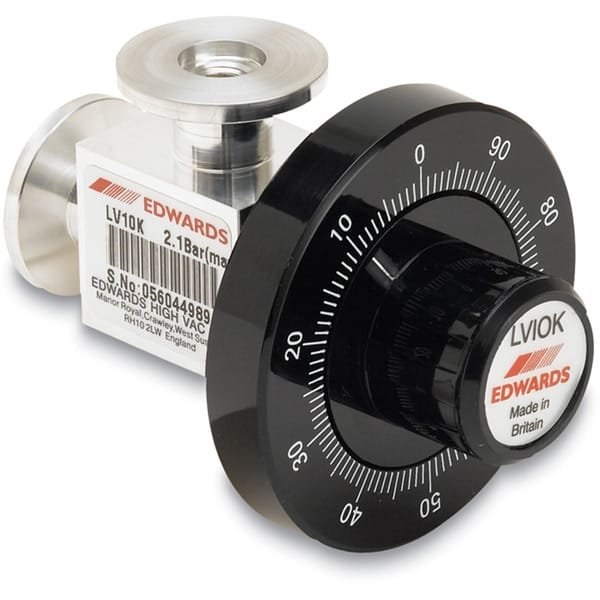
KF flanged gas needle valves are precision flow control components designed for high vacuum (HV) systems where accurate and repeatable gas regulation is required. Integrating fine metering capability with ISO-KF quick flange connections, these valves are widely used in vacuum deposition, analytical instrumentation, and gas delivery systems that demand both reliability and ease of installation.
Detailed Description
KF flanged gas needle valves are engineered to provide precise control over low to moderate gas flow rates through a finely tapered needle and seat mechanism. The valve stem allows gradual adjustment, enabling operators to achieve stable and repeatable flow conditions—critical for processes such as sputtering, CVD, and leak testing.
The valve body is typically constructed from high-grade stainless steel (SS304 or SS316/316L), ensuring excellent corrosion resistance and compatibility with high-purity gases. Internal sealing options may include metal-to-metal sealing or elastomer-based seals depending on the required vacuum level and chemical compatibility.
KF (QF) flanged connections allow for rapid assembly and disassembly without complex tooling, making these valves ideal for modular vacuum systems. The compact design minimizes dead volume, reducing gas retention and improving system responsiveness.
Some configurations also support fine thread pitch control, locking mechanisms for stable settings, and optional flow direction indicators. For enhanced cleanliness, electropolished internal surfaces and vacuum-compatible cleaning processes can be provided.
Key features include:
Precision needle control for accurate gas flow regulation
Stainless steel construction for durability and chemical resistance
KF (QF) quick flange connection for easy installation
Low dead volume design for improved system response
Optional fine adjustment and locking features
Suitable for high-purity and vacuum gas applications
Applications
KF flanged gas needle valves are widely used in:
Vacuum deposition systems (PVD, CVD, ALD)
Gas flow control in semiconductor processing
Analytical instruments (mass spectrometry, gas chromatography)
Leak testing and calibration systems
Laboratory vacuum setups and research equipment
Controlled gas dosing in experimental systems
Technical Parameters
| Parameter | Typical Value / Range | Importance |
|---|---|---|
| Material | SS304 / SS316L | Corrosion resistance & purity |
| Connection Type | ISO-KF (QF) flange | Quick installation |
| Size Range | KF10 – KF50 | System compatibility |
| Valve Type | Needle valve (fine control) | Precise flow adjustment |
| Pressure Range | Vacuum to ~10 bar (typical) | Versatile operation |
| Leak Rate | ≤ 1×10⁻⁹ mbar·L/s | High sealing performance |
| Operation | Manual (fine thread control) | Accurate регулирование |
Comparison with Related Materials
| Material/System | Key Advantage | Typical Application |
|---|---|---|
| KF Needle Valve | Precise flow control + quick connection | Vacuum gas systems |
| Ball Valve | Fast on/off operation | General gas control |
| Shut-Off Valve | Reliable isolation | Safety and maintenance |
| VCR Needle Valve | Ultra-high purity connections | Semiconductor gas lines |
FAQ
| Question | Answer |
|---|---|
| What is the main advantage of a needle valve? | It allows precise and gradual control of gas flow rates. |
| Are KF connections easy to install? | Yes, KF flanges enable quick assembly without complex tools. |
| Can these valves be used in high vacuum systems? | Yes, they are suitable for HV applications with proper sealing. |
| What sizes are available? | Standard sizes range from KF10 to KF50. |
| Are they compatible with high-purity gases? | Yes, stainless steel construction ensures compatibility. |
Packaging
Our KF Flanged Gas Needle Valves are meticulously tagged and labeled externally to ensure efficient identification and maintain high standards of quality control. Each valve is carefully cleaned and packaged to prevent contamination or mechanical damage during storage and transportation, ensuring optimal performance upon installation.
Conclusion
KF flanged gas needle valves provide precise, reliable, and user-friendly gas flow control for vacuum systems. With robust construction, fine adjustment capability, and easy integration via KF flanges, they are essential components for laboratories, semiconductor processes, and advanced vacuum applications.
For detailed specifications and a quotation, please contact us at sales@thinfilmmaterials.com.
Ordering Table
| Drawing | Flange Size | Actuator Diameter | Part Number |

| KF10 (1.18" OD) | 2.44 | C37102000 |

Reviews
There are no reviews yet.