
Introduction
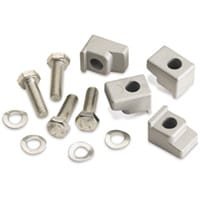
KF (QF) HV Claw Clamp Kits made from stainless steel are essential components for assembling and securing vacuum flange connections in high vacuum (HV) systems. Designed for quick installation and reliable sealing, these clamp kits are widely used in laboratories, semiconductor processing, and industrial vacuum systems where frequent assembly and disassembly are required.
Detailed Description
KF (QF) claw clamp kits are engineered to connect standard KF (Quick Flange) fittings using a combination of a stainless steel clamp, centering ring, and elastomer O-ring (typically Viton). The claw-style clamp provides uniform pressure distribution around the flange, ensuring a secure and leak-tight connection.
Constructed from corrosion-resistant stainless steel (commonly SS304 or SS316), these clamps offer excellent mechanical strength and durability, even under repeated use. The ergonomic wing nut or bolt mechanism allows for tool-free or minimal-tool tightening, significantly reducing installation time compared to bolted flange systems.
The centering ring ensures proper alignment between mating flanges and houses the O-ring, which forms the vacuum seal. Depending on the application, different O-ring materials (Viton, Buna-N, EPDM) can be selected to accommodate varying ताप environments and chemical exposures.
KF clamp kits are standardized according to ISO-KF dimensions, making them fully compatible with a wide range of vacuum components including tubes, tees, crosses, valves, and adapters.
Key features include:
Stainless steel construction for corrosion resistance and durability
Quick-release design for fast assembly and disassembly
Uniform clamping force for reliable vacuum sealing
Compatibility with standard ISO-KF flange systems
Reusable components with long service life
Applications
KF (QF) HV claw clamp kits are widely used in:
High vacuum (HV) and rough vacuum systems
Semiconductor processing equipment
Thin film deposition systems (PVD, CVD)
Analytical instruments and mass spectrometers
Research laboratories and vacuum test setups
Leak detection and vacuum piping assemblies
Technical Parameters
| Parameter | Typical Value / Range | Importance |
|---|---|---|
| Material | SS304 / SS316 | Corrosion resistance & strength |
| Standard | ISO-KF (QF) | Ensures compatibility |
| Size Range | KF10 – KF50 (custom sizes available) | Matches flange dimensions |
| Sealing Element | Viton / NBR / EPDM O-ring | Determines sealing performance |
| Clamp Type | Claw clamp with wing nut/bolt | Enables quick installation |
| Operating Pressure | Up to ~10⁻⁸ mbar (with proper seal) | Suitable for HV systems |
Comparison with Related Materials
| Material/System | Key Advantage | Typical Application |
|---|---|---|
| KF Clamp Kit (SS) | Quick connection, reusable | General HV systems |
| CF Flange System | Ultra-high vacuum capability | UHV systems |
| ISO-K System | Larger diameter handling | Industrial vacuum lines |
| Aluminum Clamps | Lightweight, cost-effective | Light-duty applications |
FAQ
| Question | Answer |
|---|---|
| What sizes are available? | Standard sizes range from KF10 to KF50, with custom options available. |
| Are the clamps reusable? | Yes, stainless steel clamps are designed for repeated use. |
| What O-ring materials can be used? | Common options include Viton, NBR, and EPDM depending on application needs. |
| Is tool-free installation possible? | Yes, most claw clamps feature wing nuts for quick manual tightening. |
| Can these be used in UHV systems? | KF systems are typically used for HV; UHV applications usually require CF flanges. |
Packaging
Our KF (QF) HV Claw Clamp Kits (SS) are meticulously tagged and labeled externally to ensure efficient identification and maintain high standards of quality control. We take great care to prevent any potential damage during storage and transportation, ensuring the products arrive in perfect condition.
Conclusion
KF (QF) HV Claw Clamp Kits in stainless steel provide a reliable, efficient, and user-friendly solution for vacuum system connections. Their robust construction, ease of use, and compatibility with ISO-KF standards make them indispensable components in modern vacuum technology setups.
For detailed specifications and a quotation, please contact us at sales@thinfilmmaterials.com.
Ordering Table
| Flange OD | Per Package | Material | Part Number |
| KF10-KF50 | 4 | Cast Steel | VKF1050CCS |

Reviews
There are no reviews yet.