

Introduction
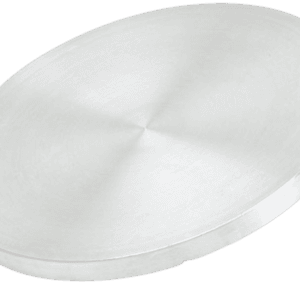
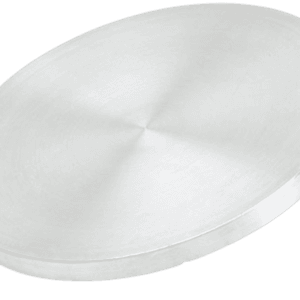
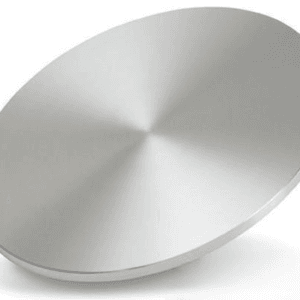
Lanthanum Vanadium Oxide (LaVO₃) Sputtering Targets are specialized ceramic targets used in thin film deposition for advanced electronic, magnetic, and oxide semiconductor applications. As a perovskite-type oxide material, LaVO₃ exhibits unique electronic correlations, tunable conductivity, and interesting magnetic properties, making it highly valuable for research in oxide electronics and functional thin films.
In magnetron sputtering processes, LaVO₃ sputtering targets enable the deposition of complex oxide thin films with controlled composition and crystal structure. These films are widely used in materials science research, oxide heterostructures, and next-generation electronic devices.
Detailed Description
Lanthanum Vanadium Oxide (LaVO₃) is a strongly correlated oxide belonging to the ABO₃ perovskite structure family. In this structure, lanthanum occupies the A-site while vanadium resides in the B-site of the perovskite lattice. This crystal structure allows the material to exhibit interesting electronic behaviors, including Mott insulating characteristics and temperature-dependent electrical conductivity.
LaVO₃ thin films are often studied for their electronic phase transitions and strong electron–electron interactions. These properties make them an important material for exploring novel electronic states and oxide-based device architectures. When deposited using sputtering techniques, LaVO₃ can form high-quality epitaxial or polycrystalline films depending on the substrate and deposition conditions.
High-density LaVO₃ sputtering targets are typically manufactured using advanced ceramic processing methods such as solid-state reaction, hot pressing, or sintering. These processes ensure uniform composition, high density, and stable sputtering behavior. High-density targets help maintain consistent sputtering rates and minimize particle generation during deposition.
Because oxide thin films are sensitive to stoichiometry, maintaining precise composition in the sputtering target is critical. A well-controlled LaVO₃ target ensures that the deposited thin films retain the desired electronic and structural characteristics. The targets can also be supplied with optional backing plates—such as copper or titanium—to improve thermal conductivity and mechanical stability during high-power sputtering.
Lanthanum Vanadium Oxide sputtering targets are commonly used in research laboratories and advanced thin film fabrication environments where oxide materials with complex electronic behavior are required.
Applications
Lanthanum Vanadium Oxide sputtering targets are primarily used in advanced materials research and functional oxide thin film fabrication. Typical applications include:
Oxide electronics research involving strongly correlated materials
Thin film heterostructures in complex oxide systems
Mott insulator and transition metal oxide studies
Spintronic and magnetic oxide devices
Functional oxide coatings for electronic components
Research on perovskite oxide interfaces and superlattices
These applications make LaVO₃ an important material in modern condensed matter physics and advanced electronic materials research.
Technical Parameters
| Parameter | Typical Value / Range | Importance |
|---|---|---|
| Purity | 99.9% – 99.99% | Higher purity improves film quality and reduces defects |
| Composition | LaVO₃ (Perovskite oxide) | Maintains correct stoichiometry for oxide thin films |
| Density | ≥ 95% theoretical density | Ensures stable sputtering and uniform deposition |
| Diameter | 25 – 200 mm (custom available) | Compatible with various sputtering systems |
| Thickness | 3 – 6 mm | Influences sputtering lifetime and stability |
| Bonding | Copper / Titanium backing plate optional | Improves heat dissipation during sputtering |
Comparison with Related Materials
| Material | Key Advantage | Typical Application |
|---|---|---|
| Lanthanum Vanadium Oxide (LaVO₃) | Strongly correlated electronic behavior | Oxide electronics research |
| Lanthanum Nickel Oxide (LaNiO₃) | Metallic conductivity | Conductive oxide electrodes |
| Strontium Vanadate (SrVO₃) | High electrical conductivity | Oxide electronics and electrodes |
| Lanthanum Manganite (LaMnO₃) | Magnetic and catalytic properties | Magnetic oxide films |
FAQ
| Question | Answer |
|---|---|
| Can LaVO₃ sputtering targets be customized? | Yes, diameter, thickness, density, and bonding options can be customized to fit different sputtering systems. |
| What sputtering methods are suitable for LaVO₃ targets? | They are typically used in RF magnetron sputtering systems for oxide thin film deposition. |
| Why is stoichiometry important for LaVO₃ targets? | Maintaining the correct La:V ratio ensures that deposited thin films retain the desired electronic and structural properties. |
| What substrates are commonly used for LaVO₃ thin films? | Substrates such as SrTiO₃, LaAlO₃, sapphire, and silicon are frequently used. |
| Are bonded targets available? | Yes, targets can be bonded to copper or titanium backing plates to improve thermal stability during sputtering. |
Packaging
Our Lanthanum Vanadium Oxide Sputtering Targets are meticulously tagged and labeled externally to ensure efficient identification and maintain high standards of quality control. We take great care to prevent any potential damage during storage and transportation, ensuring the targets arrive in perfect condition.
Conclusion
Lanthanum Vanadium Oxide (LaVO₃) sputtering targets provide a reliable material source for the deposition of complex oxide thin films with unique electronic and magnetic properties. Their perovskite structure and strongly correlated electron behavior make them an essential material for oxide electronics, condensed matter physics research, and advanced thin film engineering.
With customizable dimensions, high purity levels, and optional backing plate configurations, LaVO₃ sputtering targets support both research-scale experiments and industrial thin film deposition systems.
For detailed specifications and a quotation, please contact us at sales@thinfilmmaterials.com.
Reviews
There are no reviews yet.