

Lutetium Iron Garnet Sputtering Target (Lu₃Fe₅O₁₂)
Introduction
Lutetium Iron Garnet (Lu₃Fe₅O₁₂, often abbreviated as LuIG) sputtering targets are advanced ceramic materials widely used in the fabrication of magnetic thin films and spintronic devices. Known for their exceptional magnetic and optical characteristics, LuIG targets are indispensable in the study of magneto-optical phenomena and the development of next-generation magnetic insulators.
As a member of the rare-earth iron garnet family, Lutetium Iron Garnet offers low magnetic damping, high resistivity, and excellent crystalline compatibility with substrates such as Gadolinium Gallium Garnet (GGG) and Yttrium Iron Garnet (YIG). These properties make it an ideal material for precision thin film growth via sputtering and pulsed laser deposition.
Detailed Description
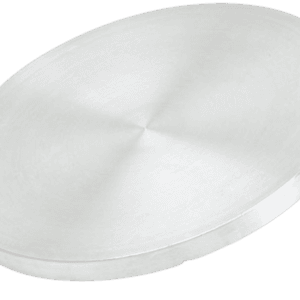
TFM’s Lutetium Iron Garnet Sputtering Target is manufactured using high-purity oxides through controlled ceramic processing and vacuum sintering to ensure dense microstructures and uniform composition. The target exhibits excellent phase purity and homogeneity, essential for achieving defect-free LuIG films with superior magnetic and optical uniformity.
Typical manufacturing steps include powder mixing, cold isostatic pressing, sintering at optimized temperatures, and precision surface machining to achieve smoothness and tight dimensional tolerances. Optional bonding to copper or titanium backing plates enhances heat dissipation and target lifetime during sputtering.
The intrinsic magneto-optical response and low Gilbert damping constant of LuIG films derived from these targets make them highly suitable for high-frequency magnetic and spin transport applications.
Applications
Spintronics and magnonics research
Magneto-optical and microwave devices
Magnetic tunnel junctions (MTJs)
Non-volatile memory elements
Thin film sensors and magnetic recording media
Photonic and optical isolator components
Technical Parameters
| Parameter | Typical Value / Range | Importance |
|---|---|---|
| Chemical Formula | Lu₃Fe₅O₁₂ | Garnet structure ensures magnetic uniformity |
| Purity | 99.9% – 99.99% | Higher purity enhances magnetic and optical performance |
| Density | ≥ 6.5 g/cm³ | Ensures consistent sputtering and film density |
| Diameter | 1–4 inch (custom sizes available) | Compatible with various sputtering systems |
| Thickness | 3 – 6 mm | Affects sputtering rate and film growth control |
| Bonding | Copper or Titanium backing | Improves thermal conductivity and target stability |
Comparison with Related Materials
| Material | Key Advantage | Typical Application |
|---|---|---|
| Lutetium Iron Garnet (Lu₃Fe₅O₁₂) | Very low magnetic damping, high optical transparency | Spintronics, optical isolators |
| Yttrium Iron Garnet (Y₃Fe₅O₁₂) | Proven magnetic insulator with broader availability | Microwave and optical devices |
| Gadolinium Iron Garnet (Gd₃Fe₅O₁₂) | Stronger magneto-optical effect | Magneto-optical sensors and films |
FAQ
| Question | Answer |
|---|---|
| Can the LuIG target be customized? | Yes. Size, purity, and bonding options can be customized according to sputtering system requirements. |
| What deposition methods are compatible? | RF magnetron sputtering, PLD, and e-beam evaporation are commonly used. |
| How is the target packaged? | Vacuum-sealed with soft foam protection, packed in export-grade cartons or wooden crates. |
| What substrate materials are suitable for LuIG films? | Gadolinium Gallium Garnet (GGG), Yttrium Aluminum Garnet (YAG), and Sapphire. |
| Is a bonding plate necessary? | Recommended for targets above 2″ or under high power sputtering conditions to enhance heat transfer. |
Packaging
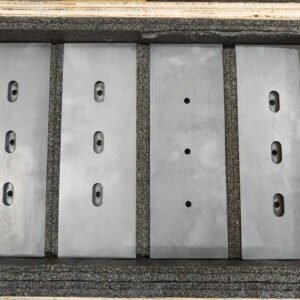
Our Lutetium Iron Garnet Sputtering Targets are carefully vacuum-sealed and externally labeled for traceability and quality control. Protective foam and anti-shock packaging ensure the targets arrive intact and free of contamination during transport and storage.
Conclusion
The Lutetium Iron Garnet (Lu₃Fe₅O₁₂) Sputtering Target from TFM offers a reliable, high-purity source for producing magnetic thin films with exceptional performance in research and advanced device applications. Its precision processing and consistent quality ensure superior results in magneto-optical and spintronic fabrication.
For detailed specifications or a quotation, please contact us at [sales@thinfilmmaterials.com].

Reviews
There are no reviews yet.