
 MSDS File
Product Overview
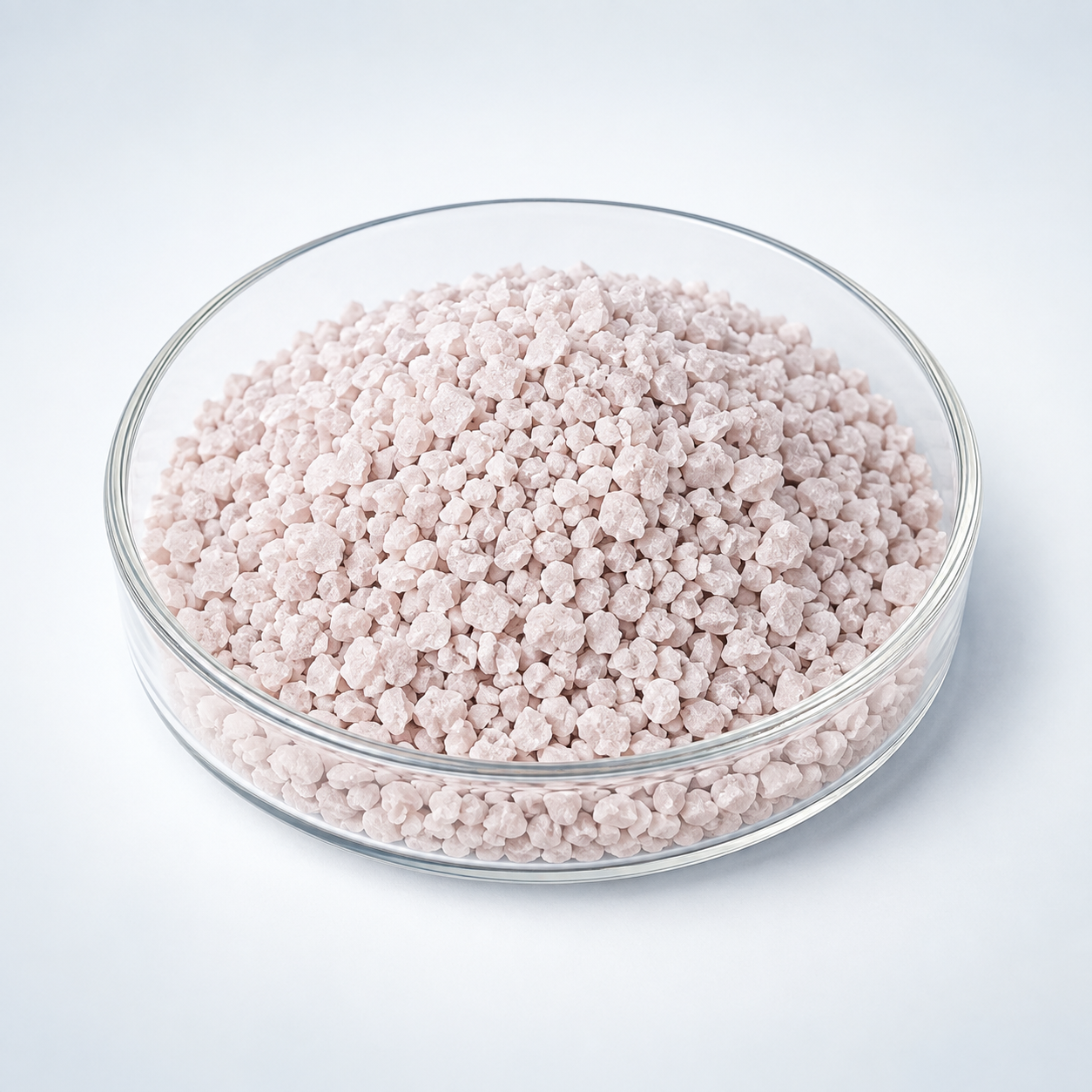
Manganese Fluoride Evaporation Materials (MnF2) is a fluoride evaporation material commonly considered for optical and functional thin-film deposition. Fluoride sources can be sensitive to source cleanliness, moisture pickup, spitting, and crucible compatibility depending on the compound and heating method. A controlled vacuum, gradual preconditioning, and stable evaporation rate help reduce particles and improve repeatability.
Evaporation Behavior and Process Considerations
Fluoride charges should be loaded into compatible, clean source hardware and conditioned gradually. Depending on the material, resistance heating or electron-beam evaporation may be used. Stable vacuum and rate control are important because moisture or trapped gases can increase spitting and film defects during initial heating.
Technical Data
| Parameter | Typical Value / Range | Importance |
|---|---|---|
| Purity | 99.9% – 99.99% | Improves optical clarity and film stability |
| Chemical Formula | MnF₂ | Ensures correct stoichiometry |
| Form | Granules / Pellets / Tablets | Compatible with evaporation sources |
| Melting Point | ~856°C | Determines suitable evaporation method |
| Moisture Control | Low hygroscopic handling | Prevents hydrolysis and contamination |
| Deposition Method | Thermal / E-beam Evaporation | Supports precise thin film growth |
| Material | Key Advantage | Typical Application |
|---|---|---|
| MnF₂ | Infrared transparency & magnetic behavior | IR optics & research |
| MgF₂ | Low refractive index | Anti-reflection coatings |
| CaF₂ | Wide optical transmission range | Optical windows |
| ZnF₂ | High chemical stability | Protective optical films |
| Question | Answer |
|---|---|
| Can MnF₂ evaporation materials be customized? | Yes, purity level, form, and pellet dimensions can be tailored to your system. |
| Is MnF₂ suitable for thermal evaporation? | Yes, both resistive heating and e-beam evaporation methods are commonly used. |
| Does MnF₂ require special storage? | Yes, it should be stored in moisture-controlled environments to prevent hydrolysis. |
| What industries use MnF₂ most? | Infrared optics, photonics research, and advanced material science laboratories. |
| How is the material packaged? | Vacuum-sealed packaging with desiccant protection and export-grade cartons or wooden crates. |
Typical Thin-Film Applications
- Optical thin-film stacks and wavelength-control coatings
- Dielectric, protective, UV, visible, or infrared coating research depending on the fluoride
- Multilayer designs requiring low-absorption inorganic evaporation materials
Source Form and Ordering Considerations
For quotation, provide the material or formula, purity, desired source form and size, quantity, evaporation method if known, and any crucible, boat, or e-beam hearth constraints. For compound materials, include the target film composition or application when possible so that source form and process risk can be reviewed together. TFM can supply pellets, pieces, granules, tablets, or other custom forms subject to material manufacturability.
Frequently Asked Questions
Is Manganese Fluoride used for optical evaporation coatings?
Many fluoride materials are used in optical thin-film stacks because of their useful refractive-index and transmission characteristics. The actual suitability depends on wavelength range and film design.
Can Manganese Fluoride be thermally evaporated?
Some fluorides can be processed by resistance heating, while others are evaporated by electron beam. The choice depends on melting behavior, vapor pressure, rate requirement, and source compatibility.
Why is gradual preconditioning important for Manganese Fluoride?
Fluoride charges can release adsorbed moisture or trapped gas during initial heating. A slow ramp helps reduce pressure spikes, spitting, and particle defects.
Does crucible material matter for Manganese Fluoride?
Yes. The evaporation source should be chemically and thermally compatible with the fluoride at operating temperature to reduce contamination or reaction.
Can film composition differ from the fluoride source?
It can, depending on dissociation behavior and deposition conditions. Film optical properties should therefore be checked against the coating specification rather than inferred only from source chemistry.
What should I specify when ordering Manganese Fluoride evaporation material?
Provide purity, source form and size, quantity, evaporation method, crucible or boat constraints, and the optical-coating application if relevant.
Reviews
There are no reviews yet.