


Product Overview
Nickel Oxide Sputtering Target (NiO) is a ceramic sputtering target used to deposit composition-specific oxide thin films. Compared with metallic targets, oxide targets are typically more sensitive to density, porosity, brittleness, thermal shock, and bonding design. In practice, target microstructure, thickness, cooling conditions, and the chosen sputtering mode can all affect arc stability, particle generation, and deposited-film performance.

Material and Deposition Characteristics
RF magnetron sputtering is commonly considered for insulating or semiconducting oxide targets, while sufficiently conductive formulations may allow alternative power modes in some systems. Target density and microstructural uniformity matter because pores, cracks, and local inhomogeneities can contribute to unstable plasma, particles, or target damage. For brittle ceramics, bonded assemblies and gradual power ramping are often worth evaluating.
Technical Data
| Parameter | Typical Value / Range | Importance |
|---|---|---|
| Purity | 99.9% – 99.99% | Higher purity improves thin film consistency |
| Diameter | 25 – 150 mm (custom up to 300 mm) | Compatible with a wide range of sputtering systems |
| Thickness | 3 – 6 mm | Influences sputtering rate and film thickness |
| Bonding Options | Indium / Elastomer | Enhances adhesion and thermal stability |
| Backing Plate | Copper / Titanium | Improves heat transfer and structural support |
| Material | Key Advantage | Typical Application |
|---|---|---|
| Nickel Oxide (NiO) | P-type semiconductor, stability | Transparent conductive films, sensors |
| Zinc Oxide (ZnO) | N-type semiconductor, low cost | Transparent electronics, photovoltaics |
| Tin Oxide (SnO₂) | High optical transparency | Gas sensors, displays |
| Question | Answer |
|---|---|
| Can Nickel Oxide sputtering targets be customized? | Yes, TFM offers custom diameters, thicknesses, and bonded backing plates. |
| Do you provide bonding services? | Yes, indium and elastomer bonding are available to improve performance. |
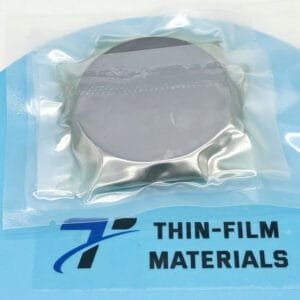
| How are the targets packaged? | Each NiO target is vacuum-sealed, cushioned with protective foam, and shipped in export-safe cartons or crates. |
| Which industries use NiO targets most? | Electronics, energy, display technologies, sensor manufacturing, and materials research. |
Typical Thin-Film Applications
- Dielectric, insulating, optical, magnetic, protective, or functional ceramic thin films
- Semiconductor, sensor, photonic, and multilayer coating research
- Applications where oxide composition, density, and process stability affect film performance
Target Configuration and Ordering Considerations
When requesting a quotation, provide target diameter or rectangular dimensions, thickness, purity or composition, required quantity, and whether a backing plate or bonded assembly is needed. For brittle ceramic or compound targets, it is useful to specify the cathode model, backing-plate material, preferred bonding method, operating power if known, and any density, tolerance, or inspection-document requirements. TFM can review drawings, old-target photos, and application details when custom dimensions are required.
Frequently Asked Questions
Is Nickel Oxide better suited to RF or DC sputtering?
RF magnetron sputtering is commonly considered for insulating or semiconducting oxide targets. If a specific formulation is sufficiently conductive, other modes may also be possible, but the equipment and target properties should be confirmed.
Why is density important for a Nickel Oxide target?
Density and microstructural uniformity affect erosion stability, thermal behavior, and particle risk. Pores, cracks, or local density variations can contribute to unstable sputtering and target damage.
Should a Nickel Oxide target be bonded to a backing plate?
Bonding is often useful for brittle oxide targets because it can improve mechanical support and heat transfer. The backing material and bonding method should be chosen according to target size, thickness, and operating conditions.
Will the deposited film always have the same composition as NiO?
Not always. Film composition can be affected by preferential sputtering, reactive gas, substrate temperature, re-sputtering, and chamber conditions. Composition-sensitive films should be verified after deposition.
How should power be ramped on a brittle Nickel Oxide target?
A conservative power ramp and stable cooling are generally advisable. The exact operating procedure should follow the target size, bonding condition, cathode design, and supplier recommendations rather than a universal wattage.
What information should I provide when ordering Nickel Oxide?
Provide formula or composition, purity, dimensions, quantity, backing and bonding requirements, cathode model or drawing, and any density, tolerance, or inspection requirements.


Reviews
There are no reviews yet.