
 MSDS File
Product Overview
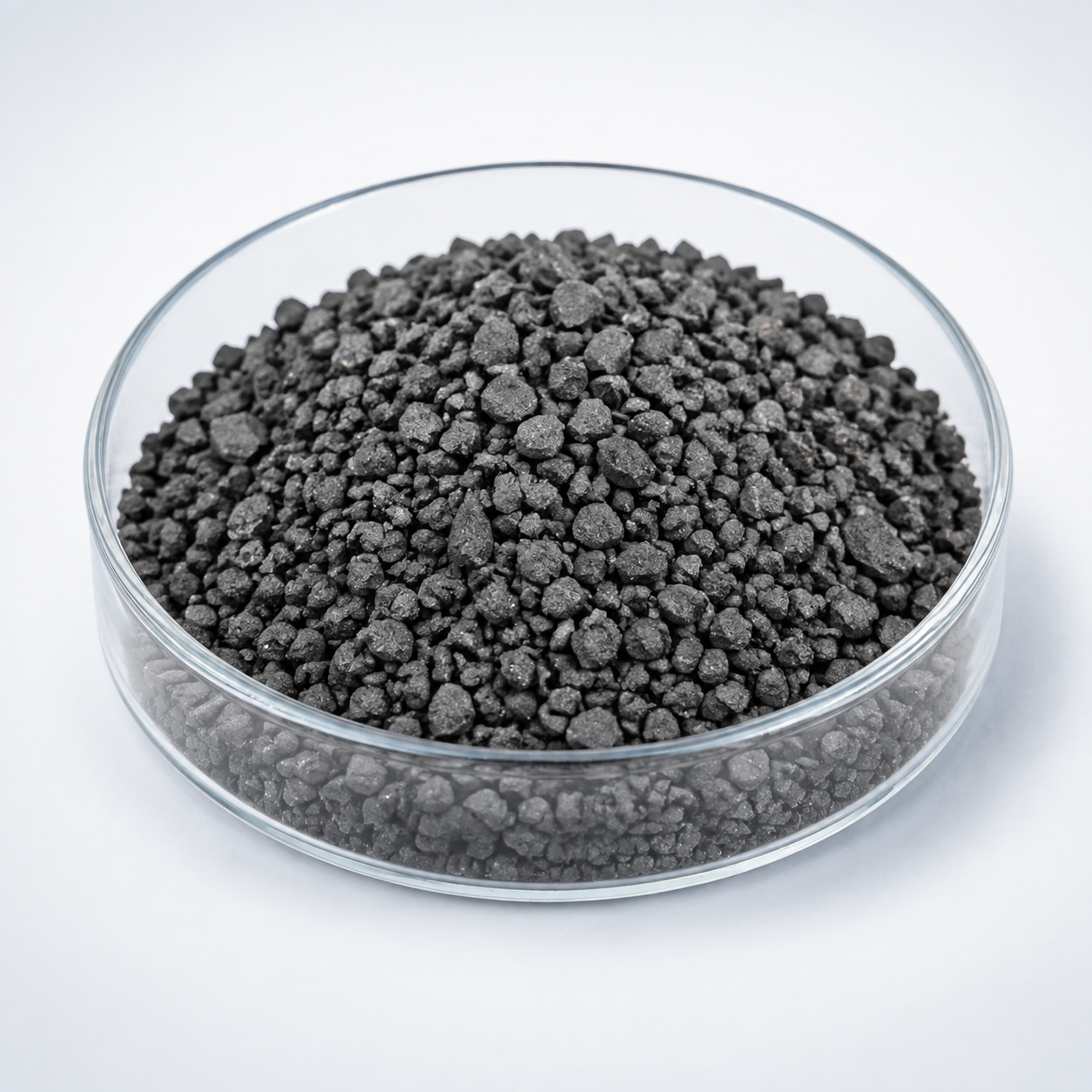
Niobium Carbide Evaporation Materials (NbC) is a high-melting compound evaporation source for specialized thin-film deposition and materials research. Carbides, borides, nitrides, silicides, and related compounds may require electron-beam heating or other high-energy evaporation methods, and some compounds can decompose or change composition before a useful vapor pressure is reached. The evaporation route should therefore be qualified against the required film chemistry rather than assumed to be congruent.
Evaporation Behavior and Process Considerations
These compounds commonly require high-energy evaporation methods such as electron-beam heating. However, high source temperature can also promote decomposition, dissociation, or preferential evaporation. Process qualification should therefore include source-behavior observation and film-composition verification before scaling to long runs.
Technical Data
| Parameter | Typical Value / Range | Importance |
|---|---|---|
| Purity | 99.9% (3N) | Ensures low contamination |
| Form | Pellets, pieces, granules | Matches evaporation requirements |
| Particle Size | 3 – 12 mm (customizable) | Adapts to crucible/e-beam setups |
| Melting Point | ~3500 °C | Enables high-temp thin films |
| Density | 7.82 g/cm³ | Contributes to stable evaporation rate |
| Material | Key Advantage | Typical Application |
|---|---|---|
| Niobium Carbide | High hardness, thermal stability | Protective & conductive coatings |
| Titanium Carbide | Excellent wear resistance, cost-effective | Cutting tools, decorative films |
| Tantalum Carbide | Extreme thermal stability | Aerospace, ultra-high-temp films |
| Question | Answer |
|---|---|
| What forms are available? | Pellets, tablets, granules, and custom-shaped pieces. |
| Can NbC be evaporated in standard e-beam systems? | Yes, it is suitable for both e-beam and thermal evaporation. |
| What industries benefit most from NbC films? | Electronics, aerospace, energy, cutting tools, and coating industries. |
| How is it packaged? | Vacuum-sealed with moisture protection, shipped in sturdy cartons or wooden crates. |
| Can the material be customized? | Yes, purity, size, and form can be tailored to specific deposition setups. |
Typical Thin-Film Applications
- Hard, refractory, electronic, protective, and specialty compound thin films
- High-temperature or advanced-material coating research
- R&D evaluating decomposition behavior and film stoichiometry under e-beam evaporation
Source Form and Ordering Considerations
For quotation, provide the material or formula, purity, desired source form and size, quantity, evaporation method if known, and any crucible, boat, or e-beam hearth constraints. For compound materials, include the target film composition or application when possible so that source form and process risk can be reviewed together. TFM can supply pellets, pieces, granules, tablets, or other custom forms subject to material manufacturability.
Frequently Asked Questions
Can Niobium Carbide be evaporated by electron beam?
Electron-beam heating is often evaluated for high-melting compounds because it can provide localized high temperature. However, the compound may decompose before evaporating congruently.
Will Niobium Carbide maintain its stoichiometry during evaporation?
Not necessarily. Carbides, borides, nitrides, silicides, and related compounds can dissociate or evaporate preferentially, so film composition should be verified.
Why is source conditioning important for Niobium Carbide?
Gradual conditioning reduces thermal shock, outgassing, and sudden particle ejection while allowing the operator to observe whether the compound remains stable under heating.
What source holder should be used for Niobium Carbide?
The holder must tolerate the required temperature and avoid chemical reaction with the charge. E-beam hearth or compatible crucible selection should be reviewed for the specific material.
Is a pellet or dense piece preferable for Niobium Carbide?
A dense, mechanically stable charge is generally easier to load and condition than loose powder. The ideal form depends on hearth size and the required evaporation rate.
What information should I provide for a Niobium Carbide evaporation-material quotation?
Provide formula, purity, source form, piece or pellet size, quantity, evaporation method, source-holder details, and the intended film composition or application.
Reviews
There are no reviews yet.