
 MSDS File
Product Overview
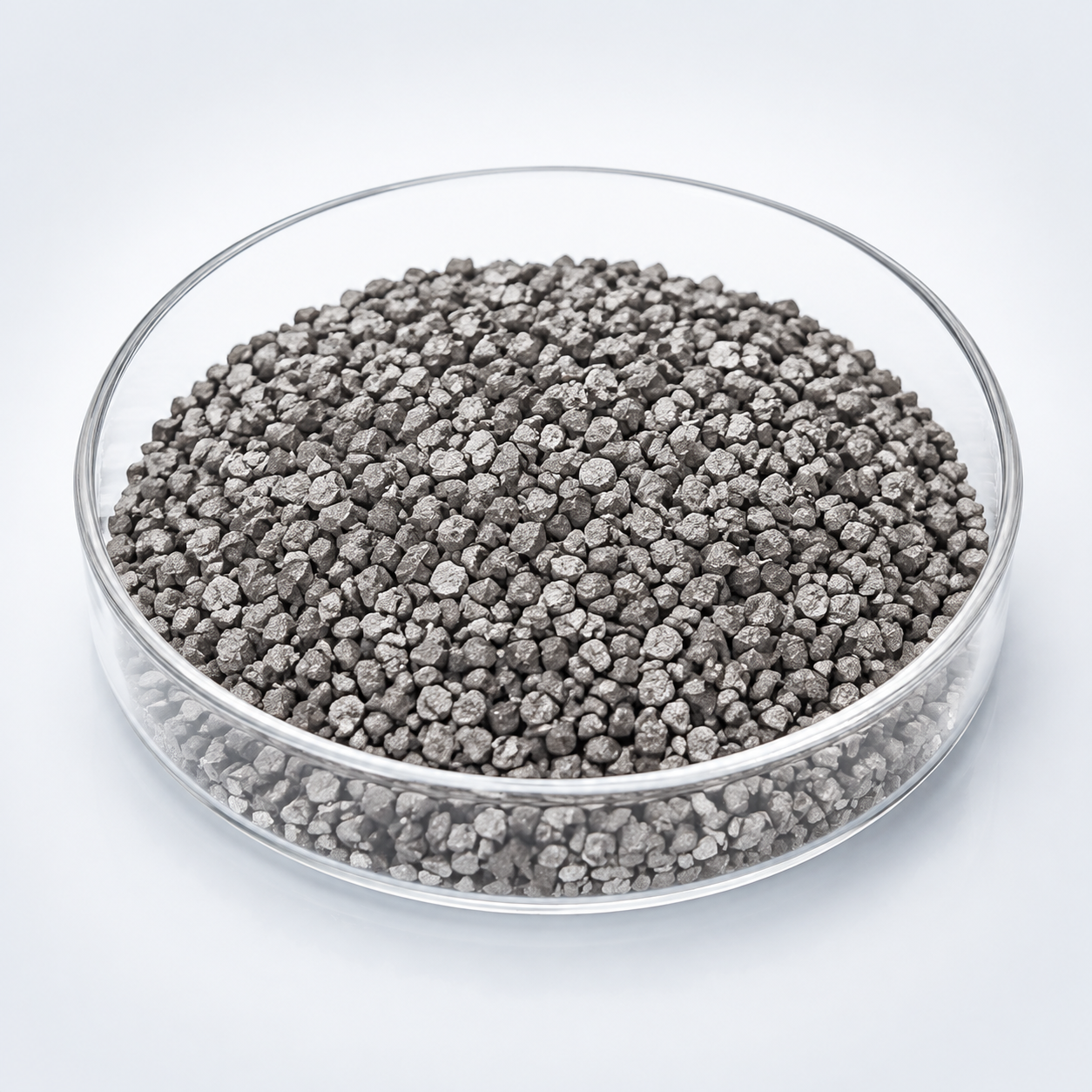
P-type Silicon Evaporation Materials (Si) is a composition-specific evaporation source for vacuum thin-film deposition and materials-development work. The correct process depends on melting point, vapor pressure, decomposition behavior, reactivity, source geometry, and the required film composition. TFM can supply custom source forms and purities according to the evaporator and application.
Evaporation Behavior and Process Considerations
The evaporation source should be selected according to the material’s melting point, vapor pressure, decomposition behavior, and compatibility with the boat, crucible, or e-beam hearth. A gradual conditioning cycle and stable rate monitoring are useful starting practices for repeatable deposition.
Technical Data
| Parameter | Typical Value / Range | Importance |
|---|---|---|
| Base Silicon Purity | 99.99% – 99.9999% (4N–6N) | Reduces contamination in semiconductor films |
| Dopant Type | Boron (B) typical | Creates P-type conductivity |
| Resistivity | 0.001 – 10 Ω·cm (customizable) | Defines carrier concentration |
| Form | Pieces / Granules / Pellets | Compatible with evaporation sources |
| Melting Point | 1414°C | Suitable for thermal and e-beam evaporation |
| Packaging | Vacuum-sealed or inert atmosphere | Prevents oxidation and contamination |
| Material | Key Advantage | Typical Application |
|---|---|---|
| P-type Silicon (Si) | Controlled hole conductivity | PN junction layers |
| N-type Silicon (Si) | Electron-conducting properties | Complementary semiconductor layers |
| Intrinsic Silicon | Minimal dopant influence | Baseline or insulating studies |
| Silicon Monoxide (SiO) | Oxide film formation capability | Optical and dielectric coatings |
| Question | Answer |
|---|---|
| Can the resistivity be customized? | Yes, dopant concentration and resistivity can be tailored to specific device requirements. |
| Is P-type Si suitable for thermal evaporation? | Yes, it is compatible with both thermal and electron beam evaporation systems. |
| How is dopant uniformity ensured? | The material is prepared from homogenized, pre-doped silicon to maintain consistent composition. |
| What forms are available? | Pieces, granules, and pellets are available to match different source designs. |
| Which industries use P-type silicon most? | Semiconductor manufacturing, photovoltaics, MEMS, sensors, and R&D institutions. |
Typical Thin-Film Applications
- Thin-film R&D requiring a composition-specific evaporation source
- Optical, semiconductor, electronic, energy, and advanced-material coating studies depending on the compound
- Custom PVD research using pellets, pieces, granules, or other source forms
Source Form and Ordering Considerations
For quotation, provide material, purity, source form, particle or piece size, quantity, evaporation method, and any boat, basket, crucible, or e-beam hearth constraints. If the material will be used for a specific coating stack, sharing the intended film thickness or deposition application can help with source-form selection and packaging recommendations.
Frequently Asked Questions
How should the evaporation method for P-type Silicon be selected?
Select the method from melting point, vapor pressure, decomposition behavior, charge size, and the available source hardware. Resistance heating and electron-beam evaporation are the most common starting options.
What source form is available for P-type Silicon?
Depending on the material, pellets, pieces, granules, tablets, or other compact forms can be reviewed for compatibility with the customer’s evaporator.
Why is source preconditioning important for P-type Silicon?
Gradual preheating can remove adsorbed gas, stabilize the charge, and reduce spitting or pressure excursions before film deposition.
Can the film composition differ from the P-type Silicon source?
Yes. Preferential evaporation, decomposition, re-evaporation, and substrate conditions can all change the final film composition.
Does purity matter for P-type Silicon evaporation material?
Yes. Source purity contributes directly to the contamination budget of the deposited film, together with chamber, crucible, and substrate cleanliness.
What information should I send TFM for a P-type Silicon RFQ?
Provide material or formula, purity, source form and size, quantity, evaporation method, holder constraints, and any film or documentation requirements.
Reviews
There are no reviews yet.