

What is a platinum manganese sputtering target?
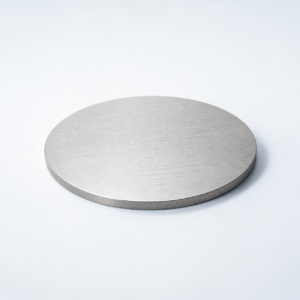
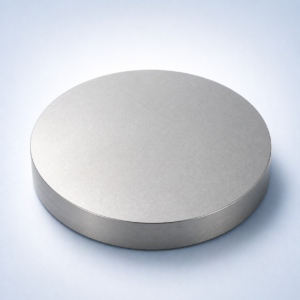
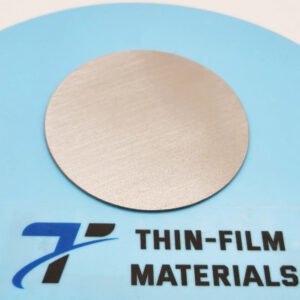
A platinum-manganese (PtMn) sputtering target supplies both elements for Pt-Mn thin-film process development. Specify the ordered Pt:Mn composition and basis separately from the film's phase, composition, and functional acceptance criteria.
Material and Deposition Characteristics
Power mode and process conditions should be selected according to the target conductivity, thermal behavior, and the requirements of the cathode system. For less common materials, conservative initial power density and film-composition verification are good practice.
How to specify platinum manganese sputtering target for an RFQ
The following fields define the order and the tests needed to qualify this target; final availability and acceptance criteria belong in the approved quotation or drawing.
| Decision | Information to provide or verify |
|---|---|
| Material identity | State the Pt:Mn ratio, mass or atomic basis, impurity limits, and any composition-uniformity evidence needed. |
| Target and cathode fit | Provide target dimensions, cathode model, mounting or backing arrangement, and the intended power conditions. |
| Film acceptance | Define how film composition and the relevant magnetic or structural behavior will be verified after deposition and any subsequent treatment. |
Send the specification and drawing for review. The selected source or target and the deposited film require separate acceptance evidence.
Browse the Sputtering Targets catalog for the broader material and source family.
Research applications and film checks
- PtMn-containing antiferromagnetic films have been studied in magnetic heterostructures and spintronic switching, including work using a specified Pt:Mn sputtering target (research example).
- For exchange-bias or spin-transport research, state the Pt:Mn ratio and basis, layer-stack design, annealing context and magnetic/electrical measurements required by the device.
- Target composition alone does not establish film ordering, exchange bias or switching behavior; qualify those outcomes on the deposited stack.
Target Configuration and Ordering Considerations
For quotation and manufacturability review, provide target size, thickness, purity or alloy composition, quantity, and the sputtering gun or cathode model if known. If a bonded assembly is required, include backing-plate material, bonding preference, and any dimensional tolerances, surface-finish needs, or inspection-document requirements. TFM can also review customer drawings or old-target samples for replacement builds.
Frequently Asked Questions
What is the main reason to use a Platinum Manganese sputtering target?
It provides a composition-specific source for thin-film deposition when the target material itself is important to the desired film chemistry or process.
How should the sputtering mode for Platinum Manganese be selected?
The power mode should be chosen according to target conductivity, thermal behavior, and equipment capability. Less-conductive materials are commonly evaluated with RF power.
Why are density and microstructure important for Platinum Manganese targets?
These factors can influence erosion stability, thermal behavior, particle generation, and the risk of cracking or local hot spots.
Can Platinum Manganese be supplied with a backing plate?
A backed configuration can be evaluated when the cathode design requires it. Provide the target drawing, composition, thickness, cooling and power conditions; TFM should confirm feasibility, backing and bonding details in the quotation.
Does target composition always equal film composition?
No. Film chemistry may differ because of sputtering yields, process conditions, substrate temperature, re-sputtering, and chamber history. Film verification is recommended when composition matters.
What should I provide to request a quotation for Platinum Manganese?
Please provide the composition, purity, dimensions, quantity, target configuration, cathode details, and any drawing or inspection requirements.
Prepare your RFQ: Download the fillable Platinum Manganese Sputtering Target, PtMn RFQ Worksheet (PDF). Enter the required composition or grade, dimensions, backing or bonding request, quantity, documents, and acceptance criteria for quotation review.
Reviews
There are no reviews yet.