
 MSDS File
Introduction
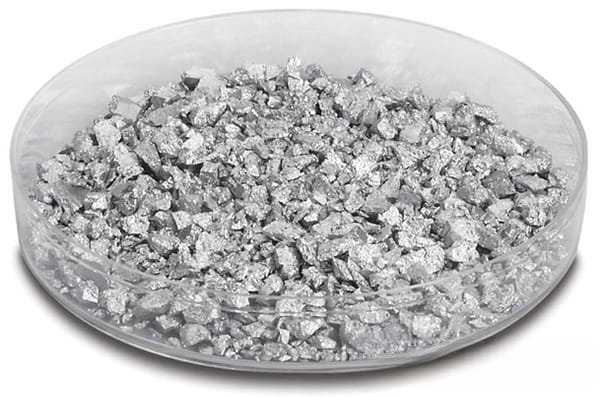
Rhodium (Rh) Evaporation Materials are high-purity noble metal sources designed for precision thin film deposition in microelectronics, optics, catalysis, and advanced research applications. Known for its exceptional corrosion resistance, high reflectivity, and outstanding thermal stability, rhodium is one of the most chemically inert and durable precious metals available for vacuum deposition processes.
Rh evaporation materials are particularly valued in applications requiring extreme environmental stability, high-temperature endurance, and reliable electrical performance.
Detailed Description
Rhodium is a platinum-group metal characterized by:
Excellent oxidation and corrosion resistance
High melting point (~1964°C)
Superior hardness compared to many noble metals
Strong reflectivity in visible and infrared wavelengths
Stable electrical conductivity
Rhodium evaporation materials are manufactured from refined precious metal feedstock to ensure high purity, typically ranging from 99.9% to 99.99% or higher (metals basis). Impurity control is critical in thin film applications, as trace elements can significantly affect film morphology, electrical conductivity, and surface reflectivity.
Available forms include:
Pellets and granules for resistive heating boats
Custom-shaped pieces for electron beam crucibles
Wires or small rods for precision loading
Due to rhodium’s high melting point, electron beam evaporation is commonly preferred for controlled deposition, though high-power resistive evaporation may also be applied depending on system capability.
Deposited rhodium thin films exhibit:
Outstanding resistance to chemical attack
High hardness and wear resistance
Excellent adhesion to glass, ceramic, and semiconductor substrates
Stable optical reflectivity under harsh conditions
These characteristics make Rh thin films suitable for demanding optical and catalytic environments.
Applications
Rhodium evaporation materials are widely used in:
Optical Coatings – High-reflectivity and durable mirror coatings
Microelectronic Contacts – Corrosion-resistant conductive layers
Catalytic Thin Films – Surface reaction and research applications
High-Temperature Sensors – Stable electrode materials
Decorative & Protective Coatings – Scratch-resistant noble metal layers
Research & Development – Precious metal thin film studies
Rhodium’s resistance to tarnishing and oxidation makes it especially suitable for long-term stability applications.
Technical Parameters
| Parameter | Typical Value / Range | Importance |
|---|---|---|
| Purity | 99.9% – 99.99% (metals basis) | Ensures stable electrical and optical performance |
| Form | Pellets / Granules / Rods | Compatible with thermal & e-beam systems |
| Melting Point | ~1964°C | Influences evaporation method selection |
| Density | 12.41 g/cm³ (theoretical) | Supports stable deposition behavior |
| Deposition Method | E-beam (typical) / Thermal | Enables precise thin film growth |
| Surface Finish | Cleaned & degreased | Minimizes contamination |
Comparison with Related Materials
| Material | Key Advantage | Typical Application |
|---|---|---|
| Rhodium (Rh) | Exceptional corrosion resistance & hardness | Durable optical coatings |
| Platinum (Pt) | High catalytic activity | Electrochemical electrodes |
| Gold (Au) | Excellent conductivity & reflectivity | Electrical contacts |
| Iridium (Ir) | Extreme thermal stability | Harsh chemical environments |
Compared to gold, rhodium offers significantly higher hardness and better resistance to mechanical wear, making it ideal for protective reflective coatings.
FAQ
| Question | Answer |
|---|---|
| Can rhodium evaporation materials be customized? | Yes, purity levels and physical forms can be tailored to specific deposition systems. |
| Is electron beam evaporation recommended? | Yes, due to rhodium’s high melting point, e-beam evaporation is typically preferred. |
| Are rhodium films chemically stable? | Yes, Rh films exhibit excellent resistance to oxidation and corrosion. |
| Which industries commonly use rhodium thin films? | Optics, microelectronics, catalysis research, and sensor technology. |
| How is the material packaged? | Vacuum-sealed with protective cushioning and export-grade cartons for secure transport. |
Packaging
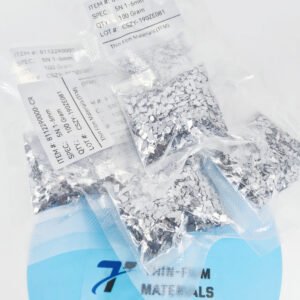
Our Rhodium Evaporation Materials are meticulously tagged and labeled externally to ensure efficient identification and maintain high standards of quality control. We take great care to prevent any potential damage during storage and transportation, ensuring the materials arrive in perfect condition.
Conclusion
Rhodium (Rh) Evaporation Materials provide a premium solution for depositing highly durable, corrosion-resistant, and high-reflectivity thin films. With customizable forms, high purity, and compatibility with advanced evaporation systems, Rh supports demanding applications in optics, electronics, and catalysis.
For detailed specifications and a quotation, please contact us at sales@thinfilmmaterials.com.
Reviews
There are no reviews yet.