
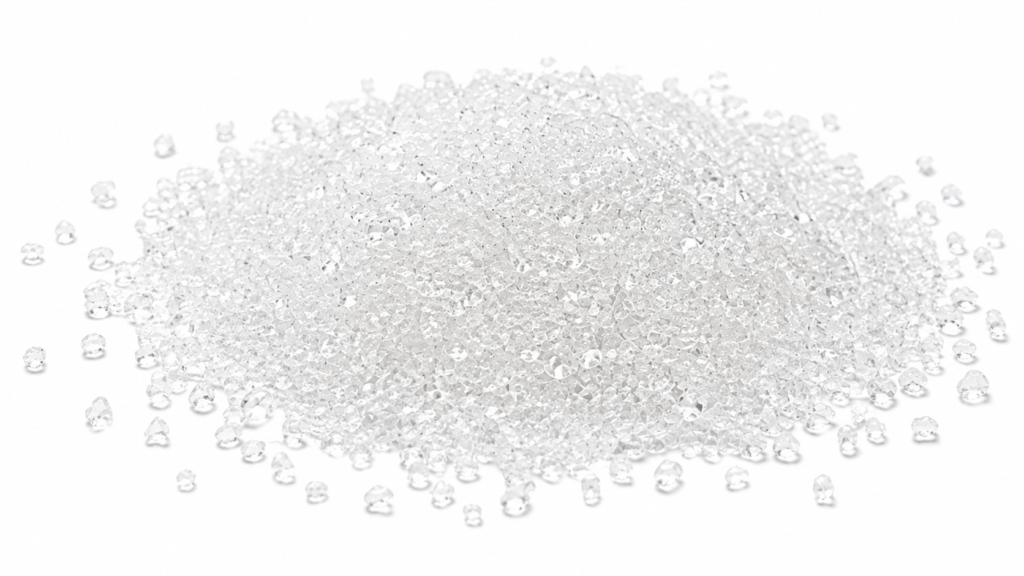
Oxide Evaporation Materials SDS
Keep this SDS/MSDS download in the first-screen product area.
Silicon Dioxide Evaporation Materials (SiO2)
High-purity SiO₂ feedstock for optical, dielectric and protective thin-film deposition.
Available in multiple charge forms. Selection should consider deposition method, source geometry and required film function.
Silicon Dioxide Film Roles
Each application should state the film role, why SiO2 is being considered, and which project details must be confirmed.
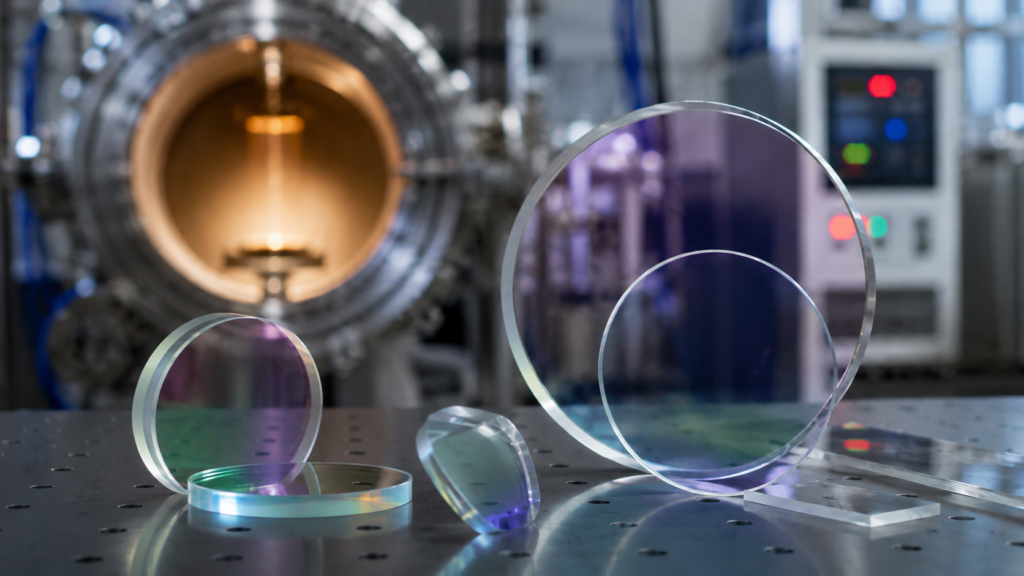
Optical Multilayers & Anti-Reflection Stacks
Film Role
Low-index layer in multilayer optical coatings, filters, mirrors, beam splitters and anti-reflection designs.
Why SiO₂
Choose SiO2 when the optical design requires its low-index dielectric role and process compatibility.
Confirm
Wavelength range, substrate, stack design, target refractive-index range, optical loss, thickness, deposition route and post-treatment.
Dielectric, Insulating & Passivation Films

Film Role
Electrical insulation, dielectric separation, passivation, interface and protective layers in device research.
Why SiO₂
Use SiO2 when the device stack requires a silicon-dioxide dielectric rather than another oxide.
Confirm
Substrate, layer function, thickness, leakage or breakdown criterion, stress, adhesion, contamination limits and thermal budget.
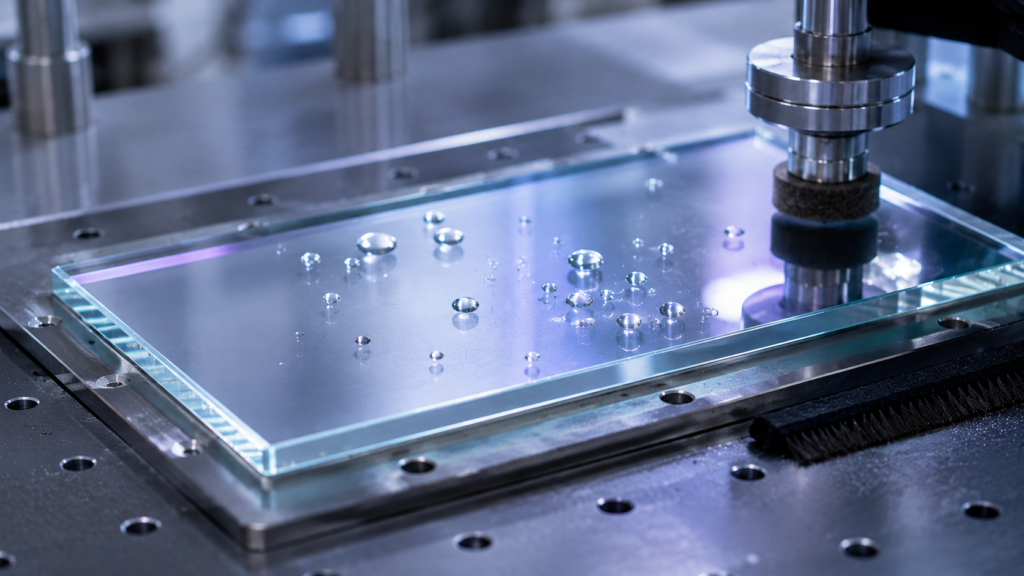
Transparent Spacer, Separation & Protective Layers
Film Role
Protective overcoats, moisture or contamination barriers, surface passivation and functional oxide layers.
Why SiO₂
Choose SiO2 when chemical stability, optical transparency or electrical insulation is required in the qualified stack.
Confirm
Environment, substrate, adhesion, porosity or density objective, thickness, optical requirement, process temperature and durability test.
Choose the Charge Form for the Source Geometry
Particle or piece size affects loading, packing, conditioning, surface area, handling and the risk of contamination. Specify the source and liner before selecting the form.
Pieces Granules
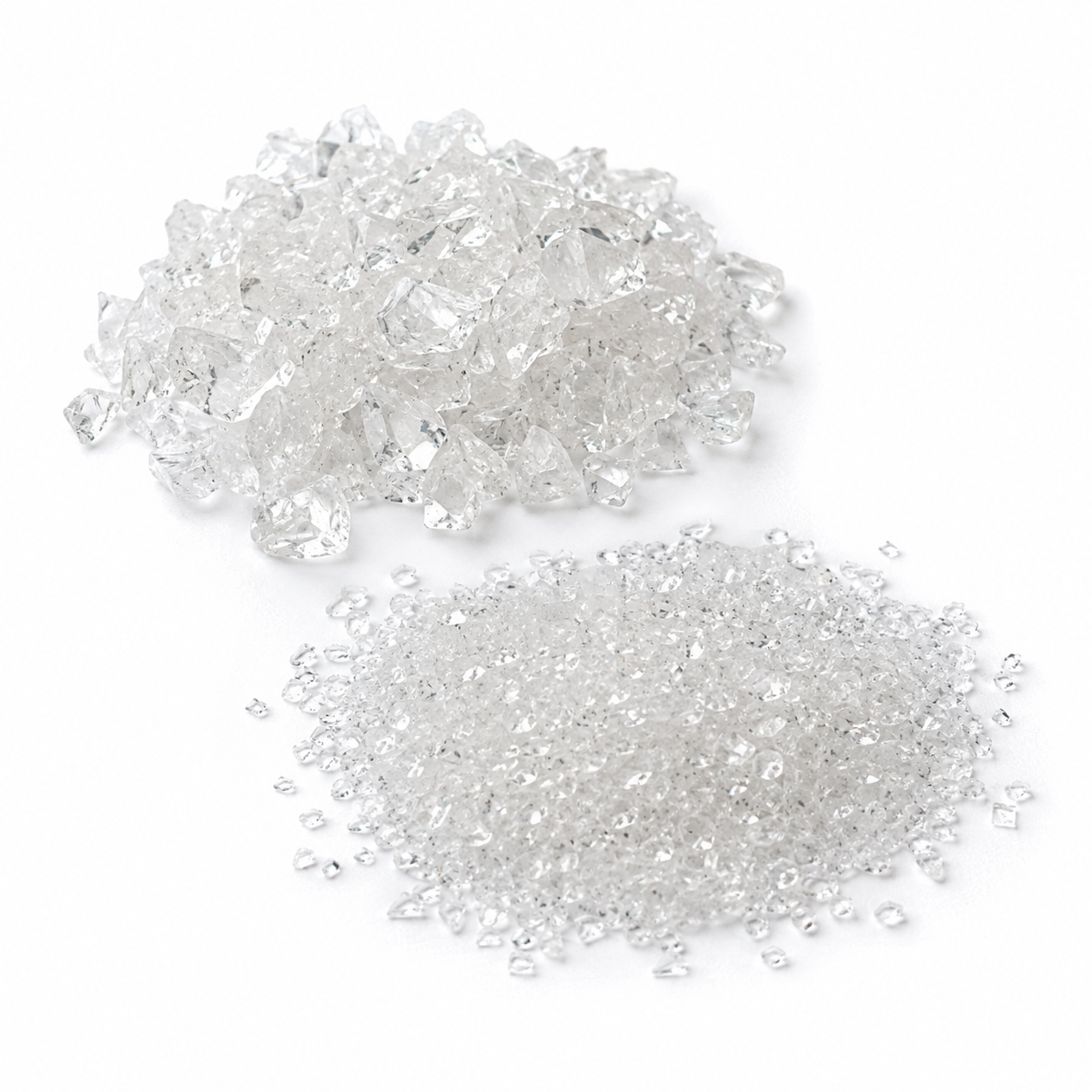
Use: e-beam hearths and crucible liners requiring controlled charge size.
Confirm: size range, undersize/oversize tolerance, quantity, packaging and source capacity.
Pellets / Tablets
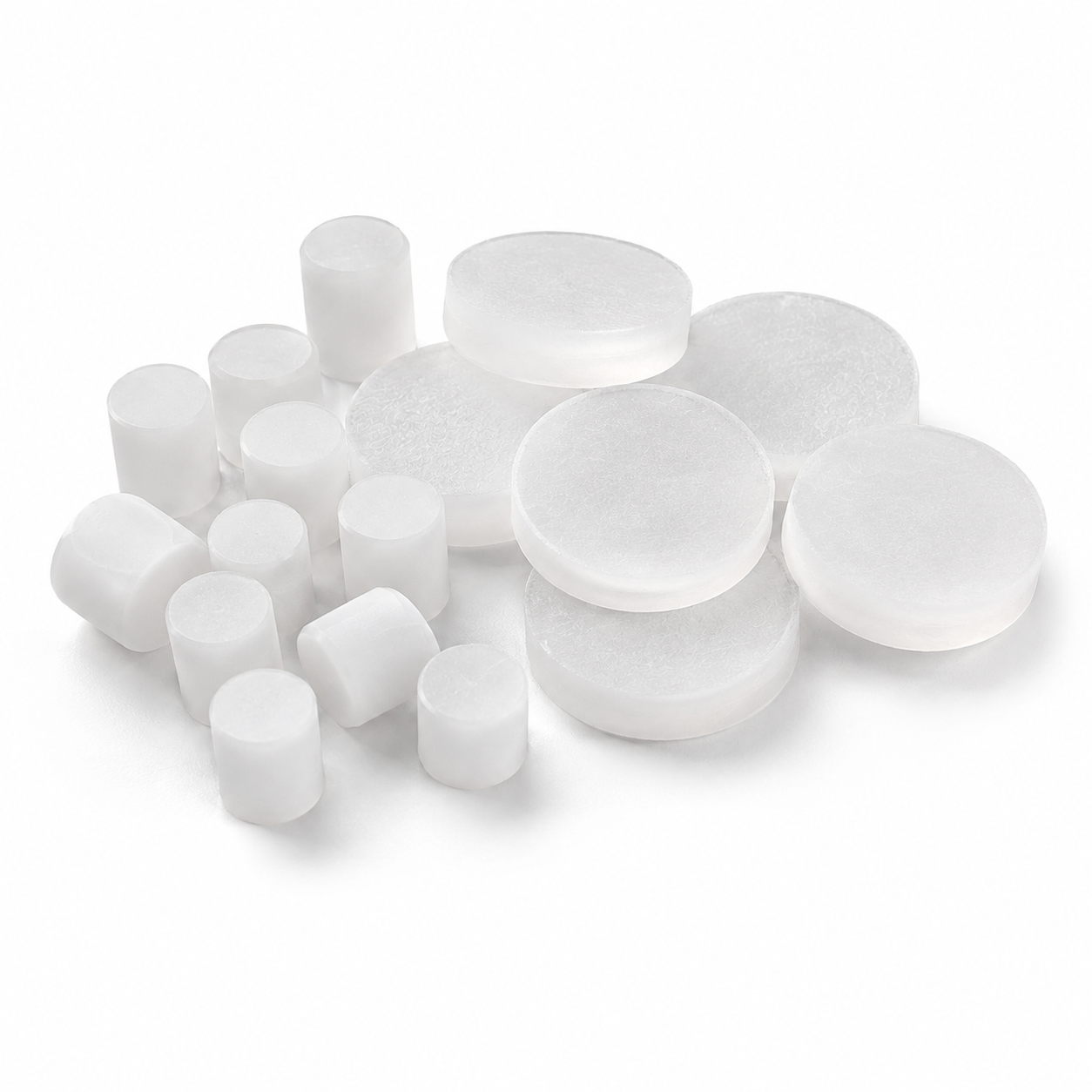
Use: repeatable loading or source designs that benefit from shaped charges.
Confirm: diameter, thickness, density, piece weight, dimensional tolerance and minimum quantity.
Powder
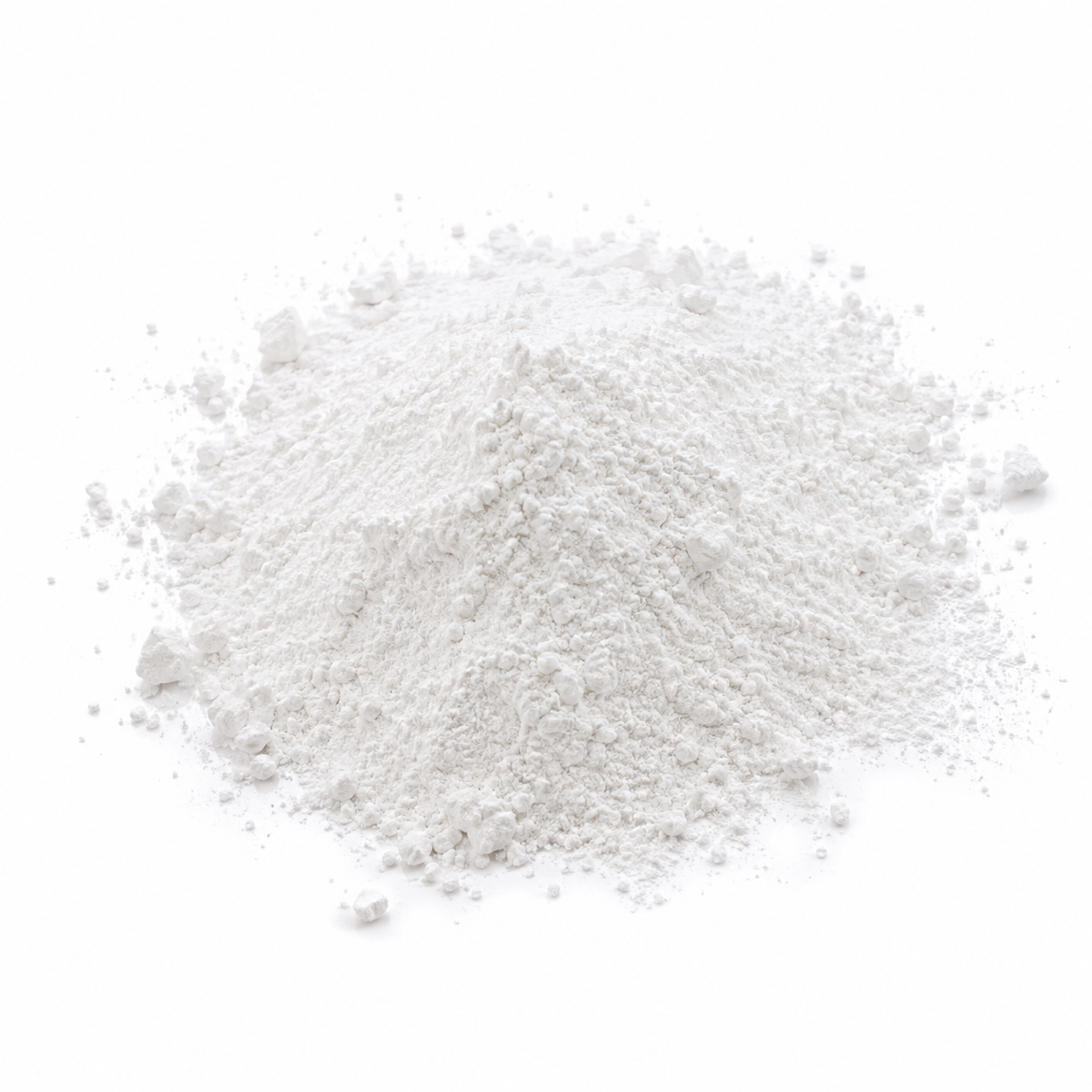
Use: research, pressing, custom charge preparation or process-specific source loading.
Confirm: particle-size basis, agglomeration, packing method, dust control and purity basis.
Custom Charges
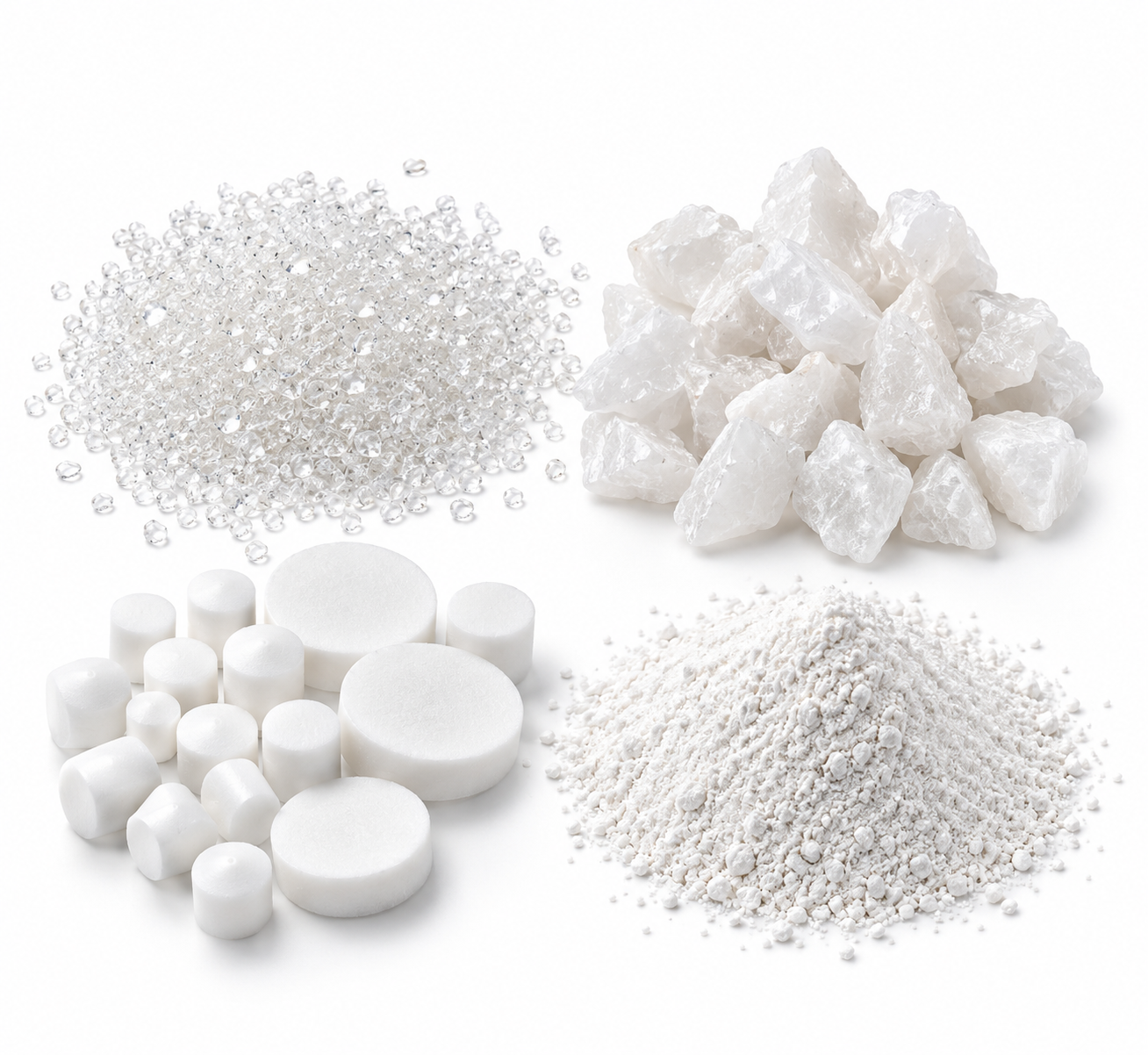
Use: nonstandard source geometries, repeat production, controlled loading, or customer-defined charge formats.
Confirm: charge form, dimensions or particle size, purity, quantity, source geometry, packaging, and any batch-specific requirements.
How to Specify Silicon Dioxide Evaporation Materials
| Selection Point | What to Confirm | Why It Matters |
|---|---|---|
| Film Function | Low-index optical layer, dielectric, passivation, protective, barrier or research film | Determines whether SiO₂ is the correct source material and which film criteria should be measured. |
| Purity & Impurities | Overall grade plus critical metallic impurities, alkali elements, moisture or other project-specific limits | Individual contaminants may matter more than the headline purity number. |
| Form & Size | Pieces, granules, pellets, tablets or powder; required piece or particle-size range | Controls source loading, packing, heating behavior, handling and surface area. |
| Deposition Route | E-beam, thermal/resistive, reactive route or system-specific process | Defines the required source temperature, charge configuration and compatibility review. |
| Crucible / Liner | Material, dimensions, hearth pocket, source capacity and whether the customer has an approved liner | Source compatibility can affect contamination, stability, service life and process safety. |
| Process Window | Vacuum, oxygen control, deposition rate, power ramp, conditioning, substrate temperature and run length | These factors influence stoichiometry, density, refractive index, stress, adhesion and repeatability. |
| Acceptance Criteria | CoA, impurity data, particle-size or dimensional record, packing weight, lot traceability and label format | Turns general expectations into measurable order requirements. |
| Quantity & Packaging | Trial quantity, batch quantity, annual demand, bottle/bag size, vacuum or moisture-protective packaging | Supports consistent handling, repeat orders and cost control. |
Source Specification Helps Control
- Supplied SiO2 chemistry and agreed impurity basis
- Charge form, size range and package quantity
- Lot identification and agreed documentation
- Clean handling and packaging condition
Final Film Still Depends On
- Chamber condition and contamination history
- Vacuum, oxygen partial pressure and deposition rate
- Source design, liner, beam pattern or heating route
- Substrate, temperature, thickness and post-treatment
SiO2 vs Related Evaporation Materials
Choose the source according to the intended film function and optical or electrical stack—not simply because the materials are all white oxide or fluoride charges.
| Material | Best Suited For | Choose It When | Main Selection Concern |
|---|---|---|---|
| Silicon Dioxide, SiO₂ | Low-index optical layers, dielectric, insulation, passivation and protective films | The stack is designed around a SiO₂ source and silicon-dioxide film function | Source compatibility, stoichiometry, density, stress and refractive index remain process-dependent |
| Silicon Monoxide, SiO | Sub-oxide protective, barrier and optical coating routes | A qualified process specifically uses SiO and its different evaporation behavior | Do not treat SiO and SiO₂ as interchangeable without film and process qualification |
| Magnesium Fluoride, MgF₂ | Very-low-index optical layers and anti-reflection designs | The optical design requires a fluoride with a lower-index role than SiO₂ | Moisture, source handling, deposition conditions and film durability require review |
| Aluminum Oxide, Al₂O₃ | Dielectric, protective, hard and intermediate-index oxide layers | Alumina-specific dielectric or protective behavior is required | Not a direct substitute for the low-index role of SiO₂ |
| Titanium Dioxide / Tantalum Oxide | High-index optical layers and functional oxide stacks | The multilayer design requires a high-index partner to SiO₂ | Phase, absorption, stress, oxygen control and process temperature differ from SiO₂ |
When SiO2 Is the Right Choice
Select SiO2 when the design specifically requires a silicon-dioxide low-index, dielectric, insulating, passivation or protective layer and the evaporation system can support the required source temperature and process window.
When to Review Another Source
Review silicon monoxide evaporation materials, MgF2, Al2O3 or a high-index oxide when the film function, refractive-index target, barrier behavior or qualified recipe points to a different material route.
Supply Scope Built Around the Order Specification
TFM reviews SiO₂ evaporation materials against purity, form, particle or piece size, source configuration, packaging and the agreed acceptance scope.
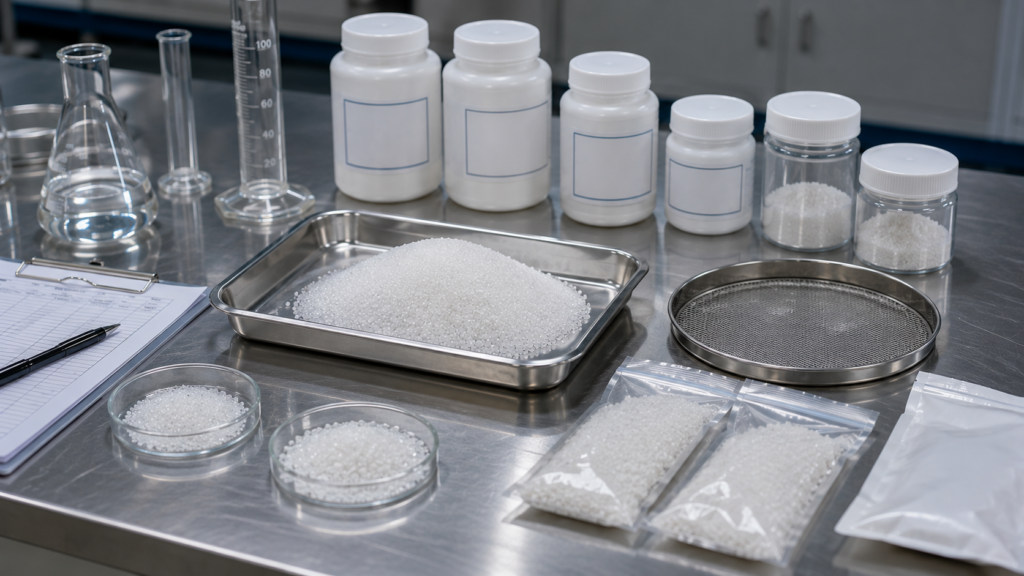
Material & Form Review
Pieces, granules, pellets, tablets, powder and custom charge forms can be reviewed according to the deposition source and requested quantity.
Clean Handling & Packaging
Packaging can be configured for trial quantities, production lots, controlled package weights and moisture- or contamination-conscious handling.
Inspection Scope
Depending on the order, the acceptance scope may include chemistry, impurity data, particle or piece-size checks, package weight, label information and lot traceability.
Safety Data Sheet
Oxide Evaporation Materials SDS remains available in the hero section for EHS and procurement review.
Order-Specific CoA
Issued against the delivered lot and the chemistry or impurity scope agreed in the quotation.
Inspection Scope
Depending on the order, the acceptance scope may include chemistry, impurity data, particle or piece-size checks, package weight, label information and lot traceability.
What to Provide for a Silicon Dioxide Evaporation Material Quote
Providing the source and film information reduces back-and-forth and helps TFM review the correct form, size and documentation.
| RFQ Item | Example / Required Detail |
|---|---|
| Material / Purity | Silicon Dioxide, SiO₂, 99.99%; list critical impurities separately where required |
| Form / Size | Pieces, granules, pellets, tablets or powder; e.g., screened 1–3 mm pieces |
| Quantity | Trial quantity, batch quantity and expected repeat-order demand |
| Deposition Method | E-beam, thermal/resistive or system-specific evaporation route |
| Source / Liner | Crucible, liner or hearth material, pocket dimensions and charge capacity |
| Intended Film | Optical low-index layer, dielectric, passivation, protective or barrier film |
| Process Notes | Vacuum, oxygen control, deposition rate, substrate temperature, run time or known recipe constraints |
| Documents / Delivery | SDS, CoA, impurity data, size or packaging record; destination city, postal code and country |
Copyable RFQ Example
Silicon dioxide evaporation material, SiO₂ 99.99%, screened 1–3 mm pieces, 1 kg trial quantity. Application: e-beam deposition of low-index optical and dielectric films. Please confirm suitable packaging, current impurity data, order-specific CoA, price, lead time and shipping to [city, postal code, country]. Our e-beam liner material and pocket dimensions are [details].
Silicon Dioxide Evaporation Material FAQ
Related Materials and Technical Support
Request a Silicon Dioxide Evaporation Material Quote
Send the required purity and purity basis, source form, granule or pellet size, quantity, deposition method, source dimensions, intended film function, critical impurities, and documentation requirements.
TFM will review material selection, source compatibility, custom sizing, inspection scope, packaging, and delivery requirements before quotation. For detailed specifications and a quotation, contact sales@thinfilmmaterials.com.