
Introduction
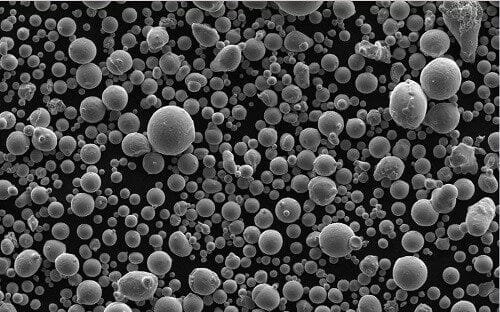
Spherical Cobalt-Based Powder (CoCrMo) is a high-performance alloy powder widely used in demanding industrial, medical, and aerospace applications. Known for its exceptional wear resistance, corrosion stability, and mechanical strength at elevated temperatures, CoCrMo powder is a critical material for additive manufacturing, thermal spraying, and powder metallurgy processes. Its spherical morphology ensures excellent flowability and packing density, making it especially suitable for precision fabrication and high-quality surface finishes.
Detailed Description
CoCrMo is a cobalt-based alloy primarily composed of cobalt, chromium, and molybdenum. Chromium provides outstanding corrosion and oxidation resistance, while molybdenum enhances solid-solution strengthening and improves wear resistance under high-load conditions. The cobalt matrix maintains strength and toughness even at elevated temperatures, outperforming many nickel- or iron-based alternatives in severe service environments.
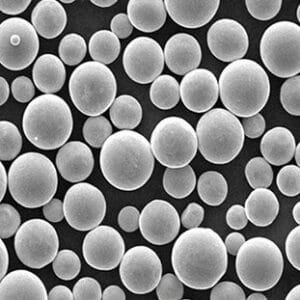
Our spherical CoCrMo powders are typically produced by gas atomization, resulting in highly spherical particles with smooth surfaces and minimal satellite formation. This morphology is essential for stable powder flow, uniform layer deposition, and consistent melting behavior in processes such as laser powder bed fusion (LPBF), electron beam melting (EBM), and directed energy deposition (DED).
Strict control of chemical composition and particle size distribution ensures reliable mechanical properties and repeatable processing performance. Low oxygen content and high alloy homogeneity help reduce defects such as porosity or cracking in finished parts. Particle size ranges can be tailored to specific manufacturing techniques, from fine powders for high-resolution 3D printing to coarser fractions for thermal spray and hot isostatic pressing (HIP).
Applications
Spherical Cobalt-Based Powder (CoCrMo) is extensively used in applications requiring high wear resistance, corrosion resistance, and long-term reliability:
Additive manufacturing (3D printing) of complex, high-strength metal components
Medical implants, including orthopedic and dental components
Thermal spray coatings for wear, corrosion, and erosion protection
Powder metallurgy parts for high-load and high-temperature service
Aerospace and energy components exposed to extreme environments
Industrial tooling and valve components requiring long service life
Technical Parameters
| Parameter | Typical Value / Range | Importance |
|---|---|---|
| Material | Cobalt Chromium Molybdenum (CoCrMo) | Determines mechanical & corrosion performance |
| Powder Shape | Spherical | Ensures good flowability and packing |
| Production Method | Gas atomization | Provides uniform composition and particle shape |
| Particle Size | 15–45 µm, 15–53 µm, 45–105 µm (custom) | Matches different AM & spray processes |
| Purity | ≥ 99.5% (alloy basis) | Reduces defects and contamination |
| Oxygen Content | Low (process-controlled) | Improves mechanical integrity |
| Apparent Density | High, consistent | Supports stable feeding and melting |
Comparison with Related Materials
| Material | Key Advantage | Typical Application |
|---|---|---|
| CoCrMo | Excellent wear & corrosion resistance | Medical implants, AM parts |
| Inconel Alloys | High-temperature strength | Aerospace, turbines |
| Stainless Steel 316L | Cost-effective, corrosion resistant | General AM parts |
| Titanium Alloys | Lightweight, biocompatible | Aerospace, medical |
FAQ
| Question | Answer |
|---|---|
| Is the powder suitable for metal 3D printing? | Yes, it is optimized for LPBF, EBM, and DED processes. |
| Can particle size be customized? | Yes, particle size distributions can be tailored to your process. |
| Is CoCrMo powder biocompatible? | Yes, it is widely used in certified medical implant applications. |
| How is the powder packaged? | Vacuum-sealed or inert-gas packed in sealed containers. |
| Can you provide test reports? | Typical chemical composition and particle size analysis can be supplied. |
Packaging
Our Spherical Cobalt-Based Powder (CoCrMo) is carefully labeled and sealed to maintain traceability and powder integrity. Packaging options include vacuum sealing or inert gas protection, with robust outer containers designed to prevent moisture ingress and mechanical damage during transportation and storage.
Conclusion
Spherical CoCrMo powder delivers a reliable combination of strength, wear resistance, corrosion stability, and process consistency. Its excellent flowability and controlled chemistry make it an ideal choice for advanced manufacturing techniques and high-performance components.
For detailed specifications, technical support, and a quotation, please contact us at sales@thinfilmmaterials.com.


Reviews
There are no reviews yet.