

What is a titanium diboride sputtering target?
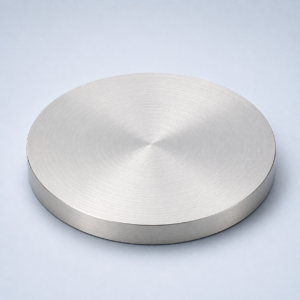
A titanium diboride (TiB2) sputtering target is a compound-boride source for Ti-B thin-film research. Target chemistry is only the starting composition; boron retention, film phase, and target behavior must be qualified under the intended sputtering conditions.
Material and Deposition Characteristics
The appropriate sputtering mode depends on target conductivity, thermal behavior, and the power-supply configuration. Many compound ceramic targets are evaluated first with RF magnetron sputtering, especially when electrical resistivity is high. For brittle or low-thermal-conductivity materials, density, backing support, and stable cooling are important for reliable operation.
How to specify titanium diboride sputtering target for an RFQ
The following fields define the order and the tests needed to qualify this target; final availability and acceptance criteria belong in the approved quotation or drawing.
| Decision | Information to provide or verify |
|---|---|
| Material identity | Specify TiB2 composition, phase or density evidence if required, and impurity limits relevant to the coating. |
| Target and cathode fit | Provide target geometry, support or backing needs, cooling, and the planned power mode for this compound target. |
| Film acceptance | Set film Ti:B composition, phase, thickness, or mechanical-test requirements and identify the measurement method. |
Send the specification and drawing for review. The selected source or target and the deposited film require separate acceptance evidence.
Browse the Sputtering Targets catalog for the broader material and source family.
Typical Thin-Film Applications
- Compound thin films for semiconductor, optical, protective, hard-coating, and functional-material research
- Applications where a pre-compounded target is preferred over co-sputtering separate elemental targets
- Projects requiring controlled chemistry and tailored target geometry for PVD development
Target Configuration and Ordering Considerations
When requesting a quotation, provide target diameter or rectangular dimensions, thickness, purity or composition, required quantity, and whether a backing plate or bonded assembly is needed. For brittle ceramic or compound targets, it is useful to specify the cathode model, backing-plate material, preferred bonding method, operating power if known, and any density, tolerance, or inspection-document requirements. TFM can review drawings, old-target photos, and application details when custom dimensions are required.
Frequently Asked Questions
What is the main reason to use a Titanium Boride sputtering target?
It provides a composition-specific source for depositing thin films when the required chemistry is better introduced from a pre-compounded target than from co-sputtering separate elements.
How should the sputtering mode for Titanium Boride be selected?
The power mode should be selected from target conductivity, thermal behavior, and equipment capability. Many compound ceramic targets are first evaluated with RF magnetron sputtering.
Why are density and microstructure important for Titanium Boride targets?
Uniform density and microstructure help support stable erosion and thermal behavior, while pores or local defects can increase the risk of cracking, particles, or unstable plasma.
Can a Titanium Boride target be supplied with a backing plate?
A supported or backed assembly can be evaluated against the cathode drawing, target grade, size, cooling and intended power conditions. Backing material, bonding method and availability should be confirmed in the order-specific quotation.
Does target composition always equal film composition?
No. Film chemistry can shift because of different sputtering yields, reactive conditions, substrate temperature, re-sputtering, or chamber history. Verify the film when the chemistry is critical.
What should I provide to request a quotation for Titanium Boride?
Please provide material composition, purity, dimensions, quantity, target or backing configuration, cathode model or system details, and any drawing, tolerance, or inspection requirements.
Prepare your RFQ: Download the fillable Titanium Boride Sputtering Target, TiB2 RFQ Worksheet (PDF). Enter the required composition or grade, dimensions, backing or bonding request, quantity, documents, and acceptance criteria for quotation review.
Reviews
There are no reviews yet.