
Introduction
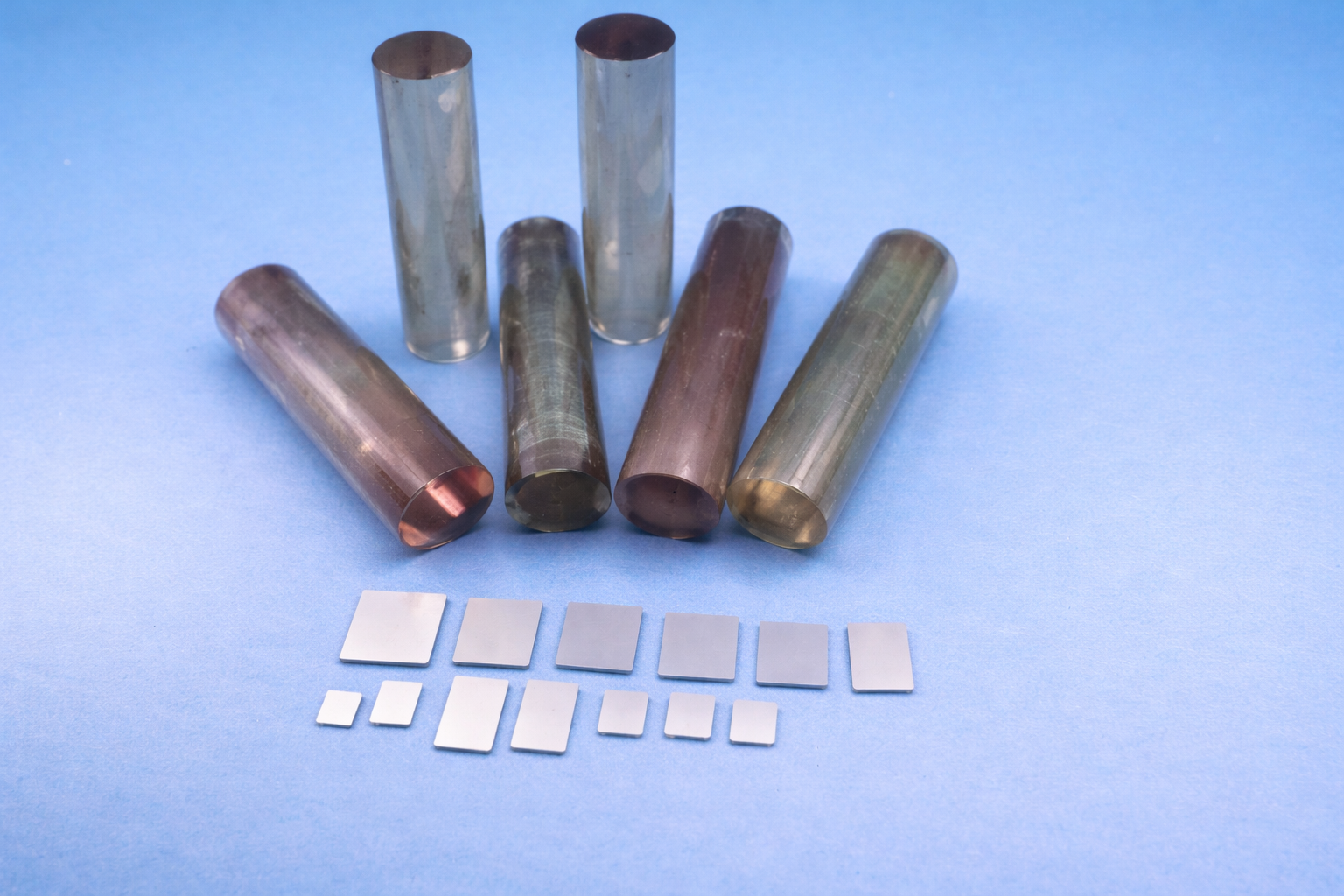
Titanium Dioxide (TiO₂) Substrate is a high-quality oxide single crystal widely used in thin film epitaxy, photocatalysis research, optoelectronics, and functional oxide device development. With its stable crystal structure, well-defined surface chemistry, and excellent thermal resistance, TiO₂ provides a robust platform for investigating oxide heterostructures and surface-driven phenomena.
Available primarily in rutile and anatase phases, TiO₂ substrates offer distinct crystallographic and electronic characteristics, allowing researchers and engineers to tailor growth conditions and interface properties for specific applications.
Detailed Description
Titanium Dioxide (TiO₂) Substrate is typically supplied as a single-crystal wafer grown through controlled crystal growth methods to ensure low defect density and high structural uniformity. The two most commonly used phases are:
Rutile TiO₂ – Tetragonal structure, thermodynamically stable at high temperatures
Anatase TiO₂ – Metastable phase with strong photocatalytic activity
Rutile TiO₂ is particularly favored for epitaxial oxide film growth due to its chemical stability and well-defined lattice parameters. Its high refractive index and optical transparency over a broad wavelength range also make it attractive for photonic and optical coating research.
The substrate surface is chemo-mechanically polished to achieve low roughness and high planarity. Optional annealing treatments can generate step-terrace structures suitable for epitaxial growth by techniques such as PLD, MBE, RF/DC sputtering, and CVD.
Key material advantages include:
High melting point and thermal stability
Excellent chemical resistance
Wide bandgap (~3.0–3.2 eV depending on phase)
Stable surface chemistry for interface engineering
Compatibility with a variety of oxide thin films
These characteristics make TiO₂ Substrate particularly valuable for studying metal–oxide interfaces, defect chemistry, and photo-induced processes.
Applications
Titanium Dioxide (TiO₂) Substrate is widely used across research laboratories and advanced material development environments:
Epitaxial growth of oxide thin films
Photocatalytic material research
Transparent conducting oxide studies
Optical and photonic coatings
Sensor device fabrication
Memristive and resistive switching structures
Energy conversion and storage materials
Surface chemistry and catalytic reaction studies
In photocatalysis and photoelectrochemical systems, TiO₂ substrates provide a structurally identical base for investigating interface-controlled reactions and thin film activity.
Technical Parameters
| Parameter | Typical Value / Range | Importance |
|---|---|---|
| Crystal Structure | Rutile or Anatase | Determines optical & epitaxial behavior |
| Orientation | (100), (110), (001) | Controls film growth direction |
| Surface Roughness | < 0.5 nm (epi-ready optional) | Ensures high-quality film deposition |
| Size | 5×5 mm – 20×20 mm (custom) | Compatible with deposition holders |
| Thickness | 0.5 mm – 1.0 mm | Mechanical stability |
| Bandgap | ~3.0–3.2 eV | Influences optical & electronic applications |
Comparison with Related Materials
| Material | Key Advantage | Typical Application |
|---|---|---|
| Titanium Dioxide Substrate | Chemical stability & photocatalytic activity | Photocatalysis & oxide epitaxy |
| SrTiO₃ | Perovskite lattice compatibility | Complex oxide films |
| Sapphire (Al₂O₃) | Excellent thermal stability | General thin film growth |
| LaAlO₃ | Strong lattice matching for perovskites | High-mobility interfaces |
Compared with SrTiO₃, TiO₂ offers distinct electronic and catalytic properties. Compared with sapphire, it provides oxide-compatible surface chemistry beneficial for functional film systems.
FAQ
| Question | Answer |
|---|---|
| Which phase should I choose, rutile or anatase? | Rutile is preferred for high-temperature epitaxy; anatase is often selected for photocatalytic research. |
| Can orientation be customized? | Yes, standard orientations such as (100), (110), and (001) are available, with custom cuts upon request. |
| Is the surface suitable for epitaxial growth? | Epi-ready polishing and annealing treatments are available to ensure atomic-level smoothness. |
| Does TiO₂ withstand high deposition temperatures? | Yes, rutile TiO₂ is stable at temperatures typically used in oxide thin film deposition. |
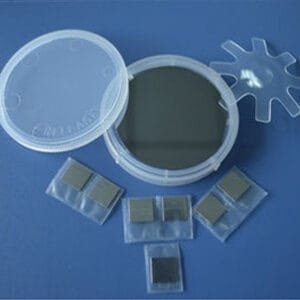
| How is the substrate packaged? | Substrates are individually protected in cleanroom-grade packaging to prevent contamination and mechanical damage. |
Packaging
Our Titanium Dioxide (TiO₂) Substrate products are meticulously tagged and labeled externally to ensure efficient identification and maintain high standards of quality control. We take great care to prevent any potential damage during storage and transportation, ensuring the substrates arrive in perfect condition.
Conclusion
Titanium Dioxide (TiO₂) Substrate offers a stable, chemically resistant, and structurally well-defined platform for advanced oxide thin film research, photocatalytic studies, and optoelectronic device development. With multiple phase options, precise orientation control, and epi-ready surface preparation, it provides reliable performance for both academic and industrial R&D applications.
For detailed specifications and a quotation, please contact us at sales@thinfilmmaterials.com.
Reviews
There are no reviews yet.