

Introduction
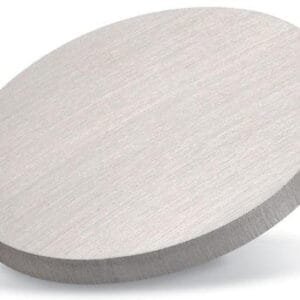
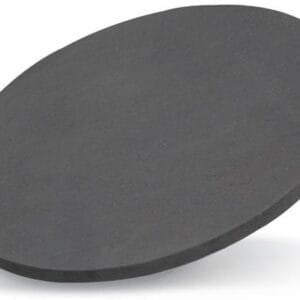
Tungsten Carbide (WC) Sputtering Targets are high-density ceramic–metal composite materials engineered for depositing extremely hard, wear-resistant, and chemically stable thin films. Known for its exceptional hardness, high melting point, and excellent mechanical strength, WC is widely used in protective coatings, tooling applications, and advanced surface engineering.
WC sputtering targets enable the formation of durable carbide-based films that enhance surface performance in harsh mechanical and chemical environments.
Detailed Description
Tungsten Carbide is a refractory compound composed of tungsten (W) and carbon (C), typically in a near 1:1 atomic ratio. It features a hexagonal crystal structure and exhibits outstanding hardness and thermal stability, with a melting point exceeding 2800°C.
High-quality WC sputtering targets are produced through advanced powder metallurgy and hot pressing or hot isostatic pressing (HIP). Key manufacturing controls ensure:
High relative density (≥ 99% theoretical density typical)
Uniform WC phase distribution
Controlled carbon content
Minimal free tungsten or graphite phases
Maintaining stoichiometric balance is essential, as deviations can affect film hardness, adhesion, and electrical properties. Due to its conductive nature, WC is compatible with DC magnetron sputtering, while RF sputtering may also be used in certain configurations.
For high-power sputtering systems or large-area deposition equipment, WC targets can be bonded to copper backing plates to improve heat dissipation and mechanical stability during extended deposition cycles.
Applications
Tungsten Carbide sputtering targets are widely used in:
Wear-Resistant Coatings
Protective films for cutting tools, molds, and mechanical components.Hard Protective Layers
Surface enhancement for industrial tooling and aerospace parts.Barrier Coatings
Diffusion barrier layers in semiconductor and microelectronic devices.Decorative & Functional Coatings
Durable coatings with dark metallic appearance.Chemical & Corrosion Protection
Coatings in aggressive industrial environments.Advanced Materials Research
R&D in carbide thin films and nanostructured coatings.
Technical Parameters
| Parameter | Typical Value / Range | Importance |
|---|---|---|
| Chemical Formula | WC | Defines carbide composition |
| Purity | 99.5% – 99.99% | Minimizes impurity phases |
| Density | ≥ 99% theoretical density | Ensures stable sputtering rate |
| Diameter | 1″ – 8″ (custom available) | Matches cathode systems |
| Thickness | 3 – 10 mm | Influences lifetime |
| Bonding | Cu backing plate optional | Improves heat transfer |
| Sputtering Method | DC magnetron preferred | Suitable for conductive carbides |
Comparison with Related Materials
| Material | Key Advantage | Typical Application |
|---|---|---|
| Tungsten Carbide (WC) | Extremely high hardness & wear resistance | Tool coatings |
| Titanium Carbide (TiC) | Lower density, good hardness | Protective films |
| Chromium Carbide (Cr₃C₂) | Oxidation resistance at elevated temps | High-temperature coatings |
| Pure Tungsten (W) | High melting point, ductile metal | Barrier layers |
WC is selected when maximum hardness, abrasion resistance, and structural stability are critical.
FAQ
| Question | Answer |
|---|---|
| Is WC suitable for DC sputtering? | Yes, WC’s electrical conductivity makes it compatible with DC magnetron sputtering. |
| Can the carbon content be customized? | Yes, stoichiometry can be adjusted based on film performance requirements. |
| Is bonding recommended? | For large-diameter or high-power applications, copper backing plates improve stability. |
| Are rotary targets available? | Yes, rotary configurations can be supplied for industrial coating lines. |
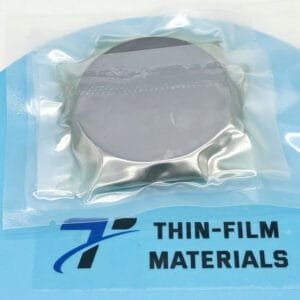
| How is the target packaged? | Vacuum-sealed with protective cushioning and export-grade cartons or wooden crates. |
Packaging
Our Tungsten Carbide Sputtering Targets are meticulously tagged and labeled externally to ensure efficient identification and maintain high standards of quality control. We take great care to prevent any potential damage during storage and transportation, ensuring the targets arrive in perfect condition.
Conclusion
Tungsten Carbide (WC) Sputtering Targets provide a reliable and high-performance solution for depositing hard, wear-resistant thin films. With controlled stoichiometry, high density, and customizable configurations, WC targets support demanding industrial coatings and advanced materials research.
For detailed specifications and a quotation, please contact us at sales@thinfilmmaterials.com.
Reviews
There are no reviews yet.