
Introduction
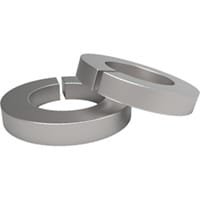
Vented Stainless Steel Washers (Metric) are purpose-designed fastening accessories for high-vacuum (HV) and ultra-high-vacuum (UHV) systems. By incorporating vent paths, these washers prevent trapped gas pockets beneath bolt heads or nuts, helping eliminate virtual leaks and improve pump-down efficiency—especially in ConFlat® (CF) flange assemblies and other blind-hole joints.
Detailed Description
Manufactured from vacuum-grade stainless steel, vented washers feature precision openings or channels that allow gases to escape during evacuation and bakeout. This design avoids sealing off micro-volumes between the washer and mating surfaces, which can otherwise release gas slowly and compromise base pressure.
Metric vented washers are commonly used in conjunction with vented bolts (often silver plated) to create a fully vented fastener stack. Their flat, rigid geometry distributes load evenly, protects flange surfaces, and maintains consistent preload across repeated thermal cycles. Smooth finishes minimize particle generation and support cleanroom and UHV requirements.
Applications
ConFlat® (CF) HV/UHV flange assemblies
UHV chambers, beamlines, and research instruments
Semiconductor processing and surface science equipment
Thin film deposition systems (PVD, sputtering, evaporation)
Any vacuum joint where blind holes or tight interfaces are present
Technical Parameters
| Parameter | Typical Value / Range | Importance |
|---|---|---|
| Material | Stainless Steel | Strength, corrosion resistance |
| Standard | Metric (e.g., M6, M8, M10) | System compatibility |
| Design | Vented (slots or holes) | Eliminates trapped gas |
| Surface Finish | Cleaned, vacuum-ready | Low outgassing |
| Vacuum Range | HV / UHV compatible | Stable base pressure |
| Reusability | Multiple cycles (with inspection) | Cost efficiency |
Comparison with Related Washers
| Washer Type | Key Advantage | Typical Application |
|---|---|---|
| Vented SS Washer (Metric) | No trapped gas, UHV ready | CF flange joints |
| Standard SS Washer | Low cost | Non-critical HV |
| Vented Silver-Plated Washer | Anti-galling + venting | Repeated assemblies |
| Plastic Washer | Electrical isolation | Low-duty setups |
FAQ
| Question | Answer |
|---|---|
| Why use vented washers in vacuum systems? | They prevent gas pockets under fasteners, reducing virtual leaks. |
| Are these required for UHV? | Strongly recommended, especially with blind tapped holes. |
| Do they work with standard bolts? | Yes, but best performance is achieved with vented bolts. |
| Can they be reused? | Yes, after proper cleaning and inspection. |
| Are custom sizes available? | Yes, custom metric sizes can be supplied on request. |
Packaging
Our Vented Stainless Steel Washers (Metric) are cleaned for vacuum service, counted, and sealed in protective packaging to maintain cleanliness and dimensional integrity. Export-grade cartons ensure safe storage and international shipment.
Conclusion
Vented Stainless Steel Washers (Metric) are essential components for reliable HV and UHV fastening, helping eliminate virtual leaks and improve vacuum stability. When paired with vented bolts, they deliver faster pump-down, cleaner operation, and long-term performance in critical vacuum assemblies.
For detailed specifications and a quotation, please contact us at sales@thinfilmmaterials.com.

Reviews
There are no reviews yet.