
Introduction
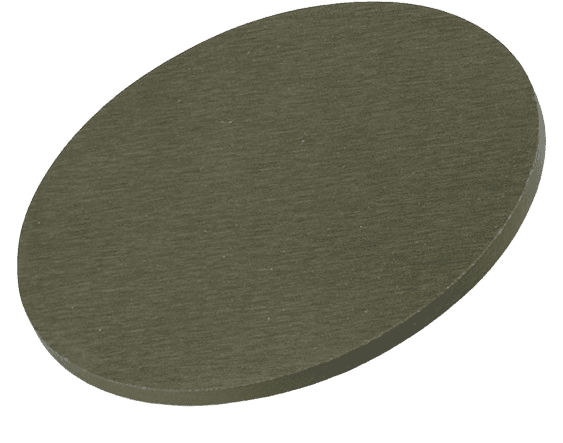
Zinc Oxide with Alumina (ZnO/Al₂O₃) sputtering targets—often associated with Al-doped ZnO (AZO) systems—are widely used to deposit transparent conductive oxide (TCO) films. These materials combine high optical transparency in the visible range with good electrical conductivity, making them a cost-effective alternative to indium-based coatings in displays, photovoltaics, and optoelectronic devices.
Detailed Description
ZnO/Al₂O₃ sputtering targets are engineered by introducing controlled amounts of alumina into a zinc oxide matrix. The presence of aluminum acts as a donor dopant, increasing carrier concentration and thereby improving electrical conductivity while maintaining high transparency.
Targets are typically fabricated via advanced ceramic processing routes such as hot pressing or sintering to achieve high density and uniform microstructure. Precise control over dopant distribution is essential to ensure stable sputtering behavior and consistent film properties across large substrates.
Compared with undoped ZnO, ZnO/Al₂O₃ targets provide significantly lower resistivity and improved film stability under thermal and environmental stress. The material is compatible with both RF and DC magnetron sputtering systems and can be supplied as planar or rotatable targets. For large-area coating applications, bonding to copper backing tubes or plates enhances thermal management and extends operational lifetime.
Key features include:
High transparency in the visible spectrum with improved conductivity
Stable electrical performance through controlled Al doping
Excellent environmental stability compared to ITO alternatives
High density and uniform microstructure for consistent sputtering
Customizable Al₂O₃ doping levels (typically 1–3 wt%)
Applications
ZnO/Al₂O₃ sputtering targets are widely used in:
Transparent conductive films for displays (LCD, OLED)
Thin film solar cells (as TCO layers)
Touch panels and smart windows
Low-emissivity (Low-E) glass coatings
Transparent electrodes in optoelectronic devices
Research and development in TCO materials
Technical Parameters
| Parameter | Typical Value / Range | Importance |
|---|---|---|
| Composition | ZnO + Al₂O₃ (1–3 wt% Al₂O₃) | Controls conductivity & transparency |
| Purity | 99.9% – 99.99% | Reduces impurities affecting film quality |
| Density | ≥ 95% – 99% theoretical | Ensures stable sputtering |
| Diameter | 50 – 300 mm (custom) | Compatible with sputtering systems |
| Thickness | 3 – 6 mm | Influences target lifetime |
| Resistivity (film) | ~10⁻³ – 10⁻⁴ Ω·cm (typical) | Key for TCO performance |
| Bonding | Copper backing (In / elastomer) | Improves heat dissipation |
Comparison with Related Materials
| Material | Key Advantage | Typical Application |
|---|---|---|
| ZnO/Al₂O₃ (AZO) | Cost-effective, stable TCO | Displays, solar cells |
| ITO (In₂O₃:SnO₂) | Excellent conductivity & transparency | High-end displays |
| ZnO (undoped) | High transparency, low cost | Optical coatings |
| FTO (SnO₂:F) | Good thermal stability | Solar cells, glass coatings |
FAQ
| Question | Answer |
|---|---|
| Can the Al₂O₃ doping level be customized? | Yes, typical ranges are 1–3 wt%, but can be adjusted based on required conductivity. |
| Is ZnO/Al₂O₃ a replacement for ITO? | In many applications, it serves as a cost-effective alternative with good performance. |
| What sputtering method is suitable? | Both RF and DC magnetron sputtering are commonly used. |
| Is bonding required? | For high-power or large-area deposition, bonding to a copper backing plate is recommended. |
| What industries use this material most? | Display manufacturing, photovoltaics, and optoelectronics. |
Packaging
Our Zinc Oxide with Alumina Sputtering Targets are meticulously tagged and labeled externally to ensure efficient identification and maintain high standards of quality control. We take great care to prevent any potential damage during storage and transportation, ensuring the targets arrive in perfect condition.
Conclusion
Zinc Oxide with Alumina sputtering targets provide an efficient and scalable solution for producing transparent conductive films with excellent optical and electrical performance. With customizable doping levels and reliable manufacturing quality, they are ideal for modern display technologies, solar energy systems, and advanced optoelectronic applications.
For detailed specifications and a quotation, please contact us at sales@thinfilmmaterials.com.
Specialized bonding services for Zinc Oxide with Alumina (ZnO/Al2O3) Sputtering Targets, including indium and elastomeric bonding techniques, enhance performance and durability. Thin Film Materials (TFM) ensures high-quality solutions that meet industry standards and customer needs.
We also offer custom machining of backing plates, which is essential for sputtering target assembly. This comprehensive approach improves target design flexibility and performance in thin film deposition. Our channels provide detailed information about bonding materials, methods, and services, helping clients make informed decisions.

Reviews
There are no reviews yet.