

Zinc Oxide with Scandia Sputtering Target (ZnO–Sc₂O₃)
Introduction
Zinc Oxide with Scandia (ZnO–Sc₂O₃) Sputtering Target is a doped transparent conductive oxide (TCO) material designed to enhance electrical conductivity while maintaining high optical transparency. By introducing scandium oxide into the ZnO matrix, carrier concentration and structural stability can be precisely tuned, making this material suitable for advanced optoelectronic and functional coating applications. ZnO–Sc₂O₃ thin films are increasingly explored as alternatives to conventional TCO materials in energy and display technologies.
Detailed Description
Our Zinc Oxide with Scandia Sputtering Targets are manufactured from high-purity ZnO and Sc₂O₃ powders with carefully controlled doping levels. The scandium content is optimized to balance electrical conductivity, carrier mobility, and optical transmission. Precise stoichiometric control is critical, as variations in Sc concentration directly influence film resistivity and transparency in the visible spectrum.
The targets are produced using advanced ceramic processing methods, including powder blending, calcination, and high-temperature sintering, to achieve high density and homogeneous microstructure. A dense target body minimizes arcing and particle generation during sputtering, ensuring stable plasma conditions and uniform thin film growth. Due to its ceramic oxide nature, ZnO–Sc₂O₃ is typically deposited using RF sputtering systems, although reactive sputtering conditions may be adjusted to optimize oxygen stoichiometry in the film.
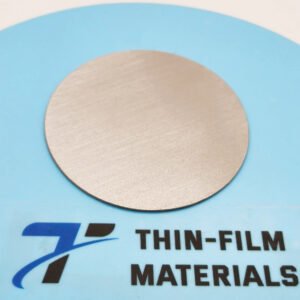
Targets are available in round, rectangular, or custom planar formats and can be supplied unbonded or bonded to copper backing plates for enhanced thermal management in high-power applications.
Applications
Zinc Oxide with Scandia Sputtering Targets are widely used in:
Transparent conductive oxide (TCO) thin films
Display panels and touch screens
Photovoltaic and solar cell coatings
Optoelectronic devices
Transparent electrodes and buffer layers
Academic and industrial R&D on doped ZnO systems
Technical Parameters
| Parameter | Typical Value / Range | Importance |
|---|---|---|
| Chemical Composition | ZnO–Sc₂O₃ (custom Sc content) | Controls conductivity and transparency |
| Purity | 99.9% – 99.99% | Reduces impurity-related optical loss |
| Diameter | 25 – 300 mm (custom available) | Compatible with sputtering cathodes |
| Thickness | 3 – 6 mm | Influences target lifetime |
| Density | ≥ 95% theoretical | Improves plasma stability |
| Sputtering Mode | RF sputtering | Required for ceramic oxides |
| Bonding | Unbonded / Cu backing (optional) | Enhances heat dissipation |
Comparison with Related TCO Materials
| Material | Key Advantage | Typical Application |
|---|---|---|
| ZnO–Sc₂O₃ | Tunable conductivity & stability | Transparent electrodes |
| Al-doped ZnO (AZO) | Cost-effective TCO | Solar cells & displays |
| ITO (In₂O₃–SnO₂) | High conductivity | Displays & touch panels |
| Ga-doped ZnO (GZO) | Improved mobility | Optoelectronics |
FAQ
| Question | Answer |
|---|---|
| Can the scandium doping level be customized? | Yes, Sc₂O₃ content can be tailored to meet conductivity and transparency requirements. |
| Is RF sputtering required? | Yes, ZnO–Sc₂O₃ is typically deposited using RF sputtering. |
| Are bonded targets available? | Yes, copper backing plates can be supplied upon request. |
| How is the target packaged? | Vacuum-sealed with protective foam and export-grade cartons or wooden crates. |
Packaging
Our Zinc Oxide with Scandia Sputtering Targets are meticulously tagged and vacuum-sealed to ensure traceability and protection from moisture and contamination. Export-grade packaging safeguards the targets during transportation and storage.
Conclusion
Zinc Oxide with Scandia (ZnO–Sc₂O₃) Sputtering Target offers a reliable solution for depositing high-performance transparent conductive oxide thin films with tunable electrical and optical properties. With precise composition control, high density, and flexible customization options, it is well suited for advanced optoelectronic, photovoltaic, and display applications.
For detailed specifications and a quotation, please contact us at sales@thinfilmmaterials.com.


Reviews
There are no reviews yet.