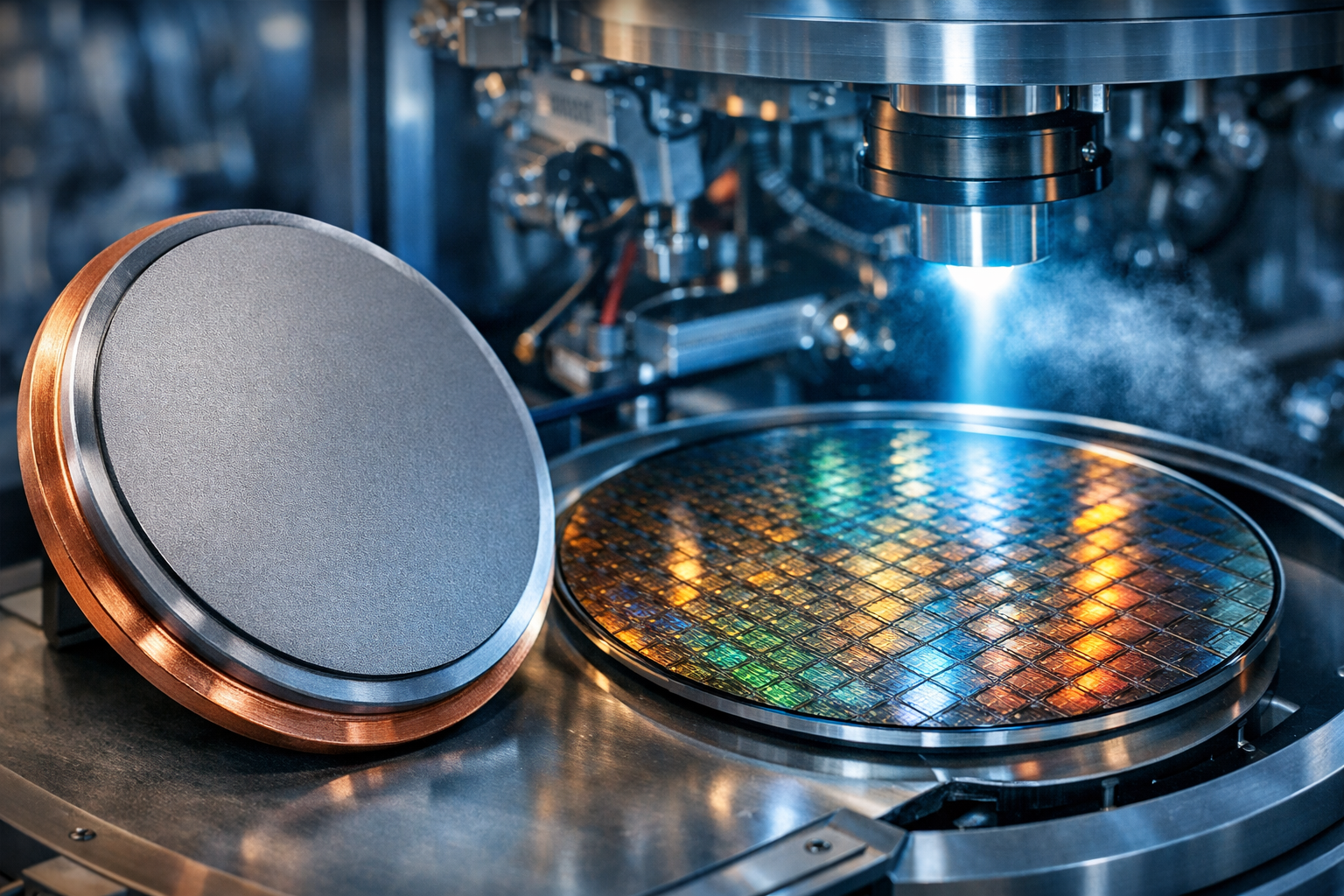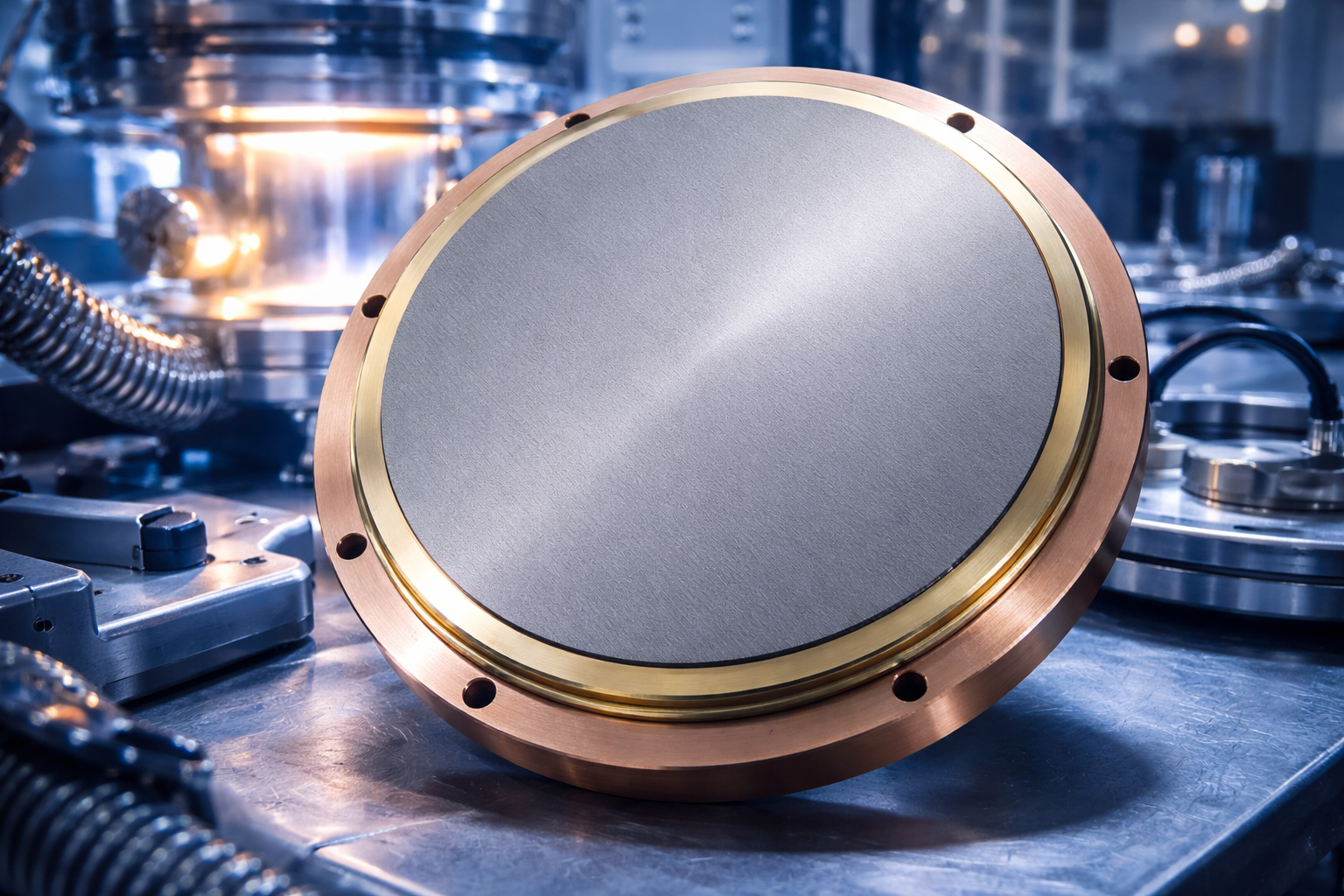
Introduction: Why ZnO Thin Films Matter
Zinc oxide (ZnO) is a multifunctional semiconductor material that has gained significant attention across both academic research and industrial manufacturing. With a wide bandgap (~3.37 eV), high exciton binding energy, and excellent transparency in the visible spectrum, ZnO thin films are widely used in optoelectronic devices, transparent conductive coatings, sensors, and photovoltaic systems.
The growing demand for high-performance coatings in displays, solar cells, and flexible electronics has further driven interest in scalable and controllable deposition techniques. Among these, reactive magnetron sputtering using a Zinc Sputtering Target offers a compelling balance between cost, process flexibility, and film quality.
However, unlike direct sputtering of oxide targets, reactive sputtering introduces additional complexity due to gas-phase reactions and dynamic changes at the target surface. This article provides a detailed exploration of the process, optimization strategies, and key challenges involved in depositing ZnO thin films via reactive sputtering of zinc.
Fundamentals of Reactive Sputtering with Zinc Targets
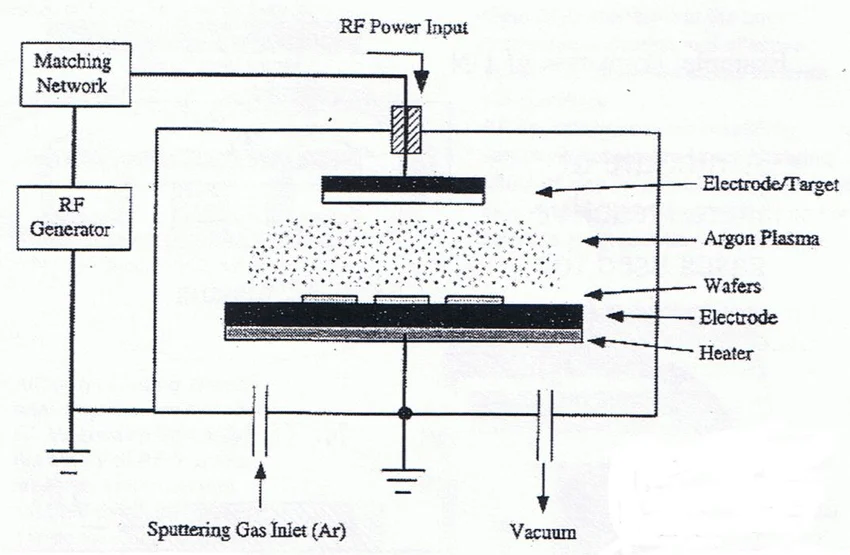
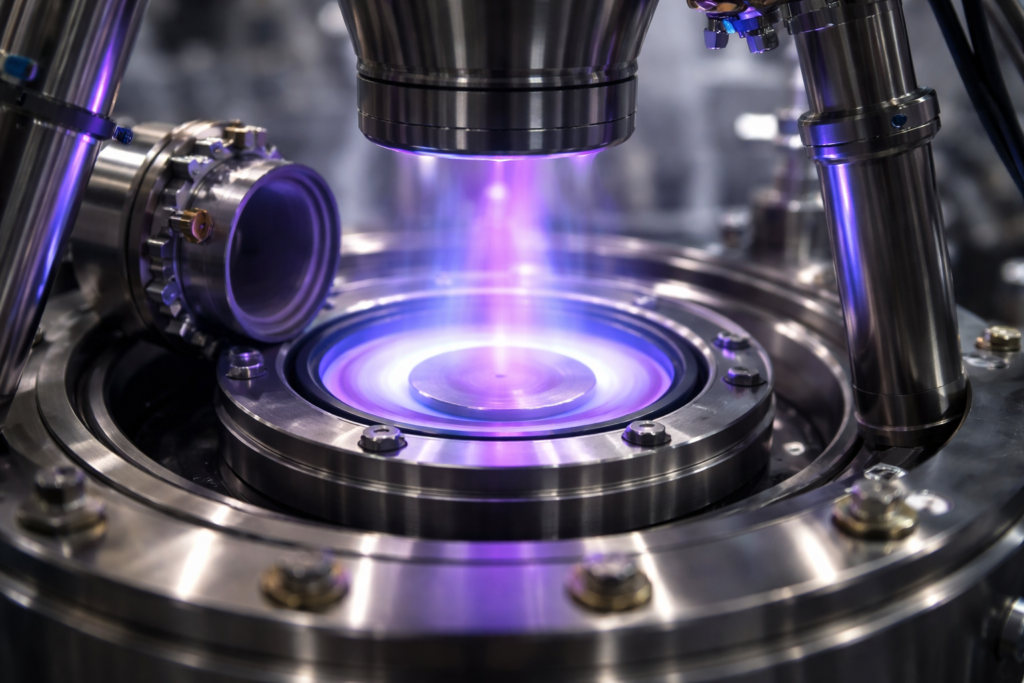
Reactive sputtering is a variation of physical vapor deposition (PVD) in which a metallic target is sputtered in the presence of a reactive gas to form a compound film.
Basic Mechanism
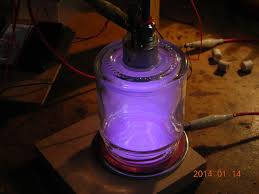
- Plasma Generation
A plasma is generated using argon (Ar) gas under vacuum conditions. Ionized Ar⁺ ions are accelerated toward the zinc target. - Sputtering of Zinc Atoms
Energetic ions bombard the zinc target, ejecting Zn atoms into the gas phase. - Reaction with Oxygen
Oxygen gas (O₂) is introduced into the chamber. Zn atoms react with oxygen either in the plasma phase or on the substrate surface. - Film Formation
ZnO molecules nucleate and grow on the substrate, forming a thin film.
Why Use Zinc Instead of ZnO Targets?
Reactive sputtering from metallic zinc offers several advantages:
- Higher sputtering yield → faster deposition rates
- Lower material cost → metallic Zn is cheaper than ceramic ZnO
- Better control of stoichiometry → tunable oxygen incorporation
- Flexible process window → adaptable to different applications
However, these advantages come at the cost of increased process sensitivity and instability, particularly due to target poisoning.
Process Regimes in Reactive Sputtering
Reactive sputtering systems typically exhibit three operating regimes:
1. Metallic Mode
- Low oxygen flow
- Target surface remains metallic Zn
- High deposition rate
- Films are Zn-rich (poor transparency)
2. Transition Mode (Critical Region)
- Partial oxidation of target surface
- Moderate deposition rate
- Films approach stoichiometric ZnO
- Best balance of properties
👉 This is the most important operating region
3. Poisoned Mode
- Target surface fully oxidized (ZnO layer forms)
- Low sputtering yield
- Deposition rate drops significantly
- Films are highly transparent but less conductive
Key Process Parameters and Optimization Strategies
1. Oxygen Flow Rate (O₂ Partial Pressure)
The oxygen flow determines the chemical composition of the deposited film.
- Too low → metallic Zn inclusions
- Too high → full target poisoning
Optimization Strategy:
- Use mass flow controllers (MFCs)
- Monitor partial pressure via residual gas analysis
- Operate near the transition point (hysteresis loop)
2. Power Density
Power directly influences plasma density and sputtering rate.
- Higher power:
- Increases deposition rate
- Helps prevent poisoning (by sputtering off oxide layer)
- Excessive power:
- Causes overheating
- Leads to stress and defects
👉 Typical range: 1–10 W/cm² (depending on system design)
3. Working Pressure
Pressure affects mean free path and energy of sputtered species.
- Low pressure (1–3 mTorr):
- Dense films
- Higher energy impact
- High pressure (5–15 mTorr):
- More scattering
- Reduced film density
4. Substrate Temperature
Temperature influences film microstructure.
- Room temperature:
- Amorphous or nanocrystalline films
- Elevated temperature (200–400°C):
- Improved crystallinity
- Better electrical properties
5. Substrate Bias
Applying bias voltage can:
- Improve film adhesion
- Increase ion bombardment
- Modify film density
Target Poisoning: Mechanism and Control
Mechanism
Target poisoning occurs when oxygen reacts with the zinc target surface, forming a ZnO layer. Since ZnO has a lower sputtering yield than metallic Zn, this leads to:
- Reduced deposition rate
- Increased discharge voltage
- Plasma instability
Hysteresis Effect
Reactive sputtering exhibits a hysteresis behavior:
- Increasing O₂ flow → sudden transition to poisoned mode
- Decreasing O₂ flow → delayed return to metallic mode
👉 This makes process control challenging.
Control Methods
1. Closed-Loop Control Systems
- Monitor plasma emission (OES)
- Adjust O₂ flow dynamically
2. Pulsed DC Sputtering
- Reduces charge buildup
- Minimizes arcing
3. Gas Flow Optimization
- Use separate gas inlets
- Improve chamber design
4. High Power Impulse Magnetron Sputtering (HiPIMS)
- High ionization
- Better control over film growth
Film Properties and Performance Tuning
ZnO films exhibit tunable properties depending on process conditions.
1. Optical Properties
- High transparency (>85%) in visible range
- Controlled by oxygen content and thickness
2. Electrical Properties
- Conductivity depends on:
- Oxygen vacancies
- Doping (Al, Ga, In)
3. Structural Properties
- Wurtzite crystal structure
- Grain size influenced by temperature and pressure
Zinc vs Zinc Oxide Targets: Practical Comparison
| Parameter | Zinc (Reactive) | ZnO (Direct) |
|---|---|---|
| Process Complexity | High | Low |
| Deposition Rate | High | Moderate |
| Cost | Lower | Higher |
| Film Control | Excellent | Limited |
| Stability | Moderate | High |
👉 For industrial production, ZnO targets may be preferred for stability, while Zn targets are ideal for R&D and tunable processes.
Common Challenges and Engineering Solutions
1. Arcing
- Caused by insulating oxide formation
- Solution:
- Pulsed DC
- Smooth target surface
2. Film Stress
- Caused by high-energy bombardment
- Solution:
- Adjust pressure and power
- Use substrate heating
3. Non-Uniform Deposition
- Caused by uneven plasma
- Solution:
- Optimize magnetron design
- Rotate substrate
4. Adhesion Issues
- Solution:
- Plasma cleaning
- Adhesion layers (e.g., Cr, Ti)
Industrial and Emerging Applications
ZnO thin films deposited via reactive sputtering are widely used in:
Electronics & Displays
- Transparent electrodes (TCO)
- OLED / LCD panels
Solar Energy
- Buffer layers in CIGS solar cells
- Anti-reflective coatings
Sensors
- Gas sensors (NO₂, H₂)
- Biosensors
Advanced Technologies
- Flexible electronics
- UV photodetectors
- Piezoelectric devices
Future Trends and Advanced Techniques
1. Doped ZnO Films
- AZO (Al-doped ZnO)
- GZO (Ga-doped ZnO)
👉 Replacing ITO in many applications
2. Low-Temperature Deposition
- For flexible substrates (PET, PI)
3. Nanostructured ZnO
- Nanorods, nanowires
- Enhanced surface area for sensors
4. AI-Driven Process Optimization
- Machine learning for parameter tuning
Conclusion
Reactive sputtering of zinc is a powerful technique for producing high-quality ZnO thin films with tunable optical, electrical, and structural properties. While challenges such as target poisoning and process instability must be carefully managed, the method offers unmatched flexibility for both research and industrial applications.
By optimizing key parameters such as oxygen flow, power, and pressure—and by leveraging advanced control strategies—engineers can achieve consistent, high-performance coatings tailored to specific applications.
High-quality Zinc Sputtering Targets play a critical role in ensuring process stability, deposition efficiency, and film uniformity.
For high-purity zinc sputtering targets, customized dimensions, or bonded configurations, please contact us at sales@thinfilmmaterials.com for detailed specifications and quotations.