Introduction
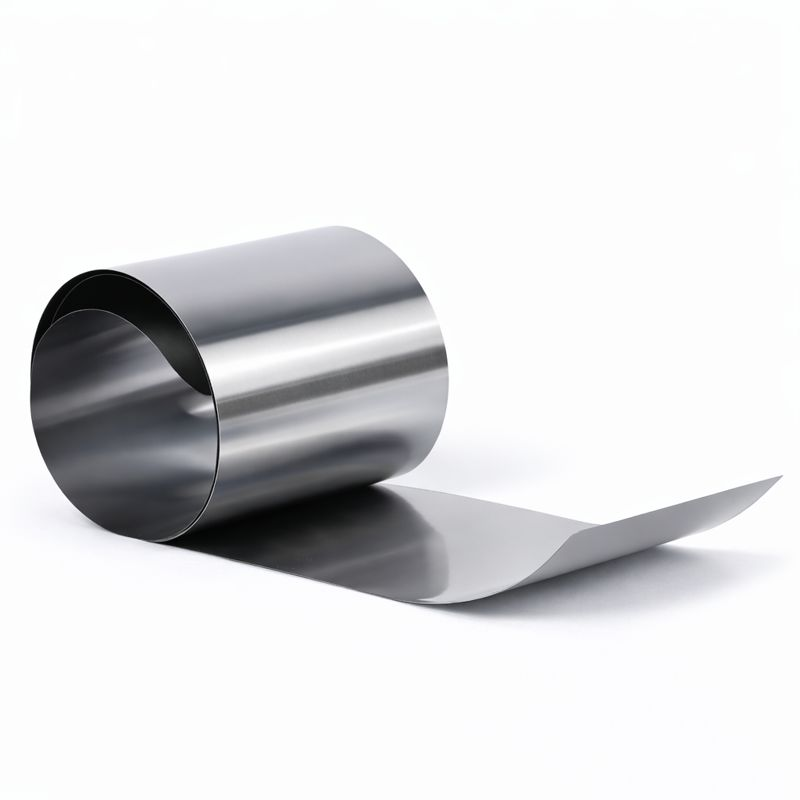
Vanadium foil is a high-performance metallic material that occupies a unique position in advanced materials science. While vanadium is widely known as an alloying element in steels and superalloys, vanadium foil (V foil) represents a far more specialized and technically demanding form of this transition metal. Produced from high-purity vanadium and processed into thin, ductile sheets, vanadium foil is primarily used in scientific research, thin-film deposition, hydrogen technology, nuclear materials studies, and extreme-environment engineering.
Unlike commodity metal foils such as aluminum or copper, vanadium foil is not designed for mass-market applications. Instead, it serves as a problem-solving material—chosen when temperature, chemical behavior, hydrogen interaction, or atomic-level control becomes critical. This article provides a comprehensive technical overview of vanadium foil, covering its fundamental properties, manufacturing principles, application logic, and comparison with alternative metal foils.
1. Fundamental Characteristics of Vanadium Foil
1.1 Position of Vanadium in the Periodic Table
Vanadium (V) is a Group 5 transition metal with atomic number 23. Its partially filled d-orbitals give rise to multiple stable oxidation states, strong metallic bonding, and tunable chemical reactivity. These atomic-level characteristics directly translate into the macroscopic behavior of vanadium foil, especially in reactive or high-temperature environments.
1.2 High Melting Point and Thermal Stability
- Melting point: ~1910 °C
- Maintains mechanical integrity at temperatures well above 1000 °C
- Lower vapor pressure than many mid-temperature metals
This combination makes vanadium foil suitable for high-temperature vacuum systems, thermal cycling experiments, and environments where dimensional stability is essential.
1.3 Mechanical Properties and Ductility
Compared with many refractory metals, vanadium offers a rare balance between strength and ductility:
- Can be rolled into thin foil without catastrophic cracking
- Exhibits good bendability and formability in annealed condition
- Easier to cut, punch, and handle than tungsten or molybdenum foils
For laboratory and precision engineering applications, this ductility significantly reduces handling risk and fabrication complexity.
1.4 Hydrogen Compatibility and Reversible Absorption
One of the most distinctive features of vanadium is its exceptional interaction with hydrogen:
- High hydrogen solubility
- Fast hydrogen diffusion rate
- Formation of reversible vanadium hydrides under controlled conditions
As a result, vanadium foil is widely used in hydrogen permeation studies, hydrogen storage research, and isotope behavior experiments. Few metallic foils offer this combination of stability and reversibility.
1.5 Surface Chemistry and Controlled Oxidation
Vanadium readily forms a very thin native oxide layer when exposed to air. Unlike aluminum or titanium oxides, this oxide:
- Is extremely thin
- Can be reduced or removed under vacuum or reducing atmospheres
- Does not permanently block diffusion or interfacial reactions
This makes vanadium foil particularly valuable in thin-film growth, diffusion couples, and interface reaction studies, where surface control is essential.
2. Purity Requirements and Raw Material Considerations
2.1 Typical Purity Grades
Vanadium foil is commonly supplied in purity ranges such as:
- 99.9% (3N)
- 99.95%–99.99% (3N5–4N)
For advanced research, trace impurities—especially oxygen, nitrogen, carbon, and hydrogen—often matter more than nominal metallic purity.
2.2 Influence of Interstitial Impurities
- Oxygen & nitrogen: Increase hardness but significantly reduce ductility
- Carbon: Affects grain boundary behavior and phase stability
- Hydrogen: Can induce embrittlement if uncontrolled
High-quality vanadium foil therefore requires careful vacuum melting, refining, and controlled thermomechanical processing to limit interstitial contamination.
3. Manufacturing Logic of Vanadium Foil
3.1 Melting and Refining
Vanadium foil production typically begins with:
- Vacuum arc melting (VAM) or electron-beam melting (EBM)
- Multiple remelts to homogenize composition
- Strict atmosphere control to minimize gas pickup
These steps establish the chemical foundation for high-performance foil.
3.2 Rolling and Thickness Control
The transformation from bulk vanadium to foil involves:
- Hot rolling to break down cast structure
- Intermediate annealing to relieve internal stress
- Cold rolling for thickness precision and surface quality
Achieving thin, uniform foil without cracking requires precise control of deformation rate and annealing temperature.
3.3 Annealing Atmosphere
Annealing is typically performed in:
- High vacuum
- High-purity argon
- Carefully controlled hydrogen-containing atmospheres (advanced applications)
The annealing environment directly affects grain size, ductility, and surface condition.
3.4 Surface Finish and Packaging
High-quality vanadium foil generally features:
- Uniform metallic gray appearance
- Fine rolling texture
- Minimal oxide discoloration
Packaging is usually vacuum-sealed or inert-gas protected to preserve surface condition until use.
4. Key Application Areas of Vanadium Foil
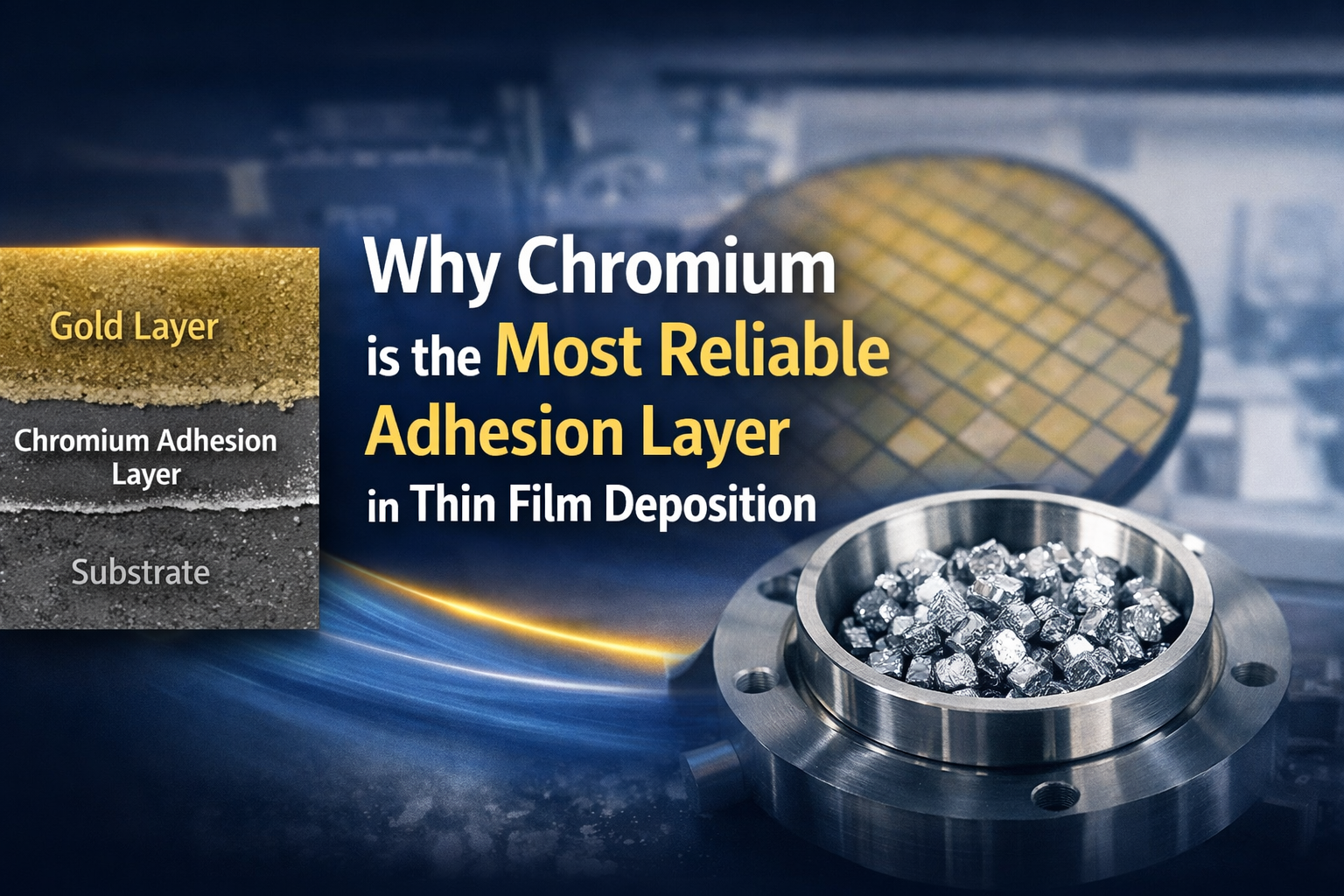
4.1 Thin-Film Deposition and Surface Engineering
Vanadium foil is frequently used as:
- Evaporation or reaction source material
- Substrate or buffer layer
- Precursor for vanadium nitride or vanadium oxide films
It plays a critical role in depositing materials such as VN, VO₂, and V₂O₅, which are essential for electronic, optical, and smart-material devices.
4.2 Semiconductor and Functional Oxide Research
Vanadium oxides—particularly VO₂—exhibit metal–insulator phase transitions near room temperature. Vanadium foil serves as a starting material for:
- Phase-transition devices
- Smart windows and thermal regulation films
- Neuromorphic and adaptive electronics
The ability to precisely control oxidation states is a major advantage of vanadium foil.
4.3 Hydrogen Energy and Storage Research
In hydrogen technology, vanadium foil is used for:
- Hydrogen permeation membranes
- Kinetic studies of hydrogen absorption and desorption
- Tritium and isotope transport experiments
Its predictable and reversible hydrogen behavior makes it a benchmark material in this field.
4.4 Nuclear and Extreme-Environment Materials Science
Vanadium and vanadium-based alloys are actively studied for:
- Fusion reactor structural materials
- Neutron irradiation experiments
- High-temperature radiation-resistant components
Vanadium foil is commonly used in model experiments and validation studies due to its low neutron activation and thermal stability.
4.5 Fundamental Materials Research
In academic and national laboratories, vanadium foil is widely used for:
- Diffusion couple experiments
- Phase diagram investigations
- Interfacial reaction studies
- Reference materials for comparative research
Its well-understood behavior allows researchers to isolate and study specific mechanisms.
5. Comparison with Other Metal Foils
| Material | Key Strength | Main Limitation | Typical Uses |
|---|---|---|---|
| Vanadium foil | Hydrogen compatibility, high-T stability | Cost, oxidation sensitivity | Hydrogen, nuclear, thin films |
| Titanium foil | Corrosion resistance, low density | Limited high-T strength | Biomedical, chemical |
| Molybdenum foil | Very high melting point | Brittleness | Furnace components |
| Tungsten foil | Extreme temperature resistance | Very difficult to process | Specialized high-T |
| Nickel foil | Easy fabrication | Lower temperature capability | Electrochemistry |
Vanadium foil stands out as a balanced solution where both chemical tunability and mechanical workability are required.
6. Selection and Handling Considerations
When specifying vanadium foil, users should carefully evaluate:
- Required purity and interstitial limits
- Thickness tolerance and flatness
- Annealed vs. work-hardened condition
- Surface cleanliness and packaging method
- Compatibility with vacuum or hydrogen environments
Proper storage—ideally under vacuum or inert gas—helps preserve foil quality before use.
Conclusion
Vanadium foil is not a general-purpose metal material; it is a high-precision engineering foil designed for demanding environments. Its combination of thermal stability, hydrogen compatibility, controlled surface chemistry, and workable ductility makes it indispensable in advanced research and emerging technologies.
As energy systems, semiconductor devices, and nuclear technologies continue to evolve, the importance of materials that offer predictable, controllable behavior under extreme conditions will only grow. Vanadium foil, though often overlooked, is increasingly proving to be one of those essential materials.
For researchers and engineers facing challenges in high-temperature, hydrogen-rich, or vacuum-based systems, vanadium foil is not merely an option—it is often the optimal solution.