Introduction
Zinc Oxide (ZnO) single crystal substrates have emerged as critical materials in advanced electronics, optoelectronics, sensing technologies, and acoustic devices. As a wide bandgap semiconductor (3.37 eV at room temperature) with a high exciton binding energy (~60 meV), ZnO bridges the gap between conventional semiconductors and emerging functional oxides. Its combination of optical transparency, piezoelectricity, semiconducting behavior, and chemical stability makes it uniquely versatile.
Unlike polycrystalline ZnO ceramics or thin films grown on mismatched substrates, ZnO single crystals provide a well-defined lattice structure, low defect density, and high structural uniformity. These characteristics are essential for epitaxial film growth, heterostructure fabrication, and high-performance device engineering. This article explores the major application fields of ZnO single crystal substrates, focusing on the technological advantages they bring to each domain.
1. Optoelectronics and UV Photonics

1.1 UV Light-Emitting Diodes (UV-LEDs)
ZnO’s direct wide bandgap makes it intrinsically suitable for ultraviolet emission. ZnO single crystal substrates are particularly valuable in:
- Near-UV LEDs
- Deep UV optoelectronic research
- High-efficiency excitonic emission devices
The large exciton binding energy enables strong excitonic recombination even at room temperature, which is advantageous for UV lasing and high-brightness UV emitters. Using a ZnO single crystal substrate reduces lattice mismatch compared to foreign substrates (e.g., sapphire), improving epitaxial quality and minimizing dislocations.
1.2 Laser Diodes and Exciton-Based Lasers
ZnO supports stimulated emission under optical pumping due to strong excitonic effects. Single crystal substrates enable:
High optical gain
Reduced non-radiative recombination centers
Enhanced threshold performance
In research environments, ZnO substrates are often used for homoepitaxial growth of ZnO thin films to investigate low-threshold UV laser operation.
1.3 Transparent Conductive Oxide (TCO) Research
ZnO and doped ZnO (e.g., Al-doped ZnO, Ga-doped ZnO) are widely studied as alternatives to indium tin oxide (ITO). Single crystal substrates serve as platforms for:
- Conductivity optimization studies
- Carrier mobility analysis
- Interface engineering
Their well-controlled crystallographic orientation allows precise investigation of anisotropic electrical and optical behavior.
2. Piezoelectric and Acoustic Devices
ZnO is inherently piezoelectric due to its non-centrosymmetric wurtzite crystal structure. This property makes ZnO single crystal substrates highly relevant in acoustic and electromechanical applications.
2.1 Surface Acoustic Wave (SAW) Devices
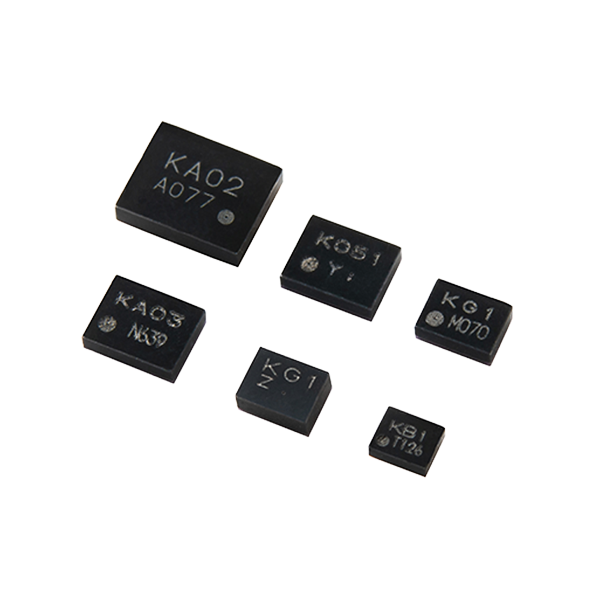
ZnO single crystals are widely used in SAW devices because of:
- Strong electromechanical coupling
- High acoustic velocity
- Stable crystal orientation
Applications include:
- RF filters in communication systems
- Wireless sensing systems
- Signal processing components
Compared with polycrystalline films, single crystal ZnO offers lower acoustic attenuation and more predictable wave propagation.
2.2 Bulk Acoustic Wave (BAW) Resonators
For high-frequency applications, BAW resonators require:
- Low internal defect density
- High mechanical Q factor
- Stable elastic constants
ZnO single crystal substrates help improve resonance sharpness and reduce energy dissipation, making them suitable for advanced RF front-end modules.
2.3 Piezoelectric Sensors and Actuators
ZnO substrates are applied in:
- Pressure sensors
- Acceleration sensors
- Microelectromechanical systems (MEMS)
Their stable piezoelectric coefficient and thermal robustness allow operation across a wide temperature range.
3. Gas Sensing and Environmental Monitoring
ZnO is highly sensitive to surface adsorbates due to its semiconducting and surface-reactive nature. While ZnO thin films are common in commercial sensors, single crystal substrates play a crucial role in:
- Fundamental surface reaction studies
- High-precision gas detection prototypes
- Defect engineering research
3.1 Oxygen and Hydrogen Sensors
The conductivity of ZnO changes upon adsorption of gases such as:
- O₂
- H₂
- CO
- NO₂
Single crystal substrates provide a controlled surface orientation for studying adsorption kinetics and improving selectivity.
3.2 High-Temperature Gas Detection
ZnO exhibits good thermal stability, making it suitable for sensing in elevated-temperature environments such as:
- Automotive exhaust monitoring
- Industrial process control
- Combustion systems
Single crystal ZnO ensures reproducible sensing behavior and reduced drift compared to polycrystalline alternatives.
4. Power Electronics and Wide Bandgap Semiconductor Research
ZnO’s wide bandgap and high breakdown field make it a candidate material for next-generation power electronics.
4.1 Schottky and p–n Junction Devices
Research into ZnO-based:
- Schottky diodes
- Metal–semiconductor–metal (MSM) devices
- Heterojunction photodetectors
requires high-quality single crystal substrates to minimize leakage current and interface traps.
4.2 High Electron Mobility Studies
ZnO has relatively high electron mobility compared to many oxide semiconductors. Single crystal substrates are used to investigate:
- Carrier transport mechanisms
- Doping efficiency
- Interface scattering
These studies are essential for developing transparent electronics and high-frequency devices.
5. Spintronics and Diluted Magnetic Semiconductor Research
ZnO can be doped with transition metals (e.g., Co, Mn, Fe) to create diluted magnetic semiconductors (DMS). Single crystal substrates are indispensable in:
- Magnetic doping uniformity studies
- Spin polarization experiments
- Ferromagnetic coupling investigations
The crystalline quality directly influences magnetic ordering and reproducibility, making substrate quality a determining factor in experimental outcomes.
6. Photocatalysis and Energy Applications
ZnO is widely used in photocatalytic and photoelectrochemical systems.
6.1 Water Splitting Research
ZnO single crystal substrates serve as model electrodes for:
- Photoanode development
- Charge transfer studies
- Surface modification experiments
The controlled surface orientation enables detailed understanding of catalytic reaction pathways.
6.2 Solar Cells and Hybrid Devices
ZnO is used as:
- Electron transport layer (ETL)
- Transparent electrode
- Buffer layer
Single crystal substrates are particularly useful in academic research to study interface properties without grain boundary interference.
7. Biomedical and Biosensing Applications
ZnO exhibits biocompatibility and antibacterial properties, making it interesting for medical research.
7.1 Biosensors
Single crystal ZnO substrates are used in:
- Enzyme immobilization studies
- Glucose sensing
- DNA hybridization detection
Their uniform surface allows reproducible functionalization.
7.2 Implantable and Biodegradable Devices (Research Phase)
ZnO’s bioactivity and slow dissolution behavior are being investigated for:
- Temporary biomedical implants
- Bio-resorbable electronics
Although still in research stages, substrate-grade ZnO crystals are essential for early-stage device prototyping.
8. Heteroepitaxy and Functional Oxide Research
ZnO single crystal substrates are often used as platforms for growing other functional oxides.
8.1 Oxide Thin Films
Applications include:
- Ferroelectric thin films
- Multiferroic materials
- Transparent conductive oxides
The lattice parameters of ZnO can be advantageous for certain oxide epitaxial systems.
8.2 Nanostructure Growth
ZnO nanorods and nanowires can be grown homoepitaxially on ZnO single crystal substrates with:
- Controlled orientation
- Reduced nucleation defects
- Improved alignment
This is particularly important in nanoscale optoelectronic and sensing devices.
9. High-Temperature and Harsh Environment Applications
ZnO maintains structural integrity and stable electrical properties at elevated temperatures.
Applications include:
- High-temperature UV detectors
- Combustion monitoring sensors
- Aerospace sensing components
Single crystal substrates ensure mechanical and chemical stability in challenging environments.
Conclusion
Zinc Oxide (ZnO) single crystal substrates occupy a strategic position in modern materials science and device engineering. Their combination of wide bandgap semiconducting behavior, strong excitonic emission, piezoelectricity, optical transparency, and chemical stability enables applications across optoelectronics, acoustic devices, sensing technologies, power electronics, spintronics, and energy systems.
While many commercial devices rely on thin films or polycrystalline materials for cost efficiency, single crystal ZnO substrates remain indispensable in research, prototyping, and high-performance niche applications. As technologies such as UV photonics, transparent electronics, and oxide-based semiconductors continue to evolve, ZnO single crystal substrates will remain a foundational material driving innovation.
In summary, ZnO single crystal substrates are not just passive supports for thin films—they are enabling platforms that define device performance, reliability, and future scalability in next-generation electronic and photonic systems.