

What is a palladium sputtering target?
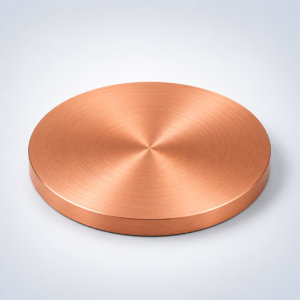
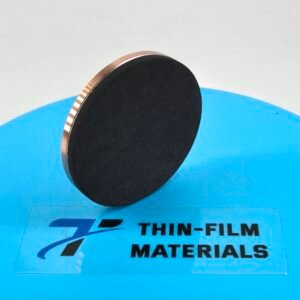
A palladium (Pd) sputtering target is an elemental-metal source for Pd-containing thin films. Target purity and surface condition should be specified against the layer's contamination and uniformity requirements rather than treated as a film-performance guarantee.
Explore related materials in the Sputtering Targets catalog.
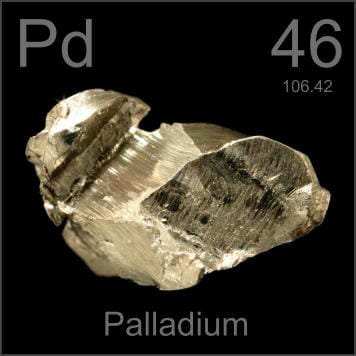

Material and Deposition Characteristics
Because the target is electrically conductive, DC magnetron sputtering is often applicable, although pulsed-DC or other power modes may also be used depending on the deposition system and film target. For high-specification films, target grain structure, residual stress, and surface preparation can influence erosion uniformity and the morphology of the deposited layer. When higher power loading or system-specific mounting is involved, a bonded target assembly may also be considered.
Element reference versus target specification
Elemental palladium (Pd) has a melting point of approximately 1554.9 °C and bulk density of approximately 12.02 g/cm³ (PubChem element reference). These elemental constants do not establish an available target size, grade, bond type or film property. Confirm order-specific requirements and evidence in the quotation.
How to specify palladium sputtering target for an RFQ
The following fields define the order and the tests needed to qualify this target; final availability and acceptance criteria belong in the approved quotation or drawing.
| Decision | Information to provide or verify |
|---|---|
| Material identity | State Pd grade and trace-element limits, plus any lot inspection or document requirements. |
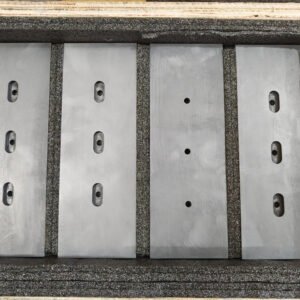
| Target and cathode fit | Supply the target and cathode drawings, thickness, mounting interface, and backing or bonding requirements. |
| Film acceptance | Identify film thickness, continuity, composition, or functional tests relevant to the actual application. |
Send the specification and drawing for review. The selected source or target and the deposited film require separate acceptance evidence.
Research applications and film checks
- RF-sputtered Pd films have been studied as hydrogen-sensing layers on flexible and rigid substrates. Reported response and structural behavior varied with film thickness, substrate and test conditions (research example).
- For a hydrogen-sensing study, define the substrate, film thickness, operating temperature and hydrogen exposure range, then test response/recovery and film integrity in the actual device.
- Target grade, geometry and backing are procurement decisions; sensor performance is a separate film/device qualification and is not guaranteed by target selection alone.
Target Configuration and Ordering Considerations
For quotation and manufacturability review, provide target size, thickness, purity or alloy composition, quantity, and the sputtering gun or cathode model if known. If a bonded assembly is required, include backing-plate material, bonding preference, and any dimensional tolerances, surface-finish needs, or inspection-document requirements. TFM can also review customer drawings or old-target samples for replacement builds.
Frequently Asked Questions
Can Palladium sputtering targets be used with DC magnetron sputtering?
Yes. Conductive metallic targets are commonly processed with DC magnetron sputtering, although pulsed-DC or other modes may also be used depending on the equipment and film objective.
What purity grade should I choose for a Palladium target?
The required purity should be selected from the contamination limits and performance needs of the deposited film. Higher purity can reduce unwanted impurities, but the optimum grade should match the application rather than default to the highest available level.
Why do density and microstructure matter for Palladium targets?
Target density, grain structure, and residual stress can influence erosion behavior, process stability, and the morphology of the deposited film. These factors become more important as film-quality requirements become tighter.
Can a Palladium target be bonded to a copper backing plate?
A backed assembly may be assessed from the cathode drawing, target dimensions and operating conditions. TFM should confirm backing material, bonding method and availability in the quotation rather than treating them as standard for every order.
What are common applications of sputtered Palladium films?
Typical uses include conductive layers, metallization, reflective or protective coatings, and composition-specific PVD research. The exact application depends on the properties of the element and the final film stack.
What information should I send TFM for a custom Palladium target?
Please provide target dimensions, thickness, purity, quantity, target style, backing-plate requirement, cathode model if known, and any tolerance, surface-finish, inspection, or documentation requirements.
Prepare your RFQ: Download the fillable Palladium Sputtering Target, Pd RFQ Worksheet (PDF). Enter the required composition or grade, dimensions, backing or bonding request, quantity, documents, and acceptance criteria for quotation review.
Looking for palladium in evaporation form? See palladium evaporation materials (Pd).
Reviews
There are no reviews yet.